


Contact Our Modular Experts for a Customized Solution
A Labor Shortage Demands a New Construction Model
The U.S. construction industry faces a basic dilemma: the need for new buildings is increasing faster than the construction workforce to build them.
Contractors are under pressure to do more projects in less time, from residential and infrastructure to energy, manufacturing, and mega-industrial projects. However, the traditional construction model is highly dependent on skilled labor carrying out complex activities directly on the construction site.
This results in a widening divide between project demand and workforce supply.
The answer isn't just to hire more workers. The construction industry needs to improve the design, manufacture, and delivery of buildings.
That’s why the U.S. construction labor shortage has made modular construction an important strategy.
Modular construction improves the efficiency of the workforce by moving construction work from labor-intensive job sites to controlled manufacturing environments, reducing dependence on the limited supply of skilled trades, and allowing contractors to increase project production without a corresponding increase in labor.


Root Causes of the U.S. Construction Labor Shortage: Aging Workforce and Pipeline Shortage of Skilled Labor
A lack of experienced tradespeople is one of the biggest challenges facing U.S. construction.
Many skilled workers are nearing retirement age, and fewer young workers are entering traditional construction careers. Jobs like electricians, welders, plumbers, and carpenters are trained over years, so labor shortages can’t be solved quickly.
The demand for construction is also increasing due to:
•Investment in infrastructure
•Shortage of housing
•Development of renewable energy
•Expansion of data centers
•Increase in industrial manufacturing
The industry therefore has a structural problem: there is a need for more projects to be completed, but there are fewer skilled workers to complete them.
Why Traditional Construction Methods Struggle in a Labor-Constrained Market
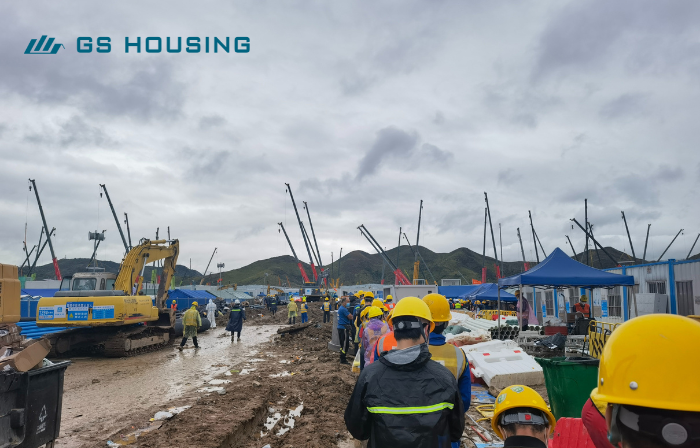
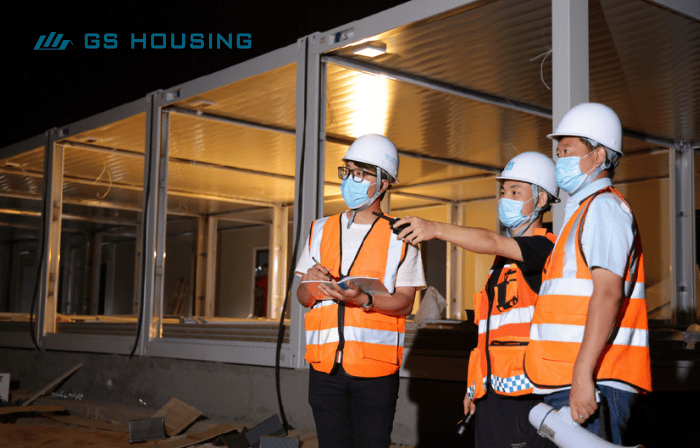
Traditional construction is predominantly based on an on-site assembly model.
All projects have workers repeating similar activities:
•Material preparation
•Structural Assembly
•Mechanical and electrical fitting
•Interior trim
•Quality verification
This approach has been used for decades, but it has some limitations when labor availability becomes limited.
1. Construction productivity depends on having workers available.
A traditional project can only move as fast as the workers finish each phase.
If there is not enough skilled labor available, a contractor may not be able to meet the schedule.
For instance:
•Slow framing delayed interior work
•Limited electricians slow commissioning
•Subcontractor shortages delay completion dates
The availability of labor is directly tied to the project schedule.
2. Job Sites Lead to Inefficient Working Conditions
Construction sites are unpredictable places.
Workers have to cope with:
•Weather delays
•Delays in material delivery
•Small workspace
•Challenges in coordination between multiple trades
All of these factors reduce the productive time available from each worker.

Modular Construction: Changing Construction from Labor-Intensive to Manufacturing-Based
The primary difference between modular and traditional construction is where most of the work is done.
Conventional building: Workers are on their way to the construction site.
Off-site construction: Parts are brought to the site from the factory.
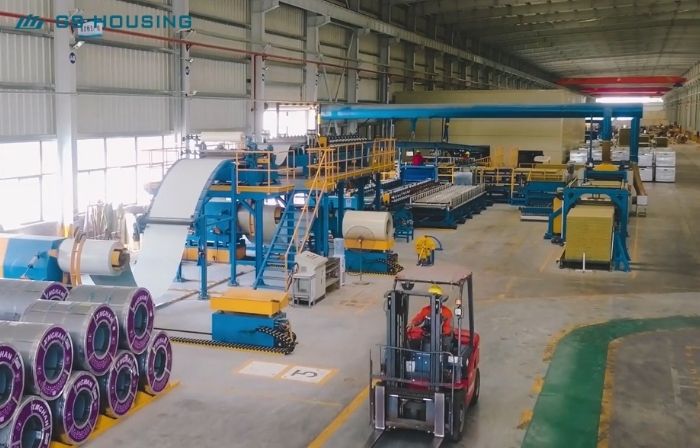
The transition moves construction from a series of site operations to a regulated manufacturing process.
The Labor Independence of Modular Construction
1. Factory production is a more efficient work process
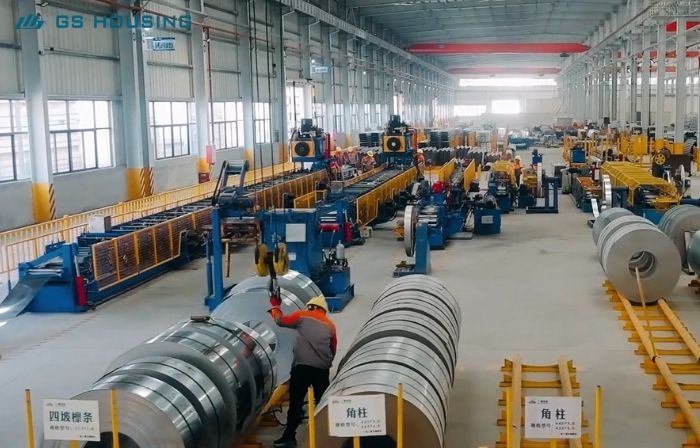
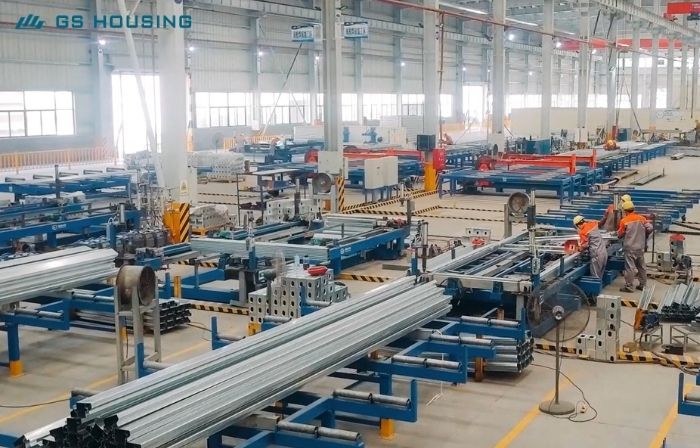
In modular construction, building modules are manufactured in a factory environment where production steps are organized and repeatable.
This allows workers to focus on tasks instead of having to change from one activity to another on a changing construction site.
Factory Production Permits:
•Better material preparation
•Uniform working conditions
•Uniform installation procedures
•Continuous quality control
That means each worker can generate more productive hours than in traditional construction.
2. Parallel Construction Lowers Total Labor Demand
Parallel workflow is one of the key advantages of off-site construction solutions
In conventional construction, many activities have to be done in sequence.
And then you have the other side of it, which is that, you know, it's not like we're going to sit around and just wait for the other shoe to drop.
Foundation → Structure → Wiring → Plumbing → Interior Finish
Each stage depends on the successful completion of the stage prior.
Prefab construction methods:
•Site foundations can be prepared
•Container modular units can be manufactured in parallel.
When the container modules arrive on site, the installation is more of an assembly process, coordinated rather than a full construction operation.
This means fewer people are needed for the crucial on-site part of the project.
3. More Strategic Use of Skilled Labor
Modular construction doesn't cut skilled workers. Instead, it frees up skilled labor to do the work where skill is most valuable.
Such as:
Traditional build: Skilled workers are busy with materials, fixing errors, and site issues.
Modular Building: Precision manufacturing, quality control, engineering, and installation by skilled workers.
This adds to the overall productivity of the construction labor force.

Talk to GS Housing Experts
Modular Construction and Traditional Construction: A Comparison of Labor Efficiency
The key distinction between modular and traditional construction is not the building method itself but the manner in which labor resources are organized and deployed.
In traditional construction, large teams work on-site, performing activities in sequence. Modular construction shifts many of the labor-intensive activities to a controlled factory setting. That means companies can get more work out of fewer workers and have greater control of their schedules.
| Comparison Factor | Traditional Construction | Modular Construction |
| Construction Location | Most activities are completed directly at the project site | Major building components are manufactured in an off-site factory, with final assembly completed on-site |
| Labor Dependency | Requires a large number of skilled workers across multiple construction stages | Requires fewer on-site workers because many processes are completed before delivery |
| Workforce Organization | Workers from different trades coordinate sequentially on a changing job site | Factory teams use standardized production processes with specialized roles |
| Skilled Labor Requirements | Heavy dependence on electricians, plumbers, carpenters, welders, and other skilled trades throughout the project | Skilled workers focus on manufacturing, quality control, engineering, and installation |
| Project Workflow | Mostly sequential: one construction stage must finish before the next begins | Parallel workflow: factory manufacturing and site preparation happen simultaneously |
| Labor Productivity | Productivity is affected by weather, site conditions, material movement, and subcontractor coordination | Higher productivity due to controlled production environments and repeatable processes |
| On-Site Workforce Size | Large construction crews are typically required for long periods | Smaller installation teams can complete final assembly and commissioning |
| Weather Impact | Rain, snow, extreme temperatures, and site conditions can delay work | Factory production continues regardless of external weather conditions |
| Training Requirements | Workers need broad field experience and multiple construction skills | Workers can be trained for specific standardized production tasks |
| Material Handling Efficiency | Materials are transported, stored, and processed at the job site | Materials are organized and optimized within factory production systems |
| Quality Control | Quality inspections mainly occur during and after construction | Quality checks are integrated throughout the manufacturing process |
| Rework Risk | Higher risk due to site coordination issues and changing conditions | Lower risk because components are produced using controlled procedures |
| Project Scalability | Expansion requires recruiting additional local labor for each project | Production capacity can increase through factory expansion and standardized manufacturing |
| Best Applications | Projects with unique designs or where site construction is preferred | Workforce housing, modular offices, healthcare facilities, schools, mining camps, energy projects, and rapid deployment buildings |
Key takeaway: Modular construction boosts labor efficiency, not just construction speed
The biggest benefit of modular building solutions in the USA is not just faster project completion. Its greater value is increasing the productivity of every worker involved.
Modular construction for contractors allows them to take repetitive, labor-intensive activities into a controlled manufacturing environment
•Get more projects done with limited workforce availability
•Reduce reliance on scarce skilled trades
•Minimize risk to the labor schedule
•Create better and more predictable construction
Factory-built buildings offers a scalable way to increase building capacity without a proportional increase in labor for a U.S. construction industry faced with long-term workforce issues.
The Impact of Prefab Construction Solutions on Productivity
Improved Quality And Rework Reduction Through Controlled Manufacturing
Rework is one of the hidden costs of traditional construction;
Reworks are due to:
•No coordination
•Weather exposure
•Damage to property
•Communication gaps may require additional labor hours.
Factory-based modular construction solves these problems by:
•Standardized procedures
•Pre-installation check-ups
•Co-ordination of digital design
Better accuracy cuts down on corrective work after installation.


Digital tech boosts efficiency in modular construction
Modern modular construction uses the following digital tools:
Building Information Modelling (BIM)
BIM allows architects, engineers, and manufacturers to coordinate designs prior to production.
Advantages include:
•Early detection of design conflicts
•Better material planning
•Decrease in construction errors
Automation of manufacturing
In a factory, production can make greater use of:
•Precision equipment
•Standardized parts
•Digital manufacturing systems
This brings the construction industry closer to the modern manufacturing industries.
Applications of Modular Construction in the U.S. Market: Remote Workforce Housing
Many U.S. industries need man-accommodation solutions in places where local resources of housing and labor are lacking.
Examples of such are:
•Mining operations
•Energy projects
•Building of infrastructure
•Major industrial developments
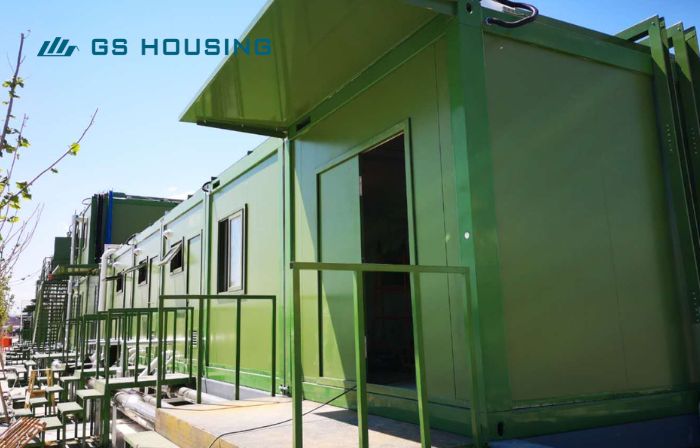
Modular remote workforce housing is a practical solution, as buildings can be constructed off-site and placed near project sites with minimal site labor.
Development of Affordable Housing
The need for faster ways to build has been growing along with the U.S. housing shortage.
Modular housing contractors should overcome challenges such as
•Limited workforce for construction
•Increasing labour costs
•Longer project timelines
Modular construction increases production efficiency and provides more housing within the capacity of the available workforce.
Rapid Deployment Emergency Housing
Traditional construction can be limited by the availability of labor after natural disasters or urgent infrastructure needs.
Modular buildings can include:
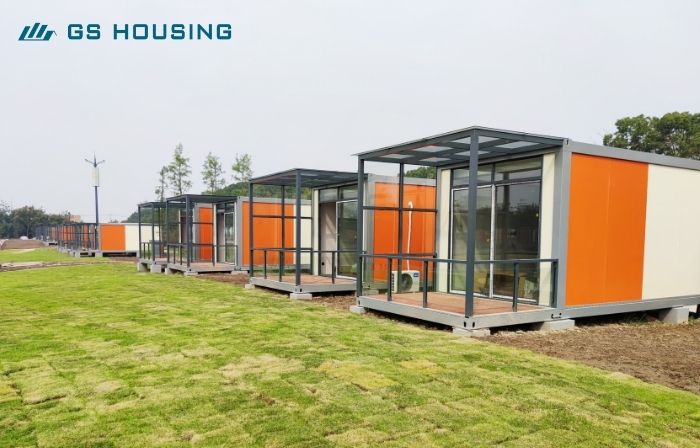
•Prefab workforce housing
•Healthcare facilities
•Container homes for emergency response
•Modular accommodation for students
•Prefabticated quick-build hotels


Why Contractors Are Embracing Modular Construction as a Long-Term Strategy
Modular construction offers more than temporary labor savings to U.S. contractors.
It creates another model of project delivery based on:
Manufacturing Predictably
Factory manufacturing reduces uncertainty about weather, availability of labor, and site conditions.
Higher labor productivity
A smaller workforce can take on larger project volumes.
Faster Time to Market
The shorter construction cycles allow for earlier building use.
Scalable Capacity
Modular construction manufacturers can run multiple projects at the same time without having each contractor employ large local construction crews.
The Future of Construction: From Labor-Intensive Building to Industrialized Construction
The U.S. construction industry is inching toward industrialized building methods.
Future construction will be increasingly combined:
•Modular manufacturing
•Digital design automation
•Ecological materials
•Smart project management
It's not about replacing workers; it’s about making the best use of a limited labor pool.
As labor shortages continue to be a looming issue, modular construction will be a key solution for companies to provide more buildings in a more efficient manner.”


GS Housing’s Support for Labor-Efficient Modular Building Solutions
GS Housing offers modular construction solutions for projects where speed, labor efficiency, and dependable delivery are paramount.
Solutions are:
•Flat pack container buildings
•Modular accommodation units
•Offices on construction sites
•Mining camp construction
•Oil and gas worker accommodation
•Emergency housing units
GS Housing helps contractors and organizations by using factory-based manufacturing and standardized modular building systems to remove the need for large on-site labor teams without compromising quality and project reliability.
Modular construction is a pragmatic answer for the U.S. construction market to the labor shortage problem: build smarter, not just build with more workers.
FAQ
How does modular construction help to overcome labor shortages in construction?
Modular construction eases labor pressure by shifting a large portion of the construction process to factories, where the standardization of production requires fewer workers and increases productivity.
Does modular construction replace traditional building?
No, Modular construction is not meant to replace traditional building but be a faster, more cost-predictable complement to it for those projects that need to be quick and less labor-dependent.
Why modular construction is taking off in the U.S.?
Climbing Modular construction is gaining popularity due to a shortage of workers, a need for more housing, a need to build more infrastructure, and a need to complete projects more quickly.
What types of projects are most suitable for modular construction?
Modular construction is often used to build workforce housing, construction camps, healthcare facilities, schools, office buildings, industrial buildings and emergency facilities.
Talk to GS Housing Experts
Contact Our Modular Experts for a Customized Solution
Post time: 22-07-26