


What is a ‘ flat-pack ‘ container?
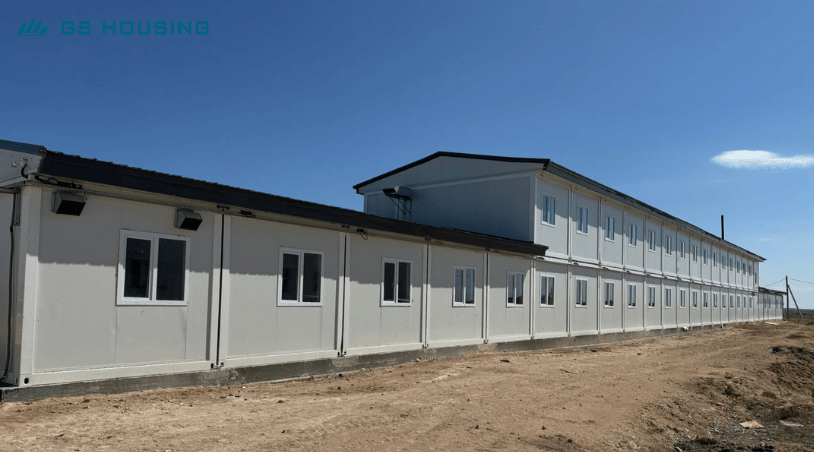
Flat-pack containers are prefabricated container-based accommodation units or camps shipped in flat-pack form and assembled on site.
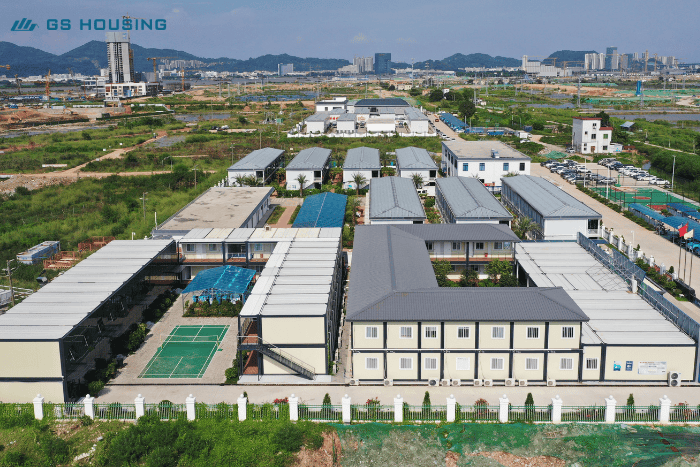
Examples of use: worker camps, temporary facility housing, container site offices, transitional housing, military or emergency camps, etc.
Analysis of the Flat-Pack Container Market
What you should pay attention to when you choose container camps for workers for your project:
|
Which industry are you in |
Who you are | What you need |
Key buying criteria |
| Mining, Oil & Gas, Infrastructure Projects | Large companies running remote sites:mining operations, drilling, pipeline, large infrastructure works | Accommodation for workers/staff, site offices, canteen facilities, clinics, workshops etc | Durability, ease of transport, speed of installation,maintenance, compliance with safety codes |
| Construction Companies / EPCs | Firms building roads, dams, power plants, large buildings etc., often in remote or semi-remote areas | Camps for labour, temporary offices, sometimes permanent support housing | Lead time, cost, modularity, ability to reuse or move modules, local approvals & regulations, local design |
| Government & Public Sector | National or regional governments needing housing, disaster relief, remote area schools/clinics, police or military housing | Rapid deployment, cost/benefit, long life, safety & standards, local acceptance, sometimes aesthetics | Regulatory compliance, standardization, lifecycle cost, ability to scale, funding constraints |
| NGOs / Humanitarian / Disaster Relief | UN agencies, Red Cross / Red Crescent etc., and local non-profits | Shelter for displaced persons, emergency camps, medical facilities in disasters | Fast delivery, portability, minimal setup, low cost, durability, weather resist- / extreme climate performance, ease of transport & repair, sometimes reusability/refugee-friendly designs |
| Affordable Housing / Social Housing | Governments, housing development agencies, low-income housing developers | Permanent or semi-permanent housing for low income households; density, cost, speed, livability | Cost per sq m / per unit, local climate/sustainability, infrastructure (water, power), social acceptability, quality, finishing, regulatory compliance |
| Tourism / Hospitality | Resorts, lodges, remote retreat camps, glamping, seasonal staff housing | Unique design, quality, comfort, aesthetics, but possibly with lower long-term permanence | Design options, finish quality, plumbing / HVAC, interior fit-out, user experience, brand image, view & layout, sometimes mobility/modularity if seasonal |
| Institutional / Educational / Healthcare | Schools, clinics, hospitals needing expansion, remote branches | Dormitories, clinics, classrooms, support buildings | Standards, safety, sanitation, comfort, ease of expansion, local regulations, indoor environmental quality |
Why flat-pack containers?
What makes a customer want flat-pack prefab camps?
Speed of construction: Flat-pack or prefab units can speed up construction enormously. Most important in emergency/disaster response or when projects are on tight deadlines.
Cost savings: Less labor on-site, less waste. Optimized manufacturing SHIPPING flat packs can save freight costs compared to fully assembled.
Flexibility/modularity: Grow, move, reuse. When you finish a camp, move to another project.
Logistics & remoteness: Many camps are in remote or hard-to-access locations (mining, frontier infrastructure, disaster areas). Flat packs are easier to ship/transport in pieces.
Standardization & factory control: better quality, fewer surprises on the job (weather, labor variability).
Regulatory & safety requirements: And as the codes for worker welfare and disaster resilience and climate resilience, etc., escalate, prefab units that ‘meet code’ are more attractive.”
Sustainability/environment & ESG: reuse, efficient materials, less waste, and often energy efficiency. Also, investors & demand good environmental performance in the public sector
Labor/material cost pressures. Skilled labor is expensive or in short supply in many countries; prefab reduces the need for labor on-site.
What to look for when choosing flat-pack prefab camps
Total Cost of Ownership – not only purchase/transport costs but also installation, maintenance, durability, energy costs, and lifecycle.
Lead time & supply chain reliability: speed of delivery & assembly; reliability of components; customs/import issues.
Transport & logistics: volume, flat pack reduces shipping volume, weight, access, road quality & inland haul to remote sites.
Local regulatory compliance & approvals: building codes, fire/safety/insulation/climate suitability, sometimes permits
Customization vs standardization:Do you need special layouts i.e., bathrooms, kitchens, or medical, or will you be happy with standard units?
Comfort & amenities: comfortable environments with insulation, ventilation, plumbing, power, and lighting for staff or long-duration stays.
Durability & maintenance: resistance to climate, reparability, spares, and robustness.
After-sales service & support: guarantees, spare parts, technical assistance, etc.
Scalability & reusability: ability to scale up or move camp, reuse modules, and adapt.
What is the best industry for flat-pack container housing
Mining and resource camps: remote locations, large workforces, need for comfortable living conditions.
Construction and infrastructure companies – big projects with remote or temporary worker camps, such as road, hydro, pipeline, power, and renewable energy projects.
Humanitarian and Disaster Relief Housing – Shelter for the homeless caused by repeated natural calamities, conflicts, etc.
Government Social Housing – Where there is a shortage of housing, governments could use prefabs to increase the rate of building.
Seasonal camps and remote tourism hotel - expandable, reusable design for comfort, design, and aesthetics
Challenges of China’s Flat-Pack Housing
Risks to be mitigated with the importation of China’s flat-pack container houses are the following:
Transport & import duties/tariffs: costs can explode.
Cultural/social acceptance: Prefab flat-pack container houses might have low prestige at times and be resisted in residential contexts.
Post sales/maintenance & warranty: rust, failure of wall panel, degradation of insulation, etc.
What do you get with flat-pack modular homes?
Design for logistics: flat pack for lower shipping costs, lightweight where possible
Integrated services: design, delivery, assembly support, possibly maintenance & spare parts
Review applicable safety, insulation, climate, and fire codes, especially in hot, humid, cold or seismic zones
Modular/scalable design to allow for growth/relocation of units
Sustainable materials, energy efficiency, good insulation, maybe solar or off-grid amenity kits
What countries are eligible to select flat-pack prefabricated accommodation camps?
1. Africa
Nigeria, Angola, Mozambique→Oil & gas camps, offshore & onshore projects, pipeline & LNG development.
South Africa, Botswana, and the DRC→demand for remote mining towns and big construction camps.
Ethiopia, Somalia, Sudan, South Sudan→Humanitarian/refugee shelters, IDP camps, donor-funded prefab requirements.
North Africa, Egypt, Morocco, and Algeria→Infrastructure housing shortages, government programs and mining projects.
Zimbabwe, Zambia→ Nickel, lithium, copper mining camps.
2. Middle East
Saudi Arabia, UAE, Qatar -> Construction labor accommodation, expo/mega projects, oil & gas.
Iraq, Iran → Camps in oil fields, EPC contractors need affordable housing programs.
Yemen, Syria, Lebanon → Humanitarian & refugee accommodation,
3. Asia
China → biggest prefab factory; local worker camps; supply for export.
India → camps for workers and affordable housing as infrastructure booms
Bangladesh, Pakistan→ refugee/disaster relief, and textile/industrial camps.
Philippines, Indonesia → Mining, earthquake, and typhoon-prone areas, worker housing.
4. Europe
Russia and CIS→ Oil, gas, mining camps, various construction sites
Eastern Europe→ Military/NATO bases, refugee housing, affordable housing projects
5. Americas
Canada→ Mining camps, oil sands, modular construction leaders.
USA → Disaster relief housing (FEMA), military bases, housing at construction sites.
Brazil, Chile, Peru → Mining camps, infrastructure projects.
Caribbean→ hurricane shelters for recovery and disaster relief
6. Oceania
Australia → Mining accommodation camp, remote worker camps, modular site accommodation.
Papua New Guinea → Mining/O&G, remote project campground;
Pacific Islands → Cyclone recovery, disaster relief, temporary shelter.
Conclude
Flat-pack container housing is becoming one of the most efficient and cost-effective solutions for modern temporary and semi-permanent construction needs. Flat-pack prefab buildings have many advantages such as fast installation, lower transportation costs, flexible layouts, and reusable modular structures . They are widely used in construction camps, mining accommodations, oil & gas projects, military camps, schools, hospitals and emergency housing worldwide.
As the world’s need for fast and sustainable construction continues to increase, flat-pack modular camps are becoming an increasingly important part of large infrastructure and remote workforce projects. Middle East and Africa, South America and Southeast Asia governments and companies are now looking at modular accommodation solutions to improve project efficiency and reduce construction time frames.
Selecting a reliable modular building supplier is crucial to guarantee building quality, thermal insulation, fire safety, and long-term durability. Continued innovation in modular construction technology should ensure flat-pack container housing remains a key trend in the future of global construction and workforce accommodation.
Post time: 19-05-26