


Situation Update August 11, 2026: This is in response to a major earthquake that struck near San José del Palmar, Colombia, on August 10. Colombian authorities and humanitarian agencies are still assessing damages and humanitarian needs. This article addresses the need for relief housing in the response and reconstruction phases.
A strong earthquake struck Colombia on 10 August 2026, underscoring once again the country’s vulnerability to seismic activity. The quake struck near San José del Palmar in western Colombia and was widely felt, including the major city of Cali. Initial reports spoke of severe damage and a rapid emergency response, with Colombian and international humanitarian organizations starting to assess the situation and coordinate aid.
In the first few hours of a disaster the priorities are obvious. Search and rescue, medical treatment, evacuation, damage assessment, and public safety. But as the first stage of the emergency response begins to take hold, there is another problem that becomes impossible to ignore—where will people live when the damaged buildings are no longer safe?
The question is of particular importance for local governments, contractors, NGOs, international aid agencies, and organizations that are preparing to support Colombia’s recovery. You may only need temporary shelter for the first days, but recovery may take months. Families need a safer, more functional place to live. “We need space for medical teams to work. “Government agencies must have coordination offices. Contractors need a place to put their reconstruction workers.
So the challenge is not just emergency housing units. This will be to develop a sustainable and relocated container house capable of supporting Colombia from emergency response to reconstruction.
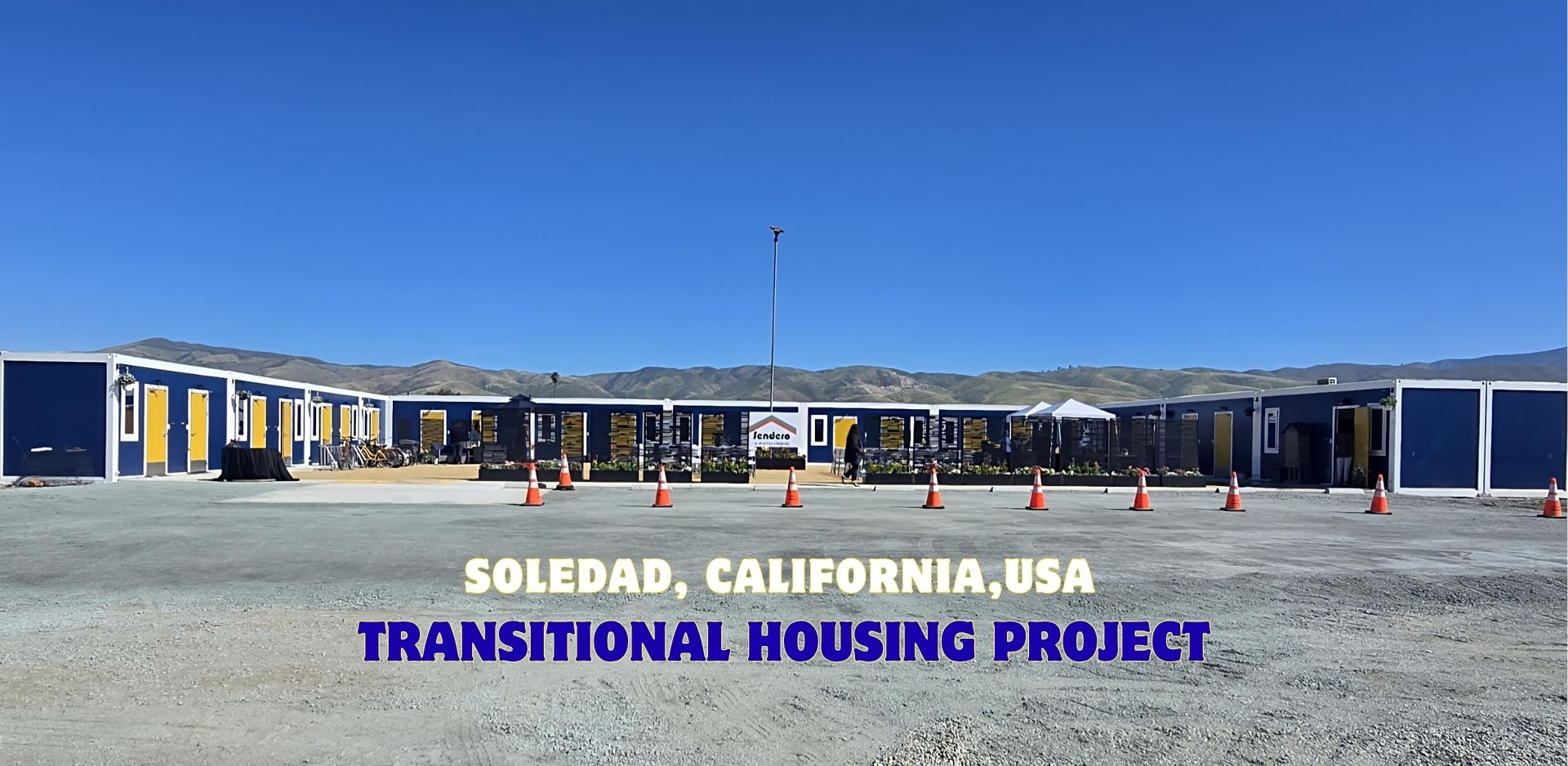
The Real Housing Crisis Begins After Rescue Operation
A great earthquake doesn’t end when the ground stops shaking.
Before residents can move back in, buildings that look like they are okay may need structural inspections. Other homes may be damaged or totally destroyed. Schools and public buildings could be rendered useless, and hospitals could be overwhelmed by injured people and those displaced.
At the same time reconstruction teams start to arrive.
Engineers inspect damaged buildings. Contractors fix roads and bridges. Power and water are restored by utility companies. Relief is coordinated by government agencies. NGOs distribute food, medical supplies, and other vital goods. Assessment and emergency teams may be sent by international organizations.
These are all activities that require physical space.
This creates a second level of demand that is sometimes underestimated in disaster planning: temporary accommodation shelter for both the affected communities and the people rebuilding them.
Colombia has faced this challenge before. The 1999 earthquake in Quindio taught us how complex recovery can be when roads are blocked, buildings damaged and emergency operations continue for a long time after the first event. Historical International Federation reports on that earthquake mention a shift from acute emergency assistance to rehabilitation and reconstruction with housing repair and rebuilding.
Thus, the earthquake of August 10, 2026, should be seen as an event of immediate rescue, but also as the beginning of a longer recovery process.


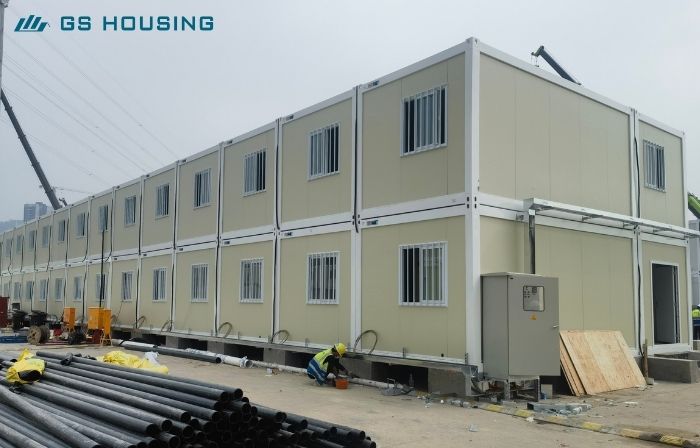
Colombia Needs Scalable Container Housing
The biggest headache for authorities may not be whether temporary shelter is needed. “It will be about how fast the accommodation capacity can be increased while the infrastructure is restored.
Initial response may be limited to a few emergency shelters. But a big recovery program is something else.
In case hundreds or thousands of persons are unable to go back to damaged houses, accommodation has to be organized around transport, sanitation, electricity, water supply, medical access, security and community services.
This is where modular container construction can provide a practical bridge between emergency shelter and permanent reconstruction.
Unlike traditional buildings that are mostly built on-site, modular containers can be fabricated in a controlled factory setting and delivered to the project site. Standardized components also facilitate the replication of the same accommodation design in a number of locations.
This is important for Colombia, as the affected areas can have very different geographical and logistical conditions. Urban sites may be limited in land, and rural and mountainous communities may have difficult road access. So a container design needs to be adaptable to different sites, not be based on one building configuration.

Flat Pack Container House: Practical Solution for Large-Scale Relief Housing Camp
In a large earthquake recovery program, the flat-pack container house can be the basic building module for temporary communities.
Its flat-pack design is especially relevant to logistics, because transport volume can be reduced compared to fully assembled buildings. Once at their destination the units can be assembled according to the layout of the project.
The real opportunity isn’t simply dropping individual container houses around a damaged city. This uses standardized container modules to create an organized temporary settlement.
A housing program could include living units with medical rooms, administrative offices, kitchens, dining rooms, sanitary facilities, storage and community spaces. Additional modules can be added as demand grows, without the need to redesign the entire settlement place.
This scalability makes it relevant to government procurement teams and international aid organizations. It may not be known immediately after an earthquake how many buildings need to be constructed. Damage assessments are a moving target, and the number of people needing temporary housing can go up and down as some families return to their homes and others move into transitional housing.
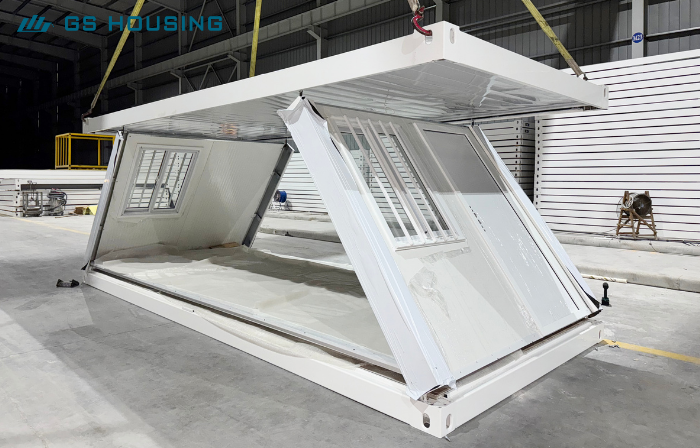
Z Type Fold Container House: When You Need to Deploy Quickly
The Z-type fold container house is a different approach to emergency deployment.
Its folding structure allows the unit to be transported in a compact configuration and to be unfolded at the destination. For emergency response projects where efficiency in transportation and rapid installation are critical, this format may provide another viable alternative.
It may serve purposes other than family housing.
A contractor rebuilding a damaged bridge might need a temporary site office and accommodation for workers close to the project. An NGO may require a field office near an affected community. The medical organization may need space for a short-term treatment or support. A temporary coordination center may be needed for local authorities as municipal buildings are assessed.
This is especially true for reconstruction contractors, where worker housing is directly related to the mobilization of the project. Housing shortages near remote or heavily impacted sites can lengthen rebuilding times and add to costs.
Expandable Container House: More Usable Space in a Compact Format
Another solution is the expandable container house if usable interior space is of higher importance than a standard container layout.
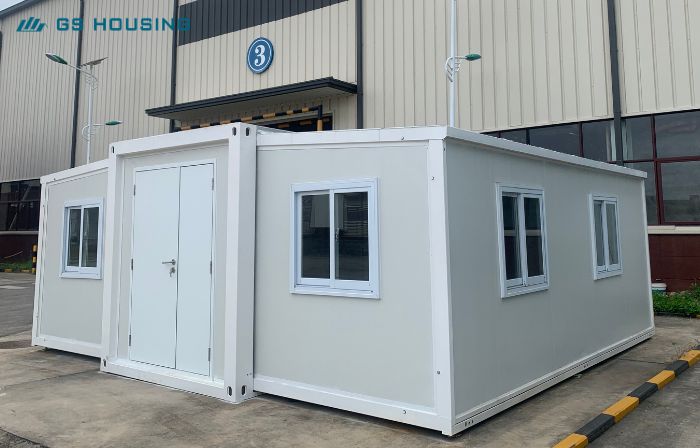
The expandable container unit is compact for transport. At the destination it expands to create a larger usable living or working area.
It can be used for family accommodation, temporary medical rooms, field offices, staff housing, classrooms, or project management facilities.
This flexibility is particularly important for humanitarian organizations, whose operational requirements may change rapidly after a disaster. A unit that was once an office may later be used as accommodation. As permanent health care services are restored, a temporary medical facility may be moved.
Container houses can be moved or reused, which can increase their longevity beyond the crisis.
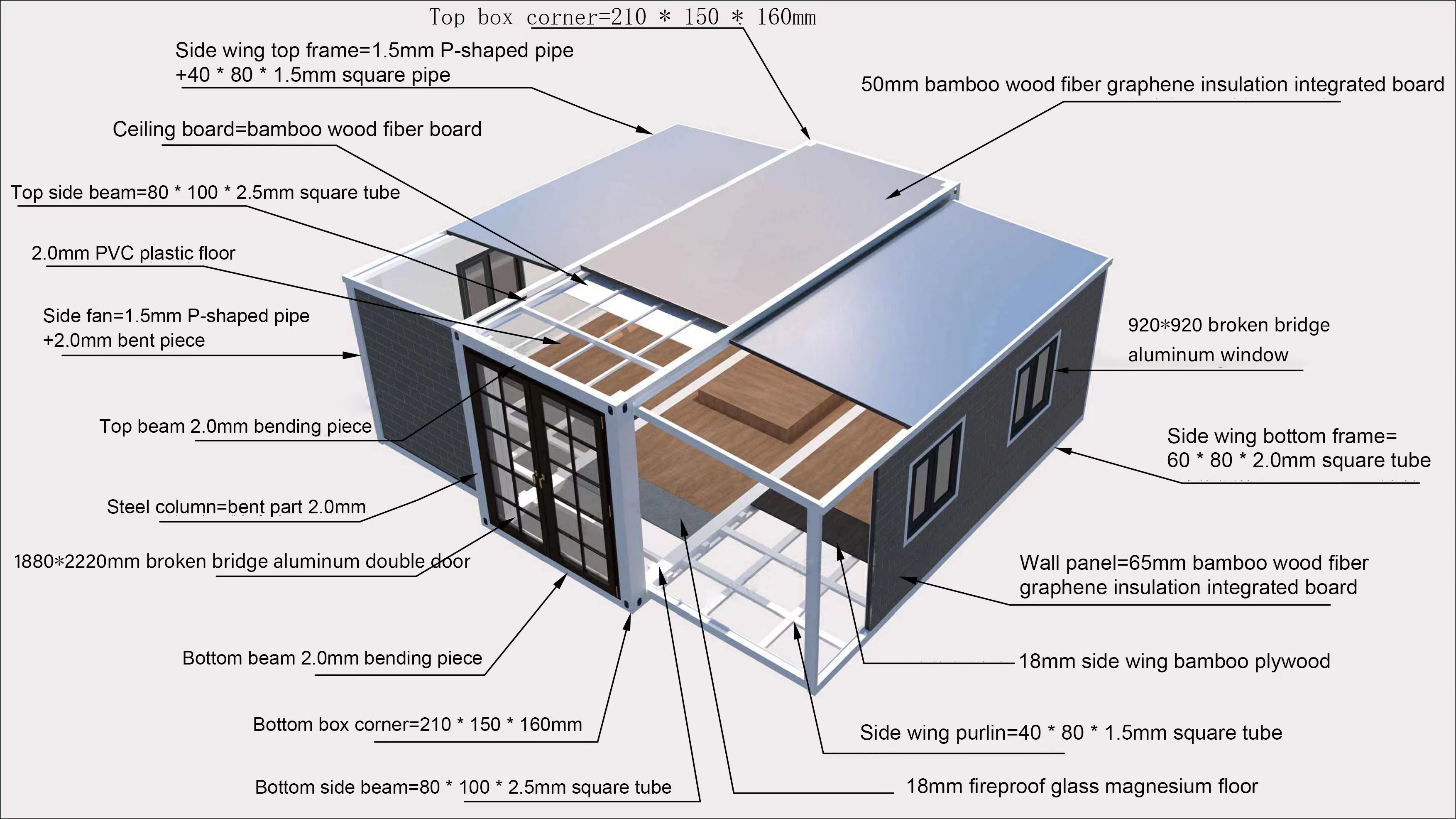
Structural Safety Must Remain the First Consideration in Earthquake-Relief Housing Construction
Modular container construction must never be promoted as an alternative to engineering requirements.
The Earthquake Relief Housing Colombia project location must be evaluated for structural performance, foundations, anchoring, connections, load paths, fire safety, electrical systems, and local building requirements.
Container houses are earthquake-resistant.
Every project must take into account the local seismic conditions and site characteristics before production and installation. The structural calculations and engineering review, where required, shall be completed in accordance with applicable Colombian regulations and project specifications.


Why NGOs and International Aid Organizations Should Look Beyond Emergency Tents
For humanitarian organizations, people’s protection and immediate needs will always come first.
But the character of those needs changes as the situation develops.
Humanitarian housing in Colombia may have to stay open much longer than originally planned. Children need space to learn. The medical teams need adequate facilities. Aid workers require secure accommodation. Displaced families need privacy and more permanent living arrangements.
Here is where modular transitional housing can supplement emergency shelter programs.
A modular housing strategy can provide a standardized building platform that can be deployed during an emergency and potentially reused during recovery, complementing this broader resilience approach.
Contractors Will Be Essential to the Housing Response
In the end, it is reconstruction that will bring a region affected by an earthquake back.
"Repair roads. Public buildings have to be rebuilt. Damaged housing needs to be rebuilt. Water and power systems need to be restored.
This means contractors will be big users of temporary accommodation for construction workers.
An EPC contractor may need a large workforce camp near a reconstruction project. A civil engineering company might need temporary offices and accommodation near damaged infrastructure. While rebuilding residential communities, a housing contractor may need additional site facilities.
GS Housing offers three modular container formats that provide various options for these requirements.
The Flat Pack Container House has a capacity for larger standard construction camps.
The Z-type fold container house is a good choice for situations where compact transportation and rapid deployment are key.
An expandable container house can provide extra interior space for offices, staff accommodation, medical facilities or family housing.
Modular accommodation is therefore relevant not only in humanitarian response but also in the practical machinery of reconstruction.

A Colombia Earthquake Relief Housing Solution for the Recovery Phase
The earthquake of August 10 has created an immediate humanitarian challenge, but the full extent of relief housing needs will be determined as damage assessments continue.
The most effective response for governments, NGOs, international aid agencies, and contractors will be cooperation across the whole recovery chain.
Emergency organizations need accommodation capacity. Local authorities require temporary facilities. Contractors need housing for their workers. International donors want projects that are scalable, can be tracked and scaled-up. Communities need to access the route from the emergency shelter to more stable living conditions.
GS Housing can help with this process with modular building systems designed for different transportation and deployment needs.
The Flat Pack Container House is a scalable option for larger temporary settlement needs. The Z-type fold container house is a compact type for quick deployment. Once deployed, the expandable container house provides more usable space but still has transport efficiency.
These solutions may be configured jointly for temporary housing, medical facilities, offices, classrooms, kitchens, sanitation buildings, storage, and reconstruction camps.
Colombia Earthquake Relief Housing Solution
GS Housing is ready to engage with Colombian government agencies, municipalities, NGOs, humanitarian organizations, international aid programs, EPC contractors, and reconstruction companies in response to the August 10, 2026 earthquake, on relief housing for homeless needs.
The need may be for a small emergency facility, temporary family housing, a medical support center or a large reconstruction worker camp, but the right modular system depends on the project location, required capacity, transportation conditions, site requirements, and deployment schedule.
Flat Pack Container House | Z Type Foldable Container House | Expandable Container House
If your organization is planning to assess the needs for earthquake relief housing in Colombia, please share the project location, estimated number of people, required facilities, and expected deployment timeline with GS Housing. “Our engineering and project teams can determine a suitable modular housing configuration for the recovery program.”
Post time: 11-08-26