


GS Housing provides rapid deployment modular emergency housing for earthquake relief, refugee camps, and post-disaster reconstruction projects worldwide.
When a magnitude 7 or higher earthquake flattens the homes of hundreds of thousands of people in mere seconds, the "golden rescue window" of 72 hours after the disaster is crucial not only for searching for lives under the rubble but also for providing shelter for every survivor. Traditional reconstruction cycles are measured in years, but disaster relief cannot wait that long—this is precisely the core value of prefabricated modular emergency housing.
As a leading manufacturer of earthquake relief housing in China, GS Housing, with over 20 years of engineering experience and mature modular construction technology, has delivered over 3,000 large-scale projects globally, producing 500 prefab emergency housing units per day. During the 2008 Wenchuan earthquake, it completed the emergency production and installation of 120,000 sets of temporary housing after the earthquake, accounting for 10.5% of its total projects.
I. Why is prefabricated modular housing the best emergency housing solution after earthquakes?
Earthquake disasters are characterised by their suddenness, wide-ranging damage, infrastructure paralysis, and frequent aftershocks. The three core challenges facing post-disaster relief are the following:
Extremely short time window: Disaster victim resettlement must begin within days, making traditional construction methods simply infeasible;
Poor transportation conditions: Damaged roads and limited transportation capacity place extremely high demands on material-transport efficiency.
Complex environmental conditions: Frequent aftershocks, extreme weather, and multiple risks related to sanitation and disease prevention overlap.
Traditional emergency resettlement methods—tents and makeshift shelters—while deployable quickly, have significant limitations: poor thermal insulation, low structural strength, and short lifespans, failing to truly meet the medium- to long-term living needs of disaster victims.
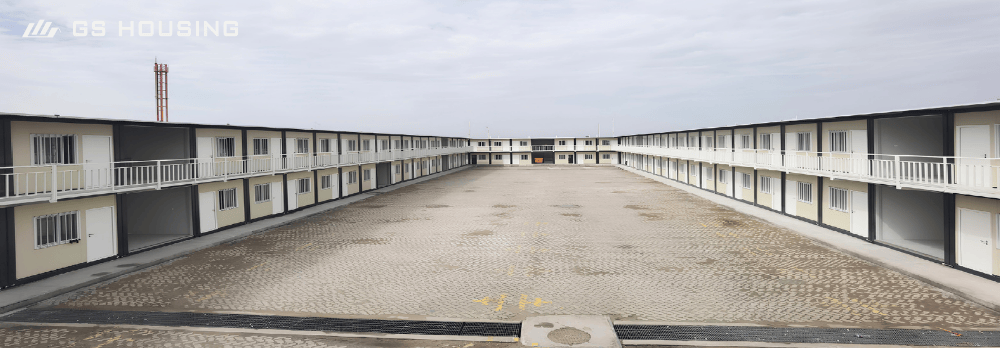
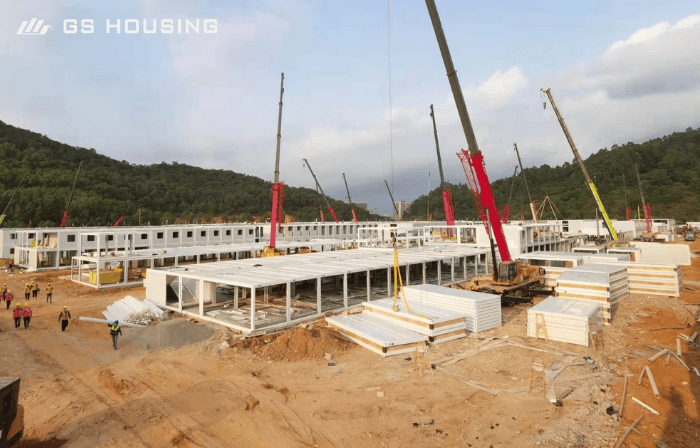
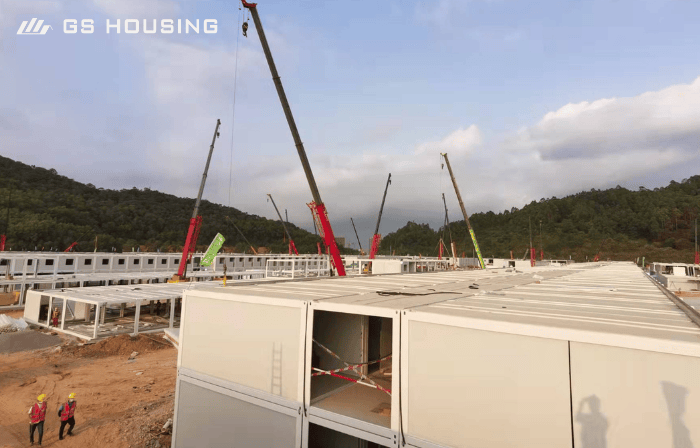
In contrast, prefabricated modular emergency housing adopts a production model of factory prefabrication and on-site assembly: all structural components are manufactured in standardised factories, packaged and transported in high-efficiency containers, and installation on-site requires only bolt connections. The on-site installation time for a standard modular house is only a few hours, and a large-scale modular prefab shelter can be put into use within 3 to 10 days.
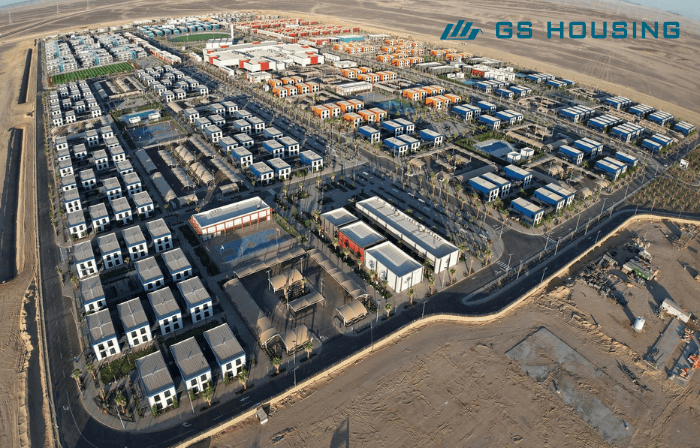
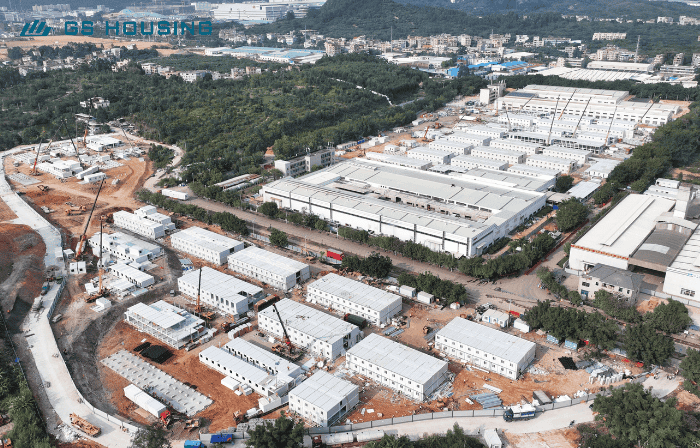
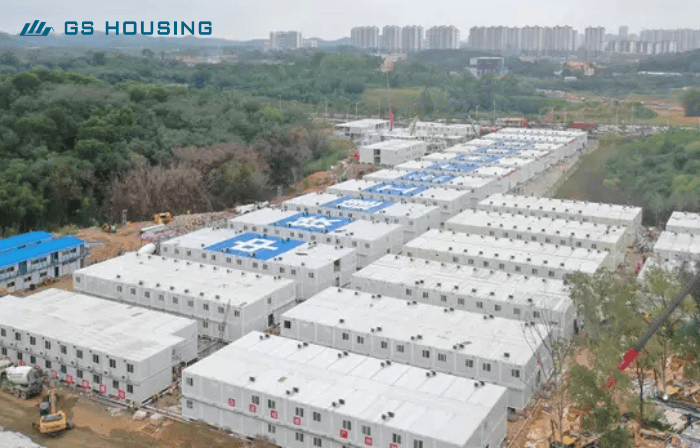
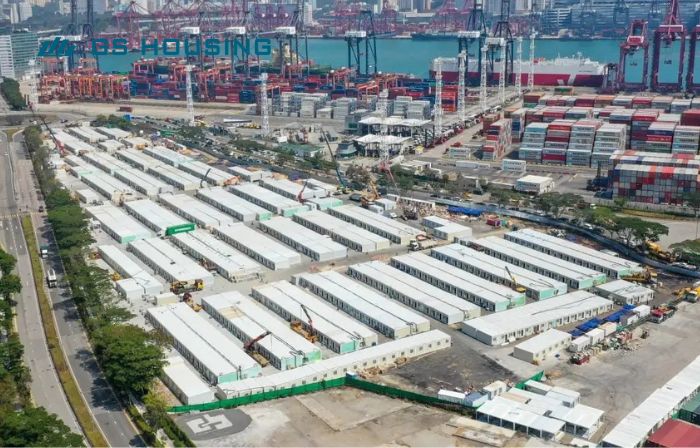
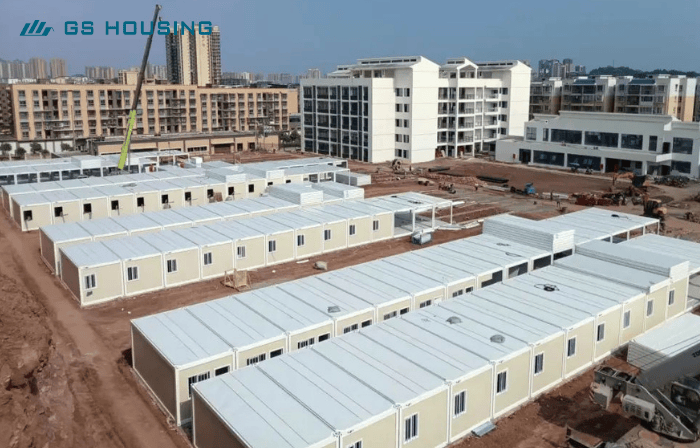
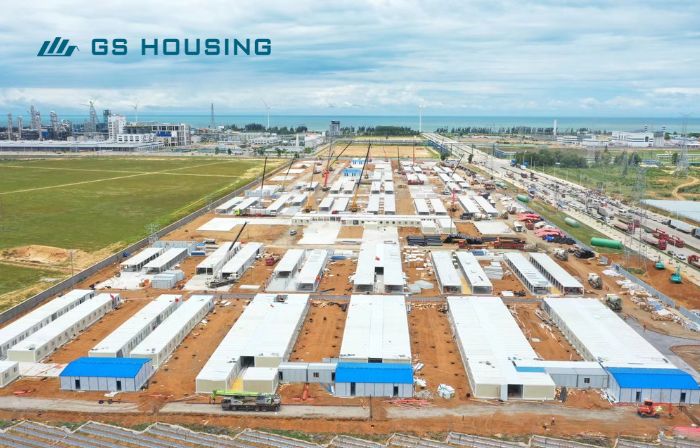
GS Housing has accumulated extensive technical expertise and practical experience in folding container houses for disaster relief. From the 2008 Wenchuan earthquake to the construction of temporary emergency hospitals during the 2020 COVID-19 pandemic and large-scale projects such as the Saudi NEOM million-labour housing camp, GS Housing's modular containers have always adhered to the core principles of "rapid deployment, reliable structure, and controllable cost."
Click to see more emergency housing projects
 |
 |
 |
 |
 |
 |
II. Detailed Explanation of Core Emergency Container Housing Products
1. Flat Pack Container House – The Mainstay for Emergency Shelter Housing
The Flat Pack Container House is GS Housing's core product line and the most widely used choice for emergency and disaster relief applications. Its design concept involves packaging and transporting all structural components of a complete house (including the top frame, bottom frame, columns, and wall panels) in a "flat pack" format.
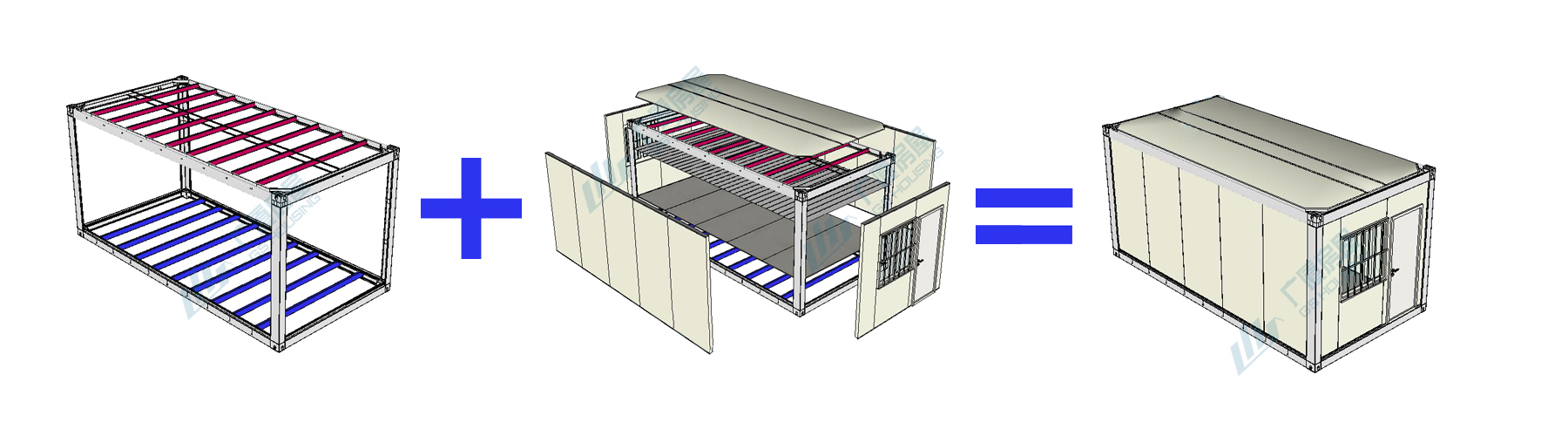
2. Fast Build Container House – The perfect balance between logistics and space
Fast-build container houses, commonly known as "quick-assembly containers" or "quick-assembly mobile homes", are modular, prefabricated building products based on a steel structure and a composite insulated wall panel system. Their core design concept is to standardise all structural components—including the top frame, bottom frame, columns, and wall panels—in a factory, allowing for on-site assembly with bolt connections. The overall structure is detachable, movable, and reusable.
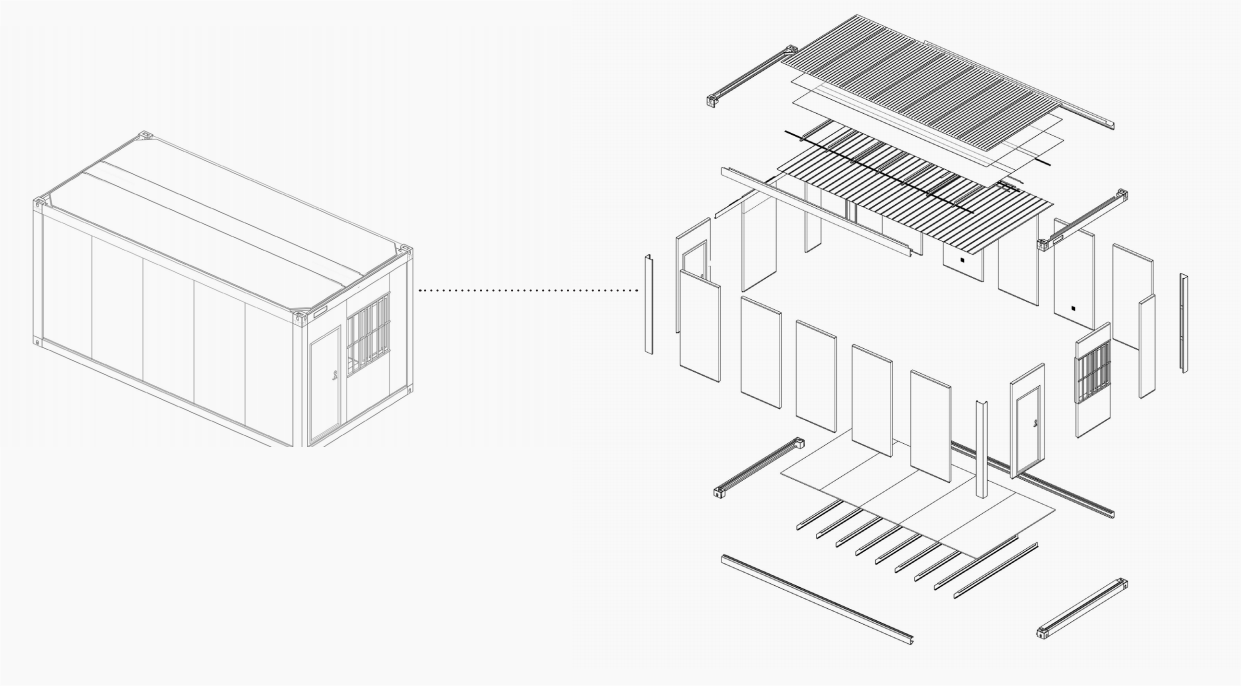
3. Z-Type Folding Container House – Foldable Emergency Shelter for ultimate speed
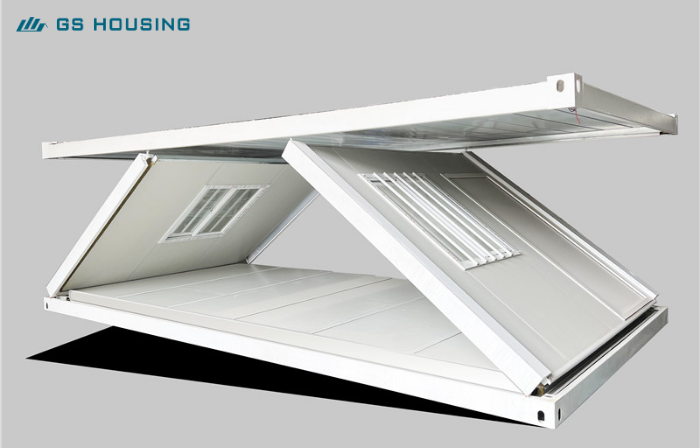
Z-type folding container houses are modular prefabricated houses designed using a Z-shaped folding mechanism. All structural manufacturing and interior decoration are completed in the factory. During transportation, they can be folded and compressed into a flat state. Upon arrival at the site, they can be unfolded and put into use within minutes through a simple push-pull operation.
GS Housing's Z-type foldable container houses combine the advantages of container multimodal transport technology and cold-formed thin-walled steel construction technology. They retain the transportation convenience of container houses while providing superior living comfort compared to traditional container houses, making them an ideal choice for diverse scenarios such as emergency support, temporary construction for engineering projects, and cultural tourism accommodation.
III. Common Advantages of Flat Pack Container Houses & Fast Build Container Houses & Z-type Folding Container Houses
Although the three prefabricated container house types differ in structural form and installation logic, they all stem from GS Housing's over twenty years of experience in modular construction systems, sharing the following seven core advantages:
1. Factory Prefabrication, On-Site Assembly, Controllable Quality
All parts undergo structural processing, wall panel assembly, water and electricity pre-installation, and interior decoration within GS Housing's modern factory. The factory prefabrication rate exceeds 90%, avoiding quality fluctuations caused by weather and differences in personnel skills during on-site construction.
2. Rapid Deployment, Far Exceeding Traditional Buildings
Whether it's the installation of flat-pack and fast-build prefabricated containers in a few hours or the unfolding of Z-type folding containers in minutes, the deployment speed of all three product types is far faster than brick-concrete, steel-structure, or even traditional container houses. In emergency disaster relief scenarios, we can control the cycle from the arrival of supplies to the house being put into use within 3-10 days.
3. Earthquake and Wind Resistance, Reliable and Safe Structure
All three house types utilise high-strength galvanised steel (Q235/SGH345 grade) as the main frame, equipped with rock wool sandwich composite wall panels. The structural design meets the requirements for earthquake fortification intensity of 8 degrees and strong winds of level 12, with a designed service life of 15-20 years, far exceeding those of ordinary tents or simple sheds.
4. Thermal Insulation and Fireproofing, Comfortable Living
All of the wall panels are made of Class A fireproof rock wool sandwich panels that are 50 to 100 mm thick. They have a heat transfer coefficient K-value of ≤0.45 W/(㎡·K), which keeps the inside temperature comfortable even in very hot or very cold weather, from -40°C to +50°C. Before leaving the factory, all products come with water and electricity lines already installed. This means they can be used right away when they are connected on-site, which is what "move-in ready" means.
5. Modular Combination, Flexible Expansion
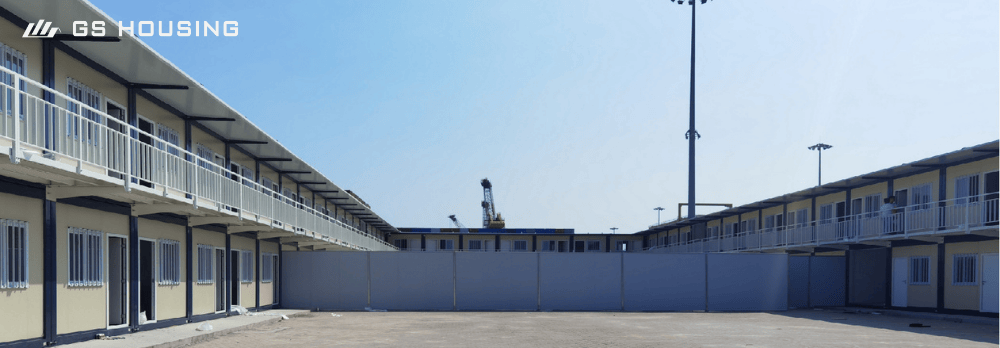
All three prefabricated container types adopt a standardised modular design (typically based on 3m x 6m units and 2.4m x 6m), supporting seamless horizontal splicing and vertical stacking. By combining different numbers of modules, various functional building complexes such as dormitories, offices, canteens, medical stations, and schools can be quickly formed.
6. Reusable, Low Life-Cycle Cost
All detachable container houses have bolted connections or folding hinges, which means they can be taken apart, moved, and recycled over and over again. Packing and quick-assembly containers can be taken apart and put back together more than five times. Z-type folding houses can be folded and unfolded thousands of times without affecting how well they work. You can use the same set of products in many different projects, which saves a lot of money in the long run.
7. International Certifications, Global Compatibility
GS Housing's prefab container houses have all passed multiple international authoritative certifications, including ISO, CE, ASTM, SGS, SASO, GOST-R, UL, and BUREAU VERITAS. This means that they meet the building standards and customs clearance requirements of major countries and regions around the world. They also work with the technical specifications of UN relief procurement, overseas EPC projects, and countries along the Belt and Road Initiative.
IV. Flat Pack Container House vs Fast Build Container House vs Z-Type Folding Container House
Despite sharing the aforementioned common advantages, the container houses differ significantly in structural principles, transportation efficiency, installation speed, infrastructure requirements, and application scenarios.
| Items | Flat Pack Container House | Fast Build Container House) | Z-Type Folding Container House |
| Structural principles | Disassembled into four main structures: top frame, bottom frame, columns, and wall panels, and packaged in flat panels. | Disassemble all main structure and bolted connections, and package the components compactly. | Z-shaped hinge folds, ultra-thin when folded, ready to use when unfolded. |
| Transportation efficiency | ★★★★ | ★★★★★ | ★★★★★ |
| 6 sets / 40 HQ | 6-8 sets / 40 HQ | 8 sets / 40 HQ | |
| Installation time | ★★★★ | ★★★ | ★★★★★ |
| 3-4 hours/4 people/set | 3-6 hours/4 people/set | minutes/set | |
| Structural strength/earthquake resistance | ★★★★★ | ★★★★ | ★★★★ |
| Resistant to earthquakes of magnitude 8, 20-year lifespan. | Resistant to earthquakes of magnitude 8, 20-year lifespan. | Fully galvanized frame + reinforced hinges, withstands 8 degrees of earthquakes. | |
| Multi-layer stacking capability | ★★★★★ | ★★★★ | ★★★ |
| ≤3 layers, most flexible combination | ≤3 layers, special connectors are required | ≤3 floors, but single-story buildings are generally recommended | |
| Number of times to reuse | ★★★★ | ★★★ | ★★★★★ |
| ≥5 | ≥3 | ≥10 |
V. Selection Guide: Which Kind of Detachable Prefab House is Best for Your Project?
Based on different project needs, we offer the following selection suggestions:
|
Project Type |
Recommended Products |
Core reason |
|
United Nations/International Rapid Disaster Response |
Z-shaped collapsible container house |
With the highest transport density and a deployment time of 3 minutes on-site, it is suitable for rapid deployment to multiple villages. |
|
Large-scale post-disaster transitional resettlement (thousands of units, centrally constructed, for use for 2-5 years). |
flat pack container house |
The single cabinet has a large loading capacity, high structural strength, and can be stacked up to 3 layers to form a community. It is reliable for long-term use. |
|
The ground in the disaster area was severely damaged and could not be hardened, for example, due to mudslides and post-earthquake ruins. |
fast build container house |
Minimal foundation requirements, no concrete needed, and quick to lay. |
|
Permanent overseas engineering camps (5 years or more, such as mines and hydroelectric power stations) |
flat pack container house |
It boasts superior durability, withstands harsh weather conditions, and can be disassembled and relocated multiple times to the next phase of the project. |
|
Field exploration/mobile medical team (relocates every 1-3 months) |
Z-shaped collapsible container house |
Folding reduces relocation costs significantly and offers a long lifespan during unfolding/folding cycles. |
|
Temporary construction site (1-2 years, needs to be completed quickly) |
Z-shaped collapsible container house |
The fastest installation, moderate cost, and the construction site surface is usually already hardened. |
|
Mixed needs (advance team + subsequent large-scale resettlement) |
flat pack container house+Z-shaped collapsible container house |
The advance team quickly established a command post using a Z-shaped formation, followed by the construction of the main camp using packing containers. |
VI. GS Housing's Brand Strength: We Are More Than Just a Manufacturer
Brand strength and delivery experience are very important when choosing a supplier of emergency disaster relief housing.
GS Housing Group Co., Ltd. was founded in 2001 with a registered capital of 100 million RMB. It has five main container houses' production bases in China: Guangdong, Jiangsu, Sichuan, Tianjin, and Liaoning. Its total assets are worth about 2 billion RMB. It has the qualifications of a national high-tech company and hundreds of national innovation patents.
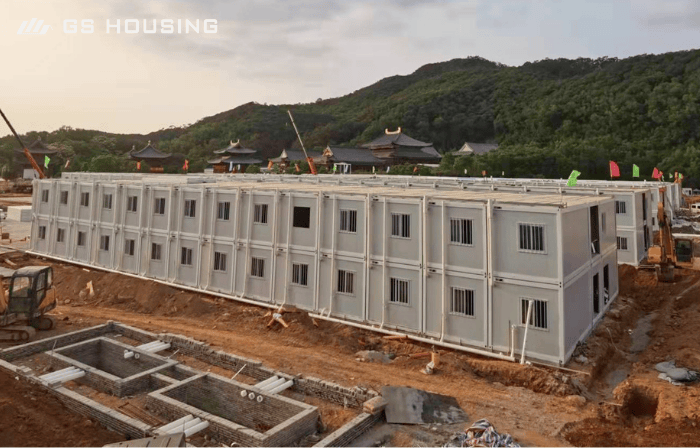
GS Housing has been providing container houses for emergency response since 2008. After the 8.0 magnitude Wenchuan earthquake that year, GS Housing quickly made and put up 120,000 transitional modular housing units, which made up 10.5% of the total project. During the COVID-19 outbreak in 2020, GS Housing helped build several hospitals by providing nearly 50,000 prefabricated modular housing units. This was a big help in the fight against the pandemic.
GS Housing does business in many parts of the world, including Asia, Africa, the Middle East, South America, and Europe. It has been heavily involved in several large projects, including the million-labourer camp for the Saudi NEOM project, the worker camp for the Pakistan MHMD hydroelectric power station, the oil field camp in Kazakhstan, and the gas worker camp in the Russian Baltic. These projects have given it a lot of experience in making sure that housing works well in very bad weather.
VII. Frequently Asked Questions (FAQ) about the Modular Camp for Disaster Relief
Question 1: Is GS Housing's emergency housing earthquake-resistant? What is the highest earthquake magnitude they can withstand?
Answer: Yes. GS Housing's prefabricated and modular container houses all use high-strength galvanised steel frame structures, connected by high-strength bolts to form an integrated frame structure. According to engineering tests, the prefabricated containers can withstand earthquakes up to magnitude 8 (Richter scale) and wind resistance up to level 12, with a design life of over 20 years. The Z-type collapsable container house also uses a fully galvanised frame and a reinforced hinge system, and its earthquake resistance meets international building code standards.
Question 2: How long does it take to install one set of modular emergency housing? How many workers are needed?
Answer: Flat Pack Container House: Four workers can complete the installation of a single modular unit in approximately 3 to 4 hours.
Fast Build Container House: Four workers can complete the installation of a single unit in approximately 3 to 6 hours.
Z-Type Folding Container House: Two to three workers, using small lifting equipment, can unfold and secure it within minutes. A large-scale emergency housing project can typically be operational within 3 to 10 days from the arrival of supplies.
Question 3: Do GS Housing's products have international quality certifications? Are they suitable for international relief supply procurement?
Answer: GS Housing's prefabricated modular units have passed multiple authoritative international certifications, including ISO, CE, ASTM, SGS, SASO, GOST-R, UL, and BUREAU VERITAS, meeting the building standards and quality requirements of major countries and regions worldwide. GS Housing also possesses a mature international logistics system and extensive experience in delivering projects in multiple countries, enabling it to provide governments and international organisations with one-stop modular disaster relief housing solutions from production, quality inspection, and transportation to on-site installation.
Question 4: How long can prefabricated emergency housing be used? Can it be used long-term after a disaster?
Answer: The standard module is designed for a lifespan of over 20 years. All three types of products use corrosion-resistant, fully galvanised steel and non-combustible composite wall panels, meeting the full lifecycle needs from emergency resettlement to transitional reconstruction and even long-term residence under normal use conditions. Furthermore, the modular structure supports disassembly, relocation, and reuse, and the materials themselves are recyclable, conforming to green environmental protection principles.
 |
 |
Question 5: Can you stack GS Housing's prefabricated emergency housing on top of each other? How many layers can be built at the most?
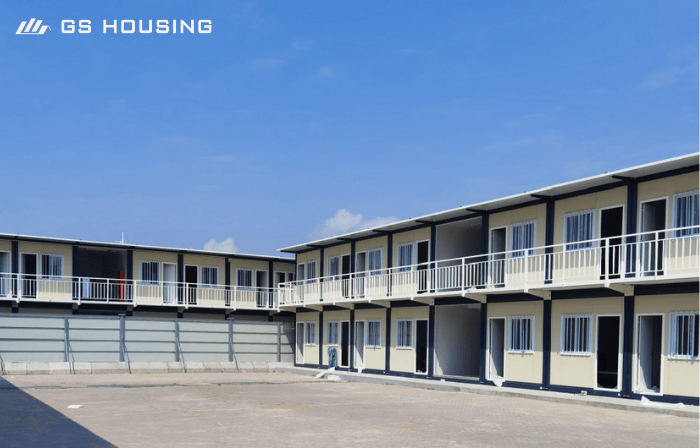
Answer: Yes. GS Housing's prefabricated and quick-build container homes can be stacked up to three layers high and can be expanded horizontally without limits. They can be combined in any way to make temporary hospitals, schools, administrative office buildings, multi-storey dormitories, and other useful buildings. Z-type foldable container houses are mostly meant for single-layer use, which makes them better for quick deployment and moving people around.
Question 6: How well does the portable emergency housing keep heat in and keep fires from spreading?
Answer: All of the wall panels are made of rock wool or glass wool sandwich panels that are 50–100 mm thick. The insulation layer has a density of at least 14 kg/m³ and a fire rating of Class A. With the right insulation and ventilation systems, you can be sure that your home will be comfortable even in extreme temperatures from -40 to +50 degrees Celsius. The wall panels also do a great job of blocking sound and reducing noise, which gives people who have lost everything a more dignified and high-quality place to live.
Question 7: Does GS Housing give advice on how to install?
Answer: GS Housing has a full-service process that includes design, production, quality control, transportation, and help with installation on site. Each product comes with a full installation guide, and we can send technical staff to the site to help.
VIII. Get the modular building solution for disasters
Earthquakes are merciless, but humanity prevails. The suddenness of disasters requires us to provide safe, dignified, and sustainable living spaces for affected people in the shortest possible time. With over 20 years of experience in modular construction technology, the strong production capacity of five production bases, an internationally certified quality system, and global project delivery experience, GS Housing is committed to providing efficient, reliable, and sustainable fast-deployment housing for disaster zones for governments and relief organisations worldwide.
Whether you are planning large-scale post-disaster reconstruction houses and modular resettlement buildings or need to quickly deploy emergency housing for emergency relief missions, GS Housing is a partner you can trust.
 |
 |
Post time: 24-04-26