


Portable Cabins for Prefab Camp Solution Projects






A portable cabin is a fully detachable modular building system designed for rapid installation, easy transport, and large-scale deployment in temporary accommodation camp solutions.
This portable building and cabin system is widely used in construction camps, mining camp housing, oil & gas camp projects, military barracks, and emergency housing worldwide.
By optimising the structural design, we allow you to transport more units in less space, significantly reducing your project's carbon footprint and shipping budget.
Portable Cabin Specifications
| Size | 6055*2435/3025*2896mm,customable |
| Storey | ≤3 |
| Parameter | liftspan:20 yearsfloor live load:2.0KN/㎡roof live load:0.5KN/㎡weather load:0.6KN/㎡sersmic:8 degree |
| Structure | main frame:SGH440 Galvanized steel, t=3.0mm / 3.5mmsub beam:Q345B Galvanized steel, t=2.0mmpaint:powder electrostatic spraying lacquer≥100μm |
| Roof | roof panel:roof panelInsulation:glass wool,density ≥14kg/m³ceiling:0.5mm Zn-Al coated steel |
| Floor | surface:2.0mm PVC boardcement board:19mm cement fiber board, density≥1.3g/cm³moisture-proof:moisture-proof plastic filmbase external plate:0.3mm Zn-Al coated board |
| Wall | 50-100 mm rock wool board;double layer board:0.5mm Zn-Al coated steel |
Why Choose Portable Building Cabins?
Fast Installation
4 workers can install 1 unit within 3–4 hours. No heavy equipment required, portable cabins are an ideal solution for urgent projects and remote sites
Efficient Transportation
Fully knock-down structure: 6–8 porta-cabin units can be packed into one standard container; that saves up to 70% shipping costs compared to fast-build prefab houses.
Flexible Modular Design
Stackable up to 3 floors, porta-cabins can be combined into portable dormitories, portable cabin offices, clinics, and canteens
Durable for Harsh Environments
Earthquake resistance: class 8; Wind resistance: up to 10–12 grades

Portable Cabin Buildings Applications
1. Construction Camp Housing
This is the core application area for prefabricated portable cabins. In remote areas or newly developed urban areas, construction teams need to quickly build high-density living areas.
Porta Dormitories for Workers: These can be equipped with bunk beds, storage lockers, and air conditioning. Through modular combination, two- or three-storey staff dormitories accommodating hundreds or even thousands of people can be built.
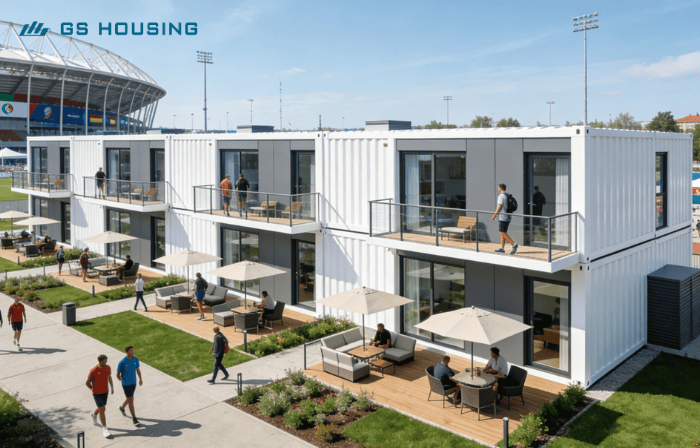
Temporary Site Office Cabin: Several prefabricated containers can be combined to make big meeting rooms, manager offices, and open-plan work areas. Putting in large windows from the floor to the ceiling on the sides can improve the workspace.
Public Toilets and Showers: The man's camp has dedicated knockdown containers with waterproof treatment and built-in sewage systems that meet its basic hygiene needs.


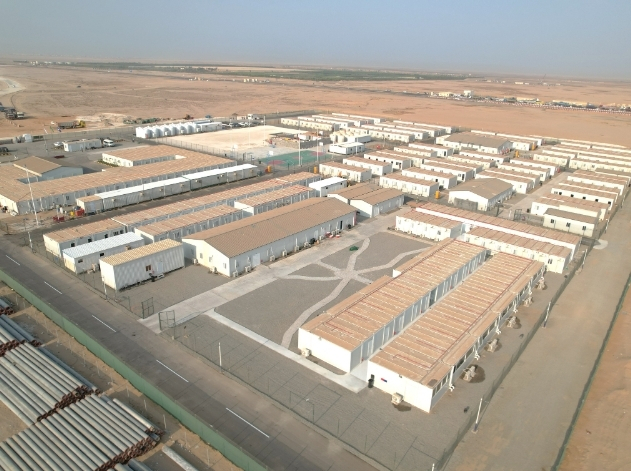
2. The mining and energy industries
These projects are usually in deserts, the Gobi, or very cold places, where the weather is bad and the costs of moving things are very high.
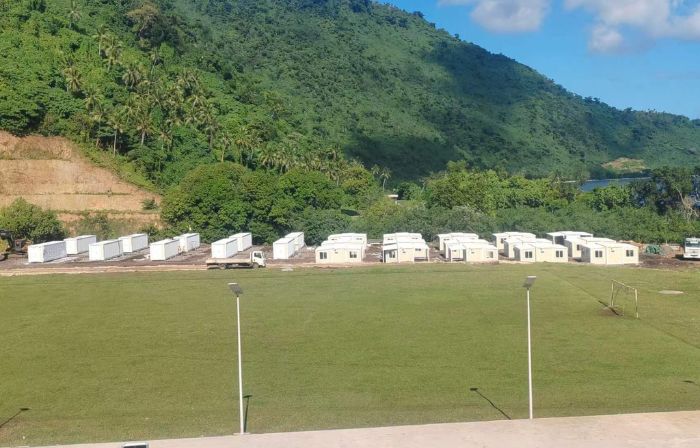
Remote Living Base: Using a knock-down model makes it much cheaper to move things by land and sea, so they can be delivered easily to mining areas with very bad roads.
Windproof and Extreme Cold-Proof Dormitories: Built with double-glazed windows and high-density rock wool sandwich panels, these dorms keep a constant temperature inside even when it's very hot or very cold outside.
Equipment Control Room: This is a safe place for small substations, generator rooms, or communication base stations. It is very resistant to fire and corrosion.
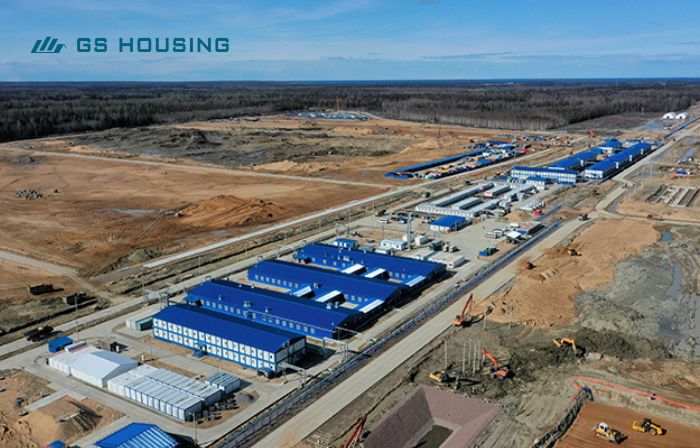
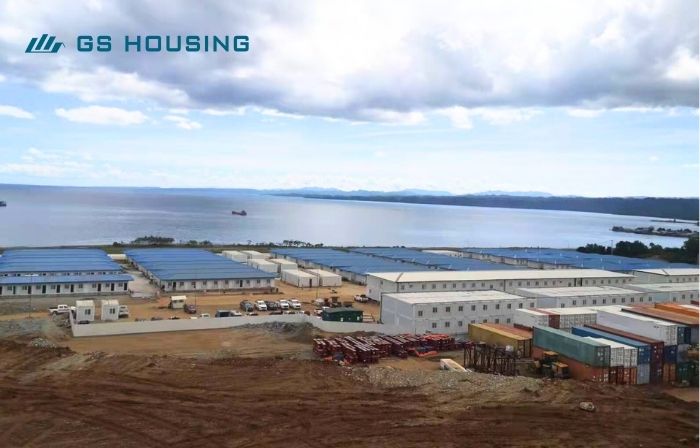
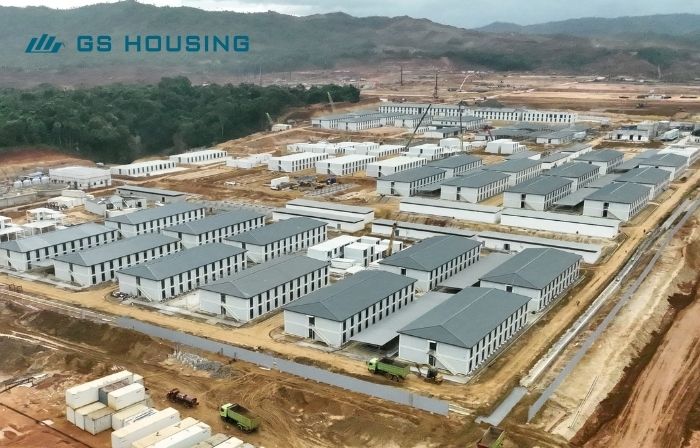
3. Engineering Mobile Camps for Infrastructure & Road Projects
Highway, railway, and bridge construction are characterised by "linear movement", requiring camps to be relocated as the project progresses.
Mobile Command Centre: After a section of the project is completed, it can be quickly disassembled into components, transported to the next site, and reassembled.
Temporary Checkpoints/Toll Stations: Providing temporary office space and accommodation for security personnel during the initial stages of road construction.
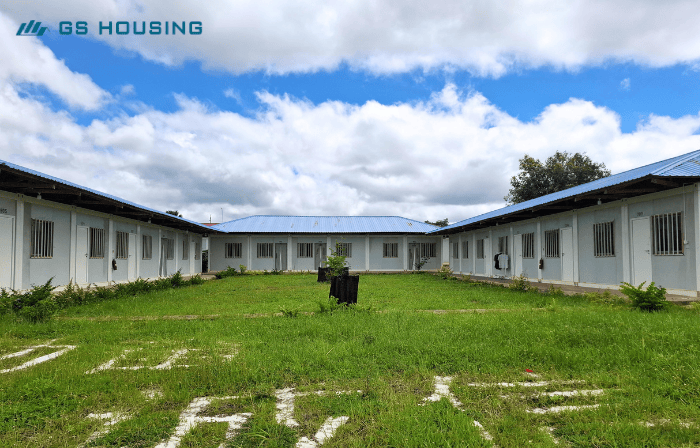


4. Emergency Rescue and Public Health - Emergency & Medical Housing.
In natural disasters or public health emergencies, speed is life.
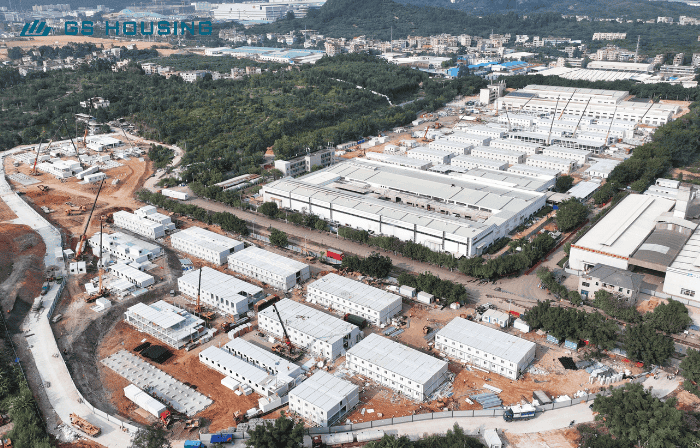
Field Mobile Hospitals: Quickly assembled into isolation wards, pharmacies, or supply depots.
Post-Disaster Modular Housing: Providing displaced residents with more robust and private semi-permanent living spaces than tents.
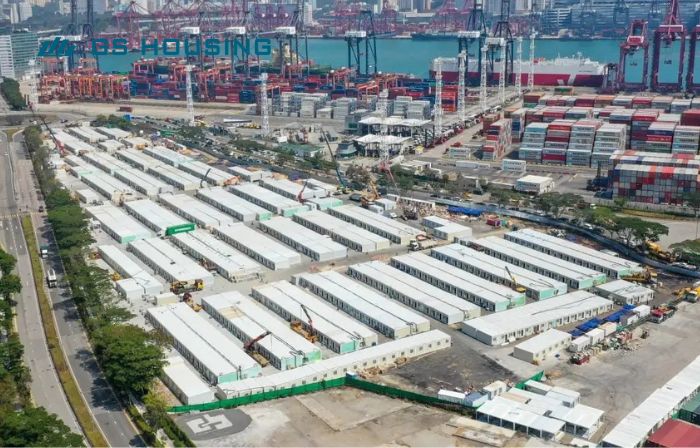
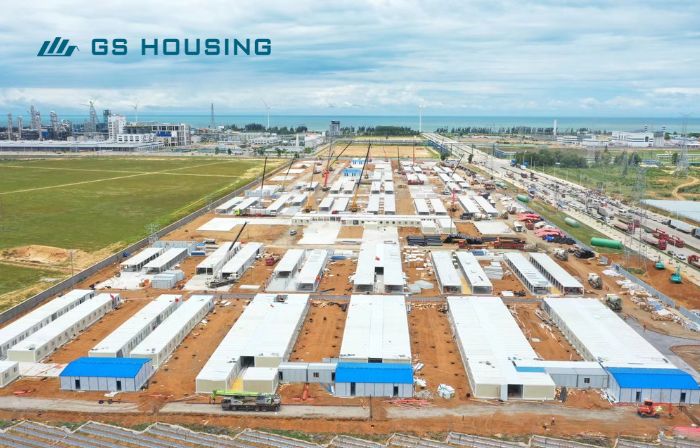
5. Businesses and public places
Modular cabin portable buildings are becoming more popular as designs get better.
Creative Commercial Blocks: These blocks can be painted in any colour you want and are ideal for cafes, pop-up shops, or guesthouses in tourist areas.
Security Posts and Newsstands: They don't take up much space, are easy to put together, and can be used in cities or neighbourhoods.
Temporary School Classrooms: These are used as temporary classrooms or labs during school expansions to ease space problems.

GS Housing- China Leading ISO Portable Cabin Supplier
GS Housing is one of the best portable cabin manufacturers in China. We don't just sell modular units; we also sell complete lifecycle container porta camp solutions that include everything from planning to building to shipping to putting them up. Here are five good reasons to choose us:
1. A lot of production
Five Production Bases: Our five big portacabin factories in China cover more than 400,000 square metres.
Maximum Production Capacity: The factory can produce over 200,000 portable cabin units per year. We can ensure that even big projects with tens of thousands of people finish on time and meet high standards.
2. Making things with high-tech tools
Graphene Electrostatic Coating Line: Our automated coating line is the best in the business. Steel frames that are coated with our graphene powder are three times less likely to rust and be damaged by the weather than frames that are painted with regular spray paint. This makes the paint film stronger and gives the frames a life of more than 20 years, even in bad weather like salt spray and high heat.
Full CNC Production: We use CNC flame cutting, plasma cutting, and automated welding to ensure that the error of each part is kept within millimetres.
3. Superior R&D & Customization Capabilities
Professional Research Institution: We have set up a special modular portable cabin research institute with more than 30 senior engineers who can do specific structural calculations based on the seismic, wind, and snow load requirements of different countries.
Full-Scenario Coverage: We can provide one-stop custom portable camp design services for everything from standard worker dormitories and executive suites to large-scale canteens and makeshift hospitals, including floor plans and 3D renderings.
4. Strict international quality certifications
We have gotten several international certifications, such as ISO9001, CE (SGS), ASTM, CSA, SASO (Saudi Arabia), and GOST (Russia).
5. The Global Project Footprint
We have worked in more than 70 countries and regions around the world and have more than 3,000 successful prefab porta-camp cases.
Landmark Projects: We've worked on some of the most famous labour camp porta-cabin projects in the world, such as the Saudi NEOM Worker Town Project, the Russian Baltic Gas Project, and the Indonesian Mining Camp. We know a lot about how to set things up on site and how to handle very complicated logistics across borders.
Questions and Answers of Porta Cabins
1. What is a porta cabin?
A portable cabin building is a modular, pre-made structure that can be taken apart completely for shipping and put back together quickly on site.
2. How long does it take to install it?
With a 4-5 group, it usually takes 3 to 4 hours per unit.
3. How many portable cabin units can a shipping container hold?
A 40HQ container can usually hold 6 to 8 units, but the number of units depends on how they are arranged.
4. Are portable cabin modules acceptable in very hot or very cold weather?
Yes, it can work in places that are hot, cold, or humid, but only if you add insulation like rock wool.
5. How long does a portable container cabin stay?
If you take care of them well, they usually last 15 to 20 years.
6. Can changes be made?
Yes, including plan, the system for electricity, plumbing, finishing the inside
7. Would it be possible to use the prefab portable cabin again?
Yes, you can take it apart and put it back together again.
8. What industries do detachable portable cabins serve the most?
All construction sites you can imagine.
Do you need a portable labour camp in the Middle East?
Contact the GS Housing Team to get a quote and a layout plan.
Products categories
-
Prefab House Labor Dormitory Office Prefabricat...
-
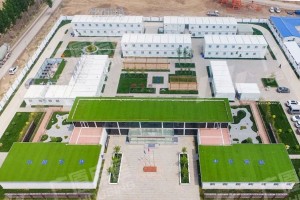
Quickly Assemble Container Home Customized Modu...
-
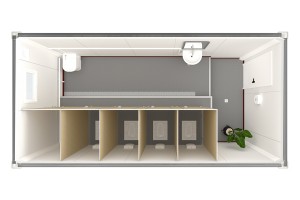
Female Toilet Ready Container House
-

Prefab Military Building, Modular House Solutio...
-
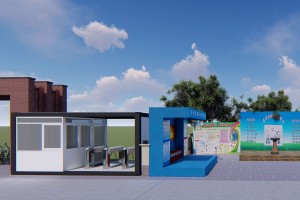
Awesome Shipping Entrance Guard Container House
-
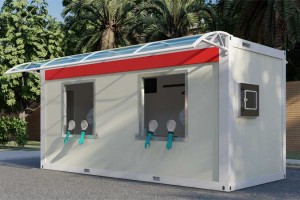
Covid-19 Emergency Modular Hospital & Insp...