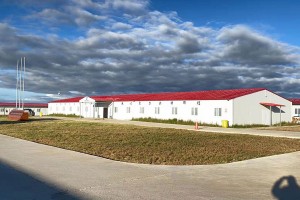
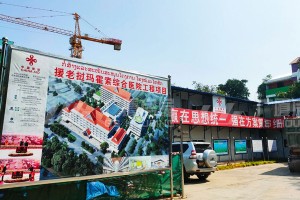
Quick-build Container House: A Modular Way to Build Construction Camps







What’s a fast-assembly container house?
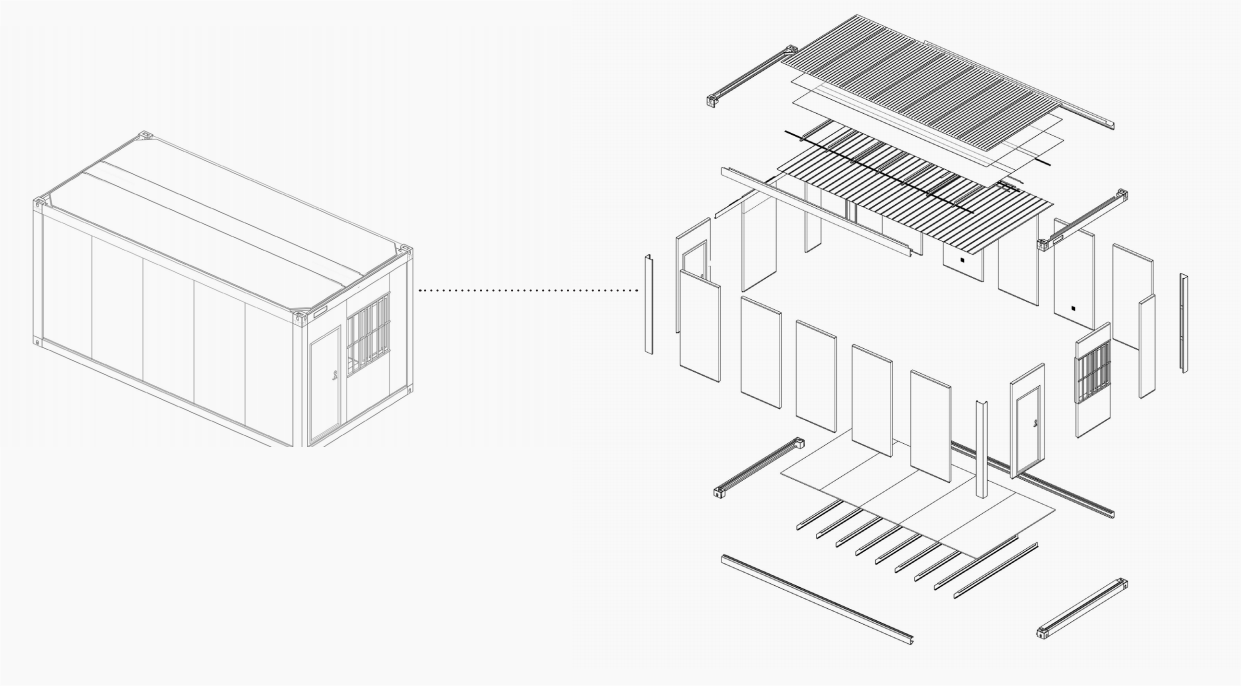
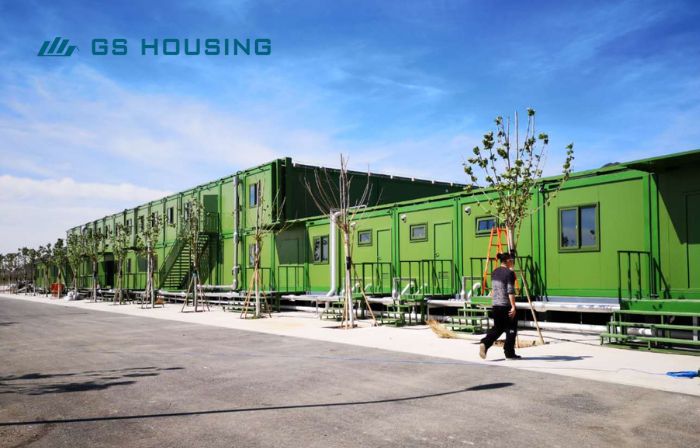
Quick-build container houses are detachable mobile houses that can be put together quickly. They have a strong steel frame and are held together with wall panels and connectors that are bolted together. You can quickly assemble and disassemble them on site, and they are easy to move by hand. They are often used in construction site dorms, temporary camps, and site offices.
Fast assembly container houses are better for the environment and cheaper than regular homes.
Quick-build Container Houses Specifications
| Size | 6055*2435/3025*2896 mm; a customizable size is available |
| Storey | ≤3 |
| Parameter | lifespan: 20 years, floor live load: 2.0 KN/ ㎡ |
| roof live load: 0.5 KN/ ㎡ | |
| weather load: 0.6KN/ ㎡ | |
| seismic: 8 degrees | |
| Structure | main frame: SGH440 Galvanized steel, t=3.0mm / 3.5mmsub-beam:Q345B Galvanized steel, t=2.0mm |
| paint: powder electrostatic spraying lacquer ≥ 100 μm | |
| Roof | Insulation:glass wool,density ≥14kg/m³ceiling:0.5mm Zn-Al coated steel |
| Floor | surface: 2.0 mm PVC boardcement board: 19 mm cement fiber board, density ≥ 1.3 g/cm³ |
| moisture-proof: moisture-proof plastic film | |
| base external plate: 0.3 mm Zn-Al coated board | |
| Wall | 50-100 mm rock wool board;double-layer board: 0.5 mm Zn-Al coated steel |
Features of Quick-Build Container Houses
Assembly methods: Quick-build containers don't use welding to put parts together; instead, they use screws and strong bolts. This means that the parts are the same as those of a flat-pack container house.
Transportation and Installation: Its biggest advantage is easy loading and unloading. Wall panels and frames can be disassembled for transport, making them suitable for construction sites with limited space or where large hoisting equipment is difficult to use.
Flexibility: The modular design allows for free assembly, like building blocks, and flexibly adjusts the space size.
Difference Between Flat Pack Container and Quick Assembly Container House
Flat pack container houses are shipped as "welded semi-finished frames" and are quickly assembled on-site.
Quick-assembly container houses are shipped as "fully disassembled" parts and are assembled from scratch on-site.
|
Items |
Quick-assembly container houses |
Flat pack container houses |
|
Structure |
The top and bottom frame components are separated and assembled on site using bolts/connectors. |
The top and bottom frames have been welded, indicating a high degree of factory prefabrication. |
|
Shipping |
All components can be laid flat and stacked to maximize space utilization. |
Because the frame is already in place, it occupies a large space and has a high container loading rate, but there are structural limitations. |
|
Installation |
Highly flexible, but installation time is slightly longer. |
Fewer installation steps and lower construction difficulty |
|
Turnover |
About 3 times |
More than 6 times |
|
Cost |
Lower |
A little higher |
|
Suitable |
More sensitive to logistics costs |
tight deadlines, areas with limited installation conditions |
Application Scenarios of Fast Build Container Houses
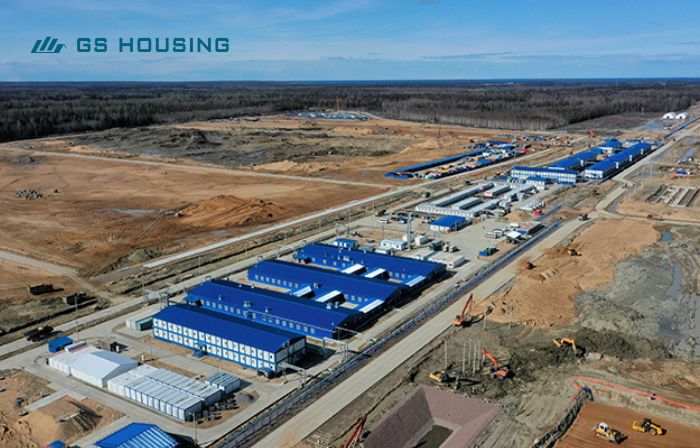
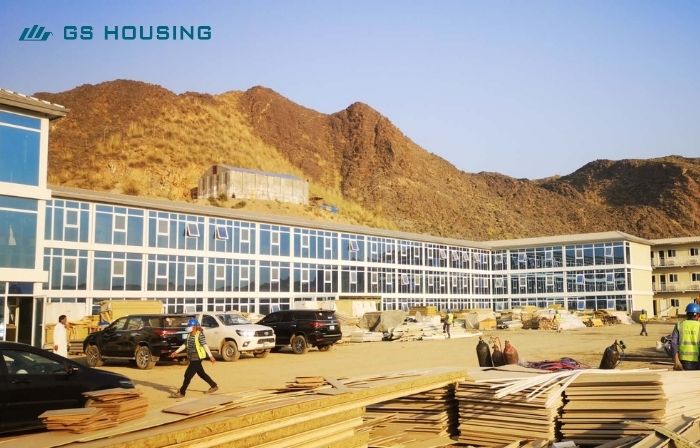
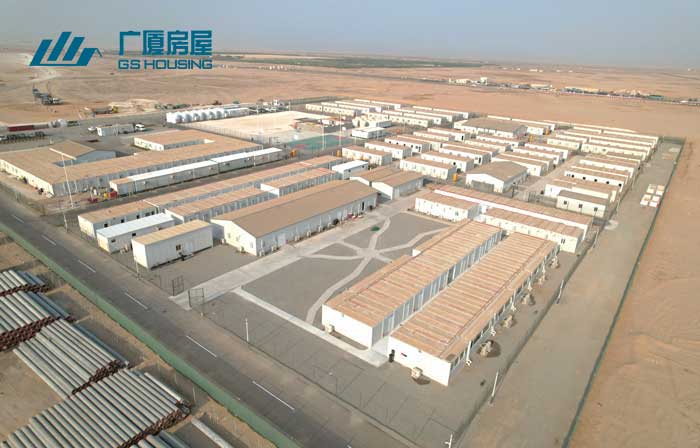
Large-Scale Infrastructure and Industrial Man Camps
1. Oil and Gas Field Camps
Oil and gas projects are typically located in remote areas, and container camps need to be relocated as exploration progresses. The modular, reusable nature of prefabricated modular units is invaluable in this scenario.
2. New Energy Supporting Projects
Energy storage units, photovoltaic power stations, wind farms, and other new energy projects often require numerous temporary facilities during construction because they are located in remote areas.
Prefabricated modular units are well-suited for new energy-supporting scenarios, serving as energy storage units, power station construction camps, etc.
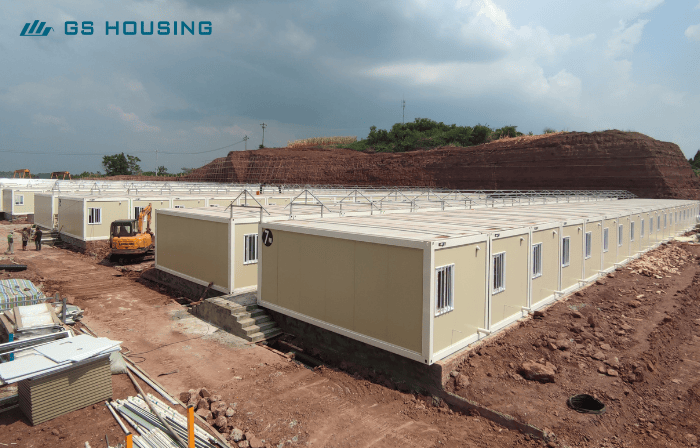
3. Temporary Camp Bases for Railway/Highway/Water Conservancy Projects
Linear engineering projects require multiple worker camps along the construction route, each potentially used for only a few months to a year. Therefore detachable and reusable container houses are more important.
Emergency and Disaster Relief Housing
1. Rapid Resettlement after Post-Disaster
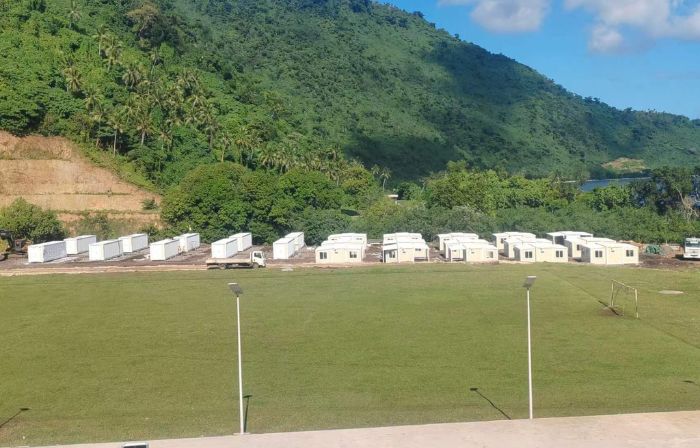
Earthquakes, floods, and other disasters cause significant displacement of people each year. Traditional tents have limitations in waterproofing, insulation, and safety, rapid deployment container houses overcome the shortcomings of tents.
2. Emergency Medical Housing
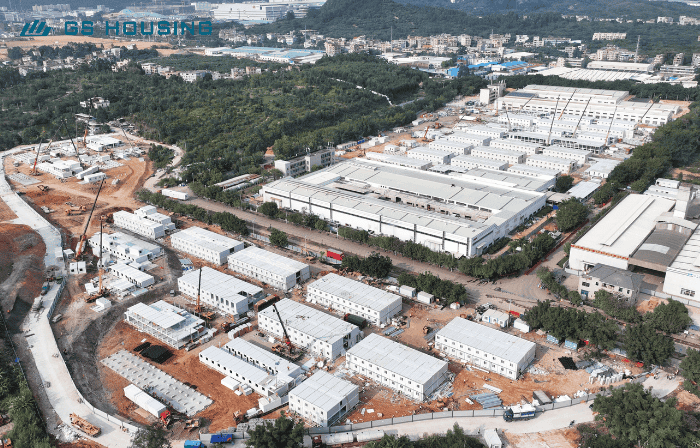
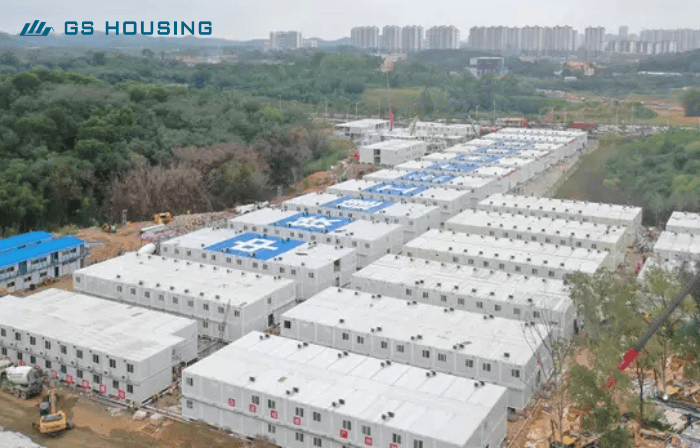
During the COVID-19 pandemic, modular units were used domestically and internationally as backup medical housing, including makeshift hospitals and medical stations in Guangzhou, Paraguay, and Tanzania.
Commercial and Special Uses
1. Temporary commercial house and pop-up stores
Modular container houses are perfect for pop-up stores, cafes, and other temporary commercial housing because they can be put together in different ways and look different.
2. Sales Offices and Showrooms
Detachable prefabricated containers can be quickly set up for sales offices and product showrooms and can be moved and reused after the project is completed.
3. Schooling and Training
In schools, easy-to-install container houses are mostly used to quickly add more space for teaching, meet emergency needs, and make it easier to move and transition school buildings. They have four main benefits: built quickly, cheaply; moved, safe, and good for the environment.
4. Temporary Military Barracks
Quick-assembly containerised houses are used for temporary military barracks, meeting the needs for rapid deployment and high mobility.

About GS Housing
GS Housing is a global fast-build container house and container camp solutions supplier, offering end-to-end services from planning and design to construction and delivery:
Mature Project Experience: Successfully completed worker camp projects in the Middle East, Indonesian mining camps, Russian cold-region labour housing projects, and emergency medical facilities, adapting to complex environments and scenario requirements.
Efficient Production System: Possesses standardised production lines and a quality control system, enabling rapid response and stable delivery for large-scale orders.
Integrated Services: Provides one-stop integrated camping solutions covering planning, manufacturing, logistics, and on-site installation, serving EPC contractors, government agencies, and corporate clients in the energy and infrastructure sectors.
FAQ of Fast Build Container Houses
1. What is a Fast Assembly Container House?
A fast assembly container house is a modular building with a completely knock-down structure. All components are shipped in loose parts and quickly assembled into a complete modular building unit on-site using bolts.
Features:
High container loading rate
Low transportation costs
Flexible structure
2. What is the difference between a Fast Assembly Container House and a Flat Pack Container?
Flat Pack = Faster Installation: The frame is welded, and it is shipped as a semi-finished product. Fast assembly container house = lower shipping costs: all parts are shipped loose and assembled on-site.
3. How long does it take to install a fast assembly container house?
Approximately 3–6 hours (skilled worker). it saves approximately 60–70% of construction time compared to traditional construction
4. Is a professional installation team required?
Professional installation personnel or technical guidance is recommended, but we provide the following:
• Standardized connection structure
• Installation drawings/video instructions provided
Most construction teams can complete the installation after training.
5. How many years can prefabricated container houses be used?
Normal service life: 10–20 years+; can be reusable and reassembled
Suitable for long-term projects and multiple uses
6. Can it withstand extreme climates?
Yes, it can be designed for desert, tropical, and cold environments.
7. Is the quick-assembly container fireproof?
It can achieve Class A fireproofing. Contact us to get certifications.
8. Is it possible to change the size and shape of the fast-build container house?
You can change everything about it, like the size of the rooms, where the doors and windows go, and how it works inside (as a dorm, office, bathroom, etc.).
Supports multi-module combinations to form large buildings
9. Are prefabricated modular units environmentally friendly?
Yes, with the following advantages:
Reusable
Reduced construction waste
Factory prefabrication reduces pollution
In line with green building trends
10. Why choose prefabricated modular units instead of traditional construction?
More quickly, cheaply, and flexibly


Start Your Container Camp Project Today
Get a customized fast assembly container house solution for your project.
Request Quotation Now