


The flash floods that hit northern Nepal on August 26, 2026, revealed a harsh truth of disaster response in mountainous areas: getting to affected communities can be nearly as difficult as providing shelter upon the arrival of rescue teams.
The disaster linked to a major ice and rock collapse in the Himalayan region sent large volumes of water, mud, and debris through river systems. Roads, bridges, homes, power facilities, and other infrastructure were badly hit. In some areas, rescue teams had to work through destroyed roads and the difficult mountain terrain. The continuing risk of secondary flooding complicated operations. The Red Cross estimated that more than 90,000 people were affected.
For communities displaced by such an event, the need does not stop when people are rescued.
They need a safe place to sleep. Medical personnel require operational treatment areas. Relief teams need storage and coordination facilities. Families need sanitation, food preparation, and basic community services.
This is where China's flat-pack modular buildings can form part of a broader flood-recovery strategy.
It is more useful to see a modular unit not just as a temporary room but as a standardized building component that can be moved, put together, and rearranged to suit different phases of disaster recovery.
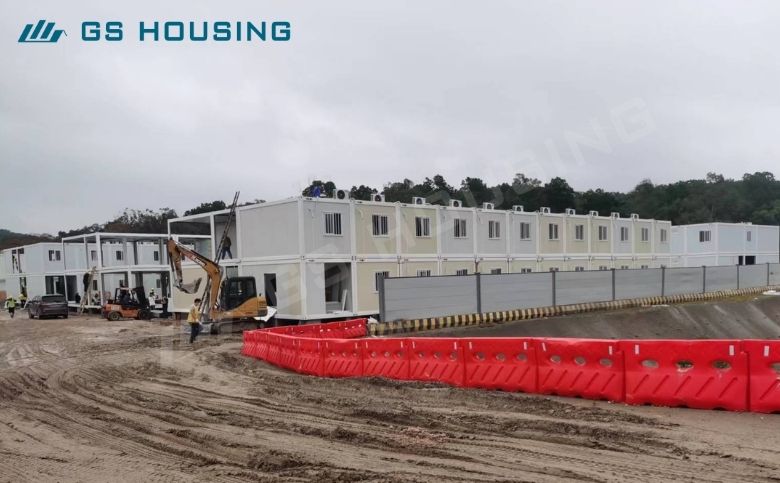
Why Nepal's Mountainous Terrain Changes the Shelter Equation
Emergency construction in a mountainous country is different from construction on an urban site.
In a normal building project, materials can often be delivered by road on a predictable schedule. After a major flood or landslide, that assumption may no longer be valid.
A damaged bridge can interrupt an entire supply route. A landslide can isolate a village. Heavy construction materials may be difficult to move through narrow mountain roads. In some locations, helicopters or smaller vehicles may become part of the logistics chain.
The Nepal disaster demonstrated exactly this problem. Rescue teams encountered destroyed roads, steep terrain, and large quantities of debris while attempting to reach severely affected locations.
This makes transport efficiency an important part of emergency shelter design.
A building that is easy to manufacture but difficult to transport may not be the most practical solution for a remote disaster area.
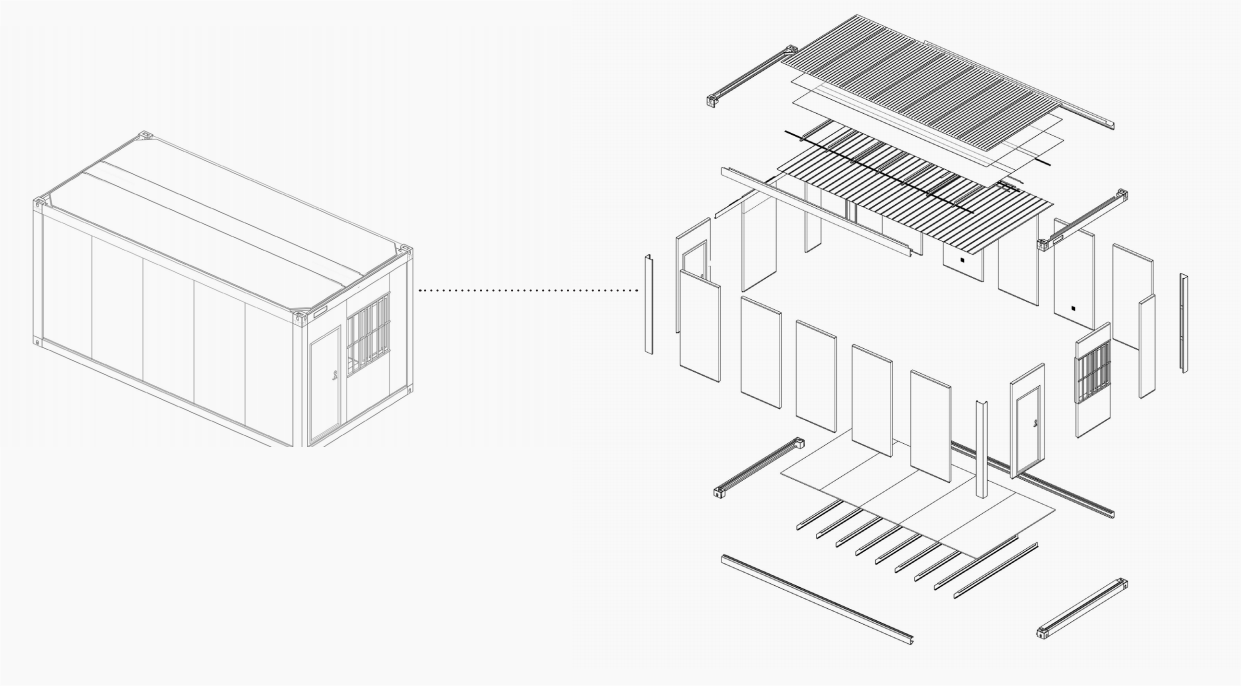
Flatpack modular buildings address this issue by separating manufacturing from final assembly. Structural frames, wall panels, roof components, flooring, and other elements can be prepared in a controlled factory environment and shipped in a compact configuration.
The objective is not simply to save transportation space. It is to reduce the amount of construction work that has to take place in an unstable or resource-limited environment.
From Individual Shelters to a Temporary Recovery Site Camp
One of the limitations of traditional disaster-relief thinking is that shelter is sometimes treated as an isolated product.
In reality, displaced communities need an environment rather than a single room.
A temporary settlement may require accommodation for families, but it may also need:
·A first-aid or medical treatment area
·Relief coordination offices
·Food preparation and dining facilities
·Storage for humanitarian supplies
·Sanitation and washing facilities
·Temporary classrooms
·Security or reception points
·Spaces for community activities
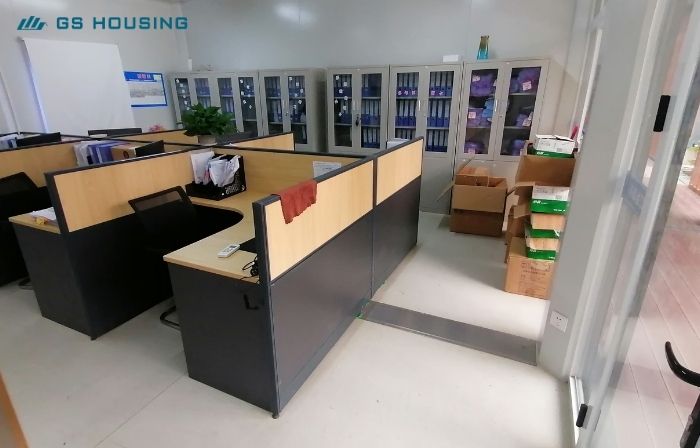
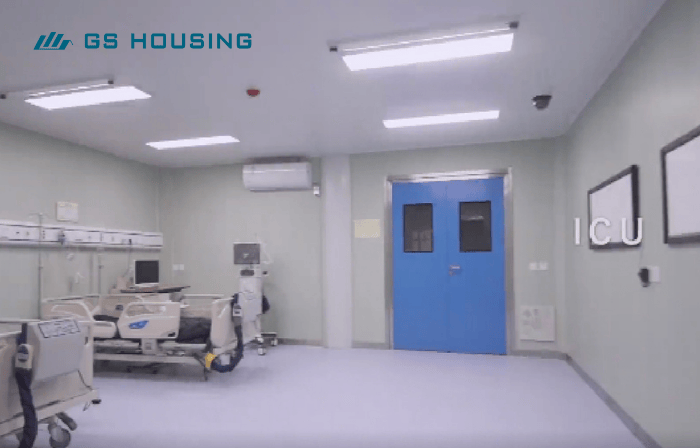


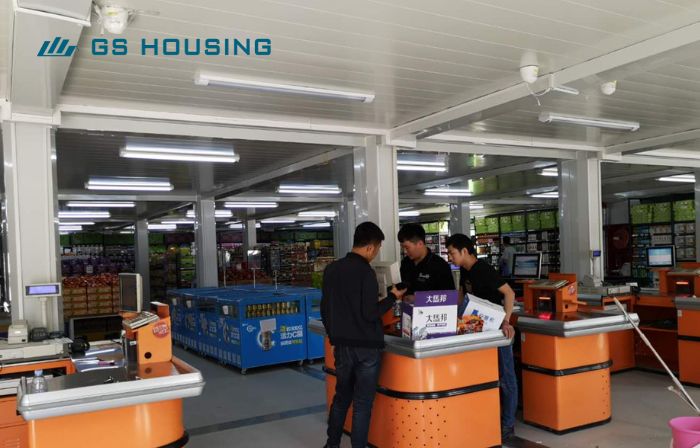
A flatpack modular system makes it possible to plan these functions together.
Several units can form a small accommodation cluster. Other units can be assigned to medical services, administration, or storage. Additional modules can be introduced when the number of displaced residents increases.
This creates a scalable temporary settlement rather than a simple shelter.
For government agencies, NGOs, and humanitarian contractors, that distinction can make basecamp planning easier because the same flat-pack modular building system can serve several operational requirements.
Importance of Safe Installation after a Flood
There is a misconception that fast-track housing should be built wherever land is available.
It can increase the risks of that approach.
A big flood can change the face of the land. River channels may migrate, soils may become unstable, and slopes may fail in landslides. Temporary water accumulation may also create new hazards.
The recent Nepal response pointed out that flood conditions can be fluid even after the initial event. Rescue efforts were briefly halted when a lake formed by the debris began to overflow, forcing people to move to higher ground.
Therefore, the first step to deploy flat-pack modular buildings must be site assessment, rather than assembly.
The local authorities and the competent engineers should evaluate:
• Stability of the ground
• Close to rivers and drainage channels
• Exposure to landslides
• Emergency vehicle access
• Floodwater channels
• Elevation and drainage
• Clean water availability
• Sanitation and wastewater requirements
A flat-pack building is modular, so it gives you flexibility, but you still need good engineering and site planning.”
Shelter Quality Critical in Recovery Period
Emergency accommodation can be very basic in terms of living conditions. However, disaster recovery may last much longer than the first few days. Homes may be inspected, infrastructure repaired, and permanent reconstruction get underway, displacing families for weeks or months.
During this period, the quality of temporary accommodation can affect day-to-day life.
Insulated wall and roof systems can help protect better from changing outdoor temperatures. Proper doors and windows can provide better weatherization and privacy. Where site conditions warrant, a raised, well-designed floor system can help to separate living areas from wet ground.
This specification is particularly important for mountain communities where weather can change quickly and cold nights can compound challenges for displaced families.
The aim is not to convert temporary housing into a permanent luxury building. The purpose is to carry out the recovery work with a reasonable degree of safety, privacy, and environmental protection.


Modular Buildings Help Medical and Community Services
But there’s more to temporary flat-pack modular buildings after a flood than just residential accommodation.
Health facilities were hit by the Nepal disaster, according to the Red Cross, and humanitarian agencies warned of greater health risks due to displacement, overcrowding, and damaged sanitation infrastructure.
Temporary modular medical and service facilities are thus an important part of the response.
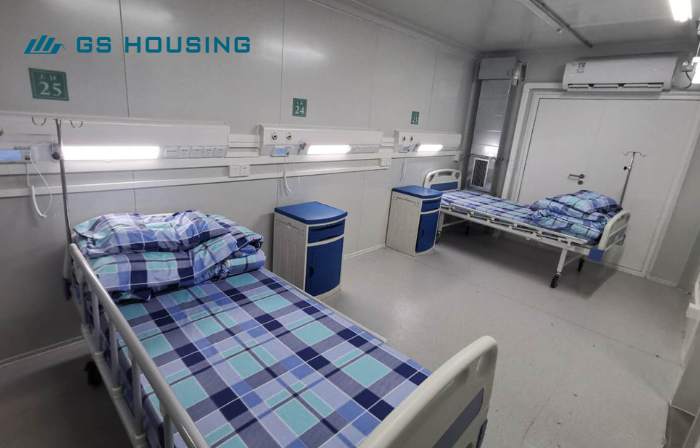
Flat-pack modular units can be configured for such functions as
Temporary clinics: examination rooms, consultation rooms, and simple treatment rooms.
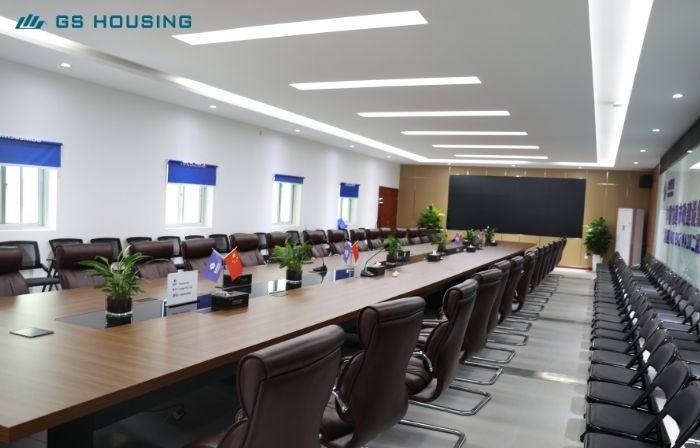
Relief site offices: coordination rooms for NGOs, departments of government, and local organizations.
Supply storage: Safe locations for food, medical supplies, clothing, and other relief items.
Temporary Classrooms: Replacement learning spaces where schools have been damaged or are being used as evacuation centers.
Community facilities: places for residents to get information, arrange assistance, or get basic services.
All these functions share the same basic flatpack modular building concept, enabling a relief project to standardize procurement instead of procuring a different temporary structure for each purpose

A Smarter Temporary Refugee Camp Plan for Remote Disaster Zones
For emergency projects in Nepal, the building itself is only one part of the supply chain.
Successful deployment of the modular refugee camp also depends on packaging, transportation, unloading, local assembly, and access to basic utilities.
That means the emergency modular building should be planned ideally before the shipment leaves the factory.
A practical project sequence may include:
1. Damage and population evaluation
To assess the number of displaced families and the urgently needed facilities.
2. Verifying the site
Investigate ground conditions, access, flood exposure, and utility availability.
3. Modular solutions for refugee camp planning
Determine the number of modular accommodation units, medical rooms, offices, kitchens, and service facilities required.
4. Logistics arrangement
Evaluate road conditions, vehicle access, offloading requirements, and local storage capacity.
5. Construction and commissioning
Install the modules, plug in utilities, and inspect the buildings before occupation.
6. Transition to recovery
Determine whether the buildings will stay in place, be enlarged, be moved, or be reused somewhere else.
This last step is frequently forgotten.
Temporary Does Not Have to Mean Single-Use
A major advantage of flatpack modular construction is the possibility of reuse.
Once permanent homes are reconstructed, an emergency accommodation unit may no longer be required for residential use. However, the flatpack modular building itself may still have value.
It could become a schoolroom, site office, community facility, worker accommodation unit, or storage building.
Instead of purchasing a structure that has value only during a short emergency period, organizations can select a flatpack modular building system that can adapt to changing requirements.
For countries exposed to recurring floods, landslides, or other natural hazards, maintaining a stock or framework agreement for standardized modular buildings can also improve future preparedness.
GS Housing Flat Pack Modular Buildings for Emergency Projects
GS Housing provides prefabricated modular building systems for emergency accommodation, temporary facilities, worker housing, site offices, medical buildings, and other rapid-deployment applications.
Its flat-pack modular building use standardized components that can be manufactured in advance and transported efficiently before being assembled at the destination.
For a flood-recovery project, the modular system can be planned around the actual requirements of the affected community rather than relying on a single fixed building layout.
Accommodation units can be combined with offices, medical rooms, kitchens, storage areas, and other service facilities to create a more complete temporary settlement camp.
The key consideration for disaster projects is therefore not simply how quickly a building can be assembled.
It is whether the building system can work within the realities of transportation, terrain, site safety, changing population needs and long-term recovery. For mountainous regions such as Nepal, these factors are particularly important.
From Rescue Mission to Community Recovery
The Nepal floods are a reminder that there are several phases of disaster response.
The first is life-saving.
Next, we have the provision of safe shelter and essential services.
This is followed by a longer period of stabilization, reconstruction, and community recovery.
Flat-pack modular building won’t stop floods, replace permanent homes, or eliminate the risks of unstable mountain environments. But they have a more practical purpose: they can provide a flexible building platform that helps communities transition from immediate displacement to a more structured recovery environment.
For aid agencies, government bodies, and construction companies, this approach can turn temporary accommodation into part of a broader recovery plan, rather than a short-term reaction.
Modular buildings can help reduce the time between rescue and recovery when built to meet local terrain, logistics, and community requirements.
Frequently Asked Questions
1. Are flat-pack modular buildings usable post-floods in Nepal?
Yeah. They can be used for temporary shelters, medical facilities, relief offices, storage, kitchens, classrooms and other post-disaster functions. But buildings should not be built on sites that have not been evaluated for flood, landslide and ground stability risks.
2. Flat-pack modular buildings are suited for remote disaster regions as:
They may be pre-assembled and shipped in a compact configuration of their components. This may help reduce transportation requirements and minimize the amount of fabrication needed at a remote disaster site.
3. Can they be used for families to stay?
Yes. Depending on the layout of the project, modular units can be set up to provide individual family rooms, shared accommodation, or larger temporary living facilities.
4. Can modular buildings be used for temporary clinics?
Yes. Units can be configured for consultation rooms, treatment areas, temporary medical offices, and other healthcare related functions, according to the particular needs of the medical operator and local regulations.
5. Are flat-pack modular buildings suitable for mountainous Nepal?
Suitable for mountainous sites, but suitability is very site dependent, depending heavily on site access, ground conditions, transportation routes, foundation design, exposure to weather, and local engineering requirements. A modular building should never substitute for proper site assessment.
6. Can the buildings be moved after the emergency?
In the case of modular construction the benefit is the ability to take down units, move and reassemble at another site depending on the building design and site conditions.
7. What should organizations consider before ordering emergency housing?
The most important factors are: number of people requiring accommodation, site safety, access to transportation, climate, insulation requirements, water and sanitation, electricity, foundation conditions, local regulations and duration of use.
8. How can NGOs or governments prepare pre-disaster modular housing?
Organizations can prepare standard building specifications, identify possible installation sites, identify suppliers and logistics plans, and maintain frame agreements or emergency procurement procedures. Pre-planning can reduce the time between disaster and the availability of usable accommodation.
Looking for Flat Pack Modular Building for Nepal Flood Relief?
Floods and landslides can leave families and relief teams without safe, usable accommodation. Rapid-deployment modular housing can provide temporary shelters, relief worker accommodation, medical spaces and community facilities while permanent reconstruction is being carried out.
Contact GS Housing to review your site conditions, capacity needs, and deployment schedule.
Post time: 01-09-26