


From temporary dorms on construction sites to creative suburban communities and boutique modular vacation homes tucked deep in nature, modular construction is redefining what it means to “build a house” with its efficiency, flexibility, and sustainability.
Flat-pack modular building is a modular construction solution based on the principles of industrialized production. It breaks construction down into standard pieces. It flattens them and packs them up. Ships them to the building site. Then rapidly builds them up like Lego bricks. The model greatly shortens the construction cycle, transportation, and labor costs and has excellent recyclability, which meets the needs of green buildings in the world.
The global flat pack accommodation market was valued at $68.24 billion in 2025 and is projected to reach $128.3 billion by 2034, growing at a CAGR of 7.5%, according to a recent research report from Fortune Business Insights. There are many factors, such as the global housing shortage crisis, the rising popularity of sustainable building concepts, and the maturity of modular construction technologies, that are helping this industry to grow.
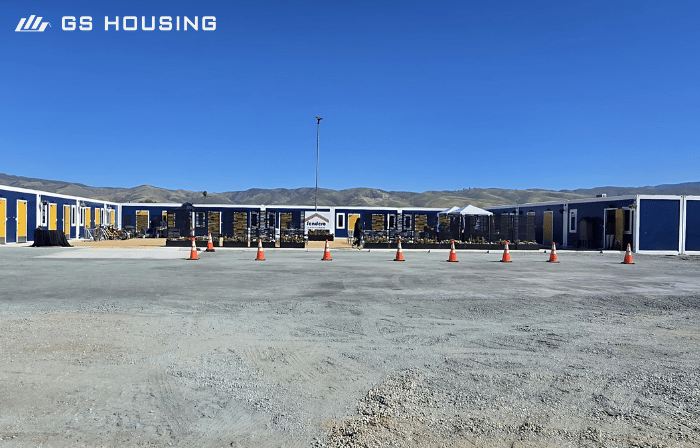
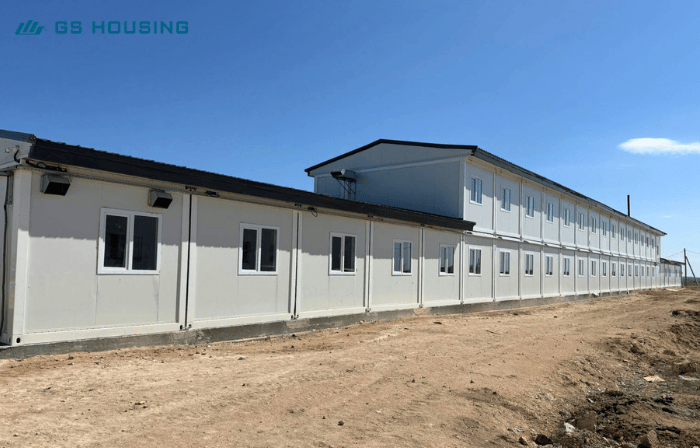
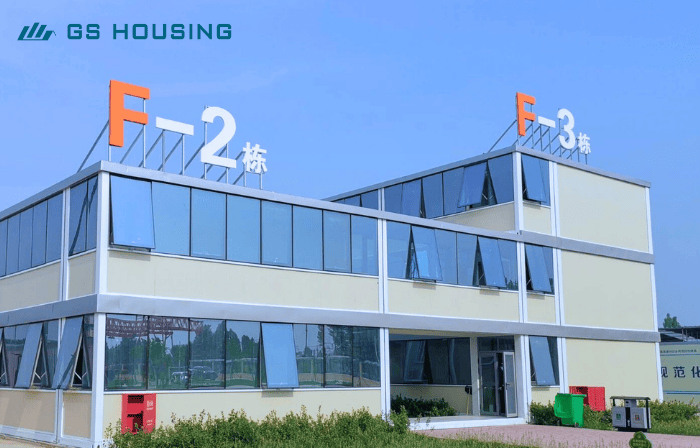
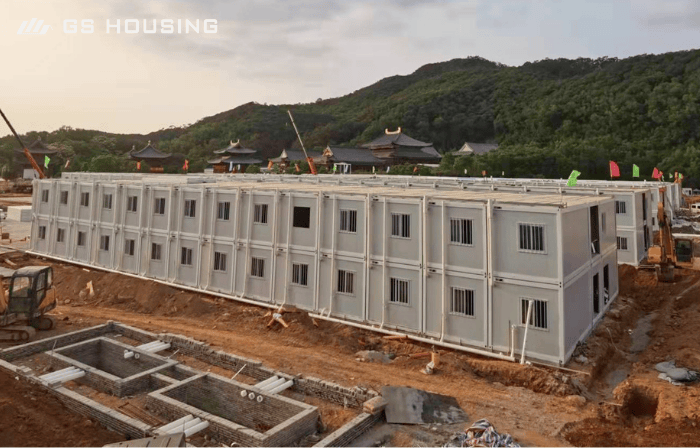


I. What is a flat-pack accommodation?
1.1 Definition of Flat Pack Accommodation Units
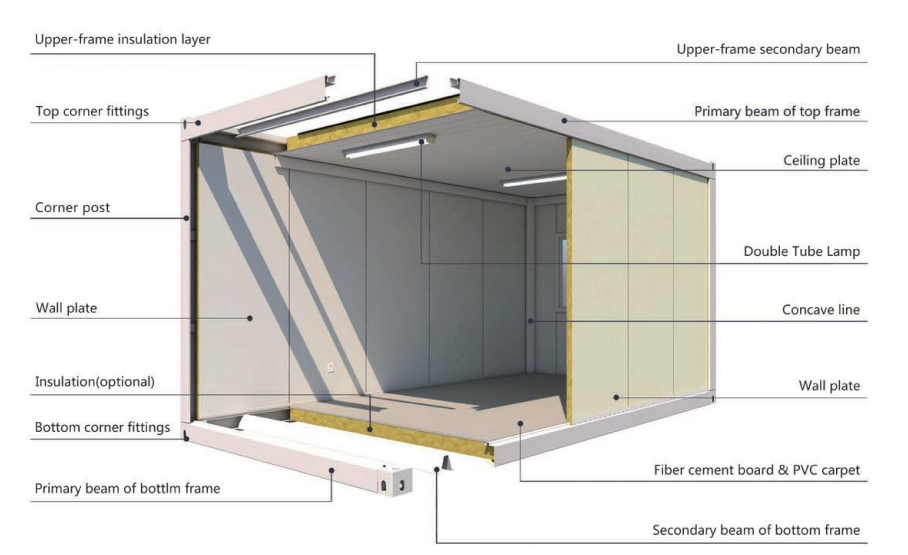
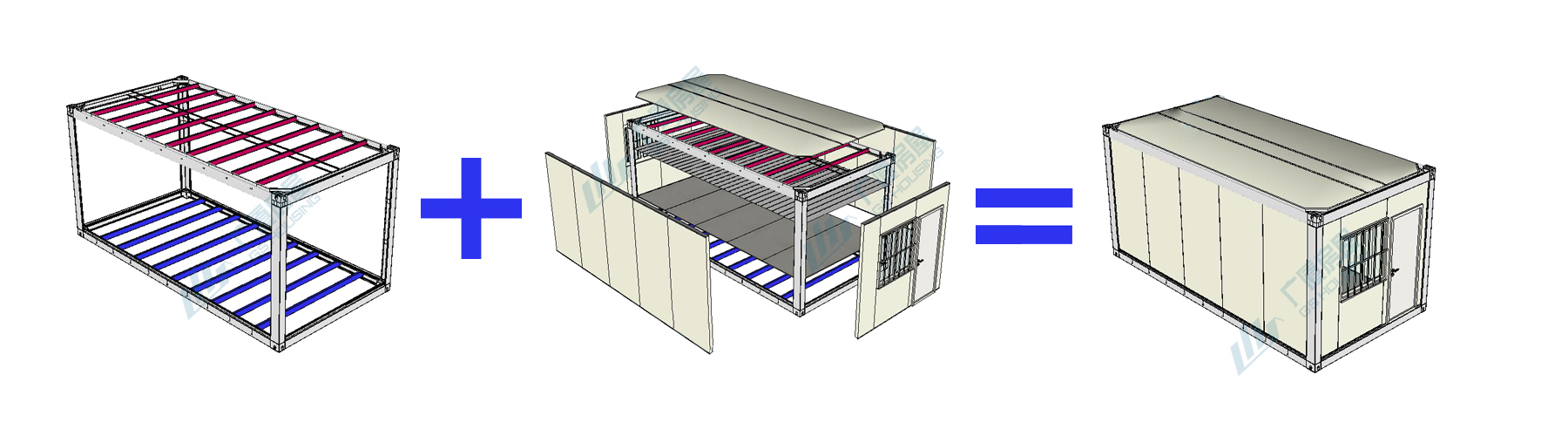
A flat-packed building is a modular building product based on the steel frame and lightweight wall panel structure system. It is made up of a top frame, a bottom frame, corner posts, and a variety of interchangeable wall panels. It is produced by industrial production methods along assembly lines and then shipped to the project site in flat, packaged form for assembly.
A standard flat pack accommodation unit usually consists of the following main parts:
The main structural frame is made of steel and comprises a top frame, a bottom frame, and corner columns and is the main load-bearing structure of the building. Commonly uses Q235B, SGH340, and other high-strength steels, with good wind and earthquake resistance.
Composite Wall Panel System: Is made up of a rock wool thermal insulation material sandwiched between the inner and outer layers of metal panels.
Prefabricated Piping System: The electrical circuits are pre-installed in the top frame and wall panels, drainage pipes are pre-installed in the bottom frame, and doors and windows are pre-installed in the wall panels, reducing the on-site construction period by 15%.
Connectors and accessories: bolts, sealing strips, corner brackets, etc., to ensure a reliable connection and airtightness between parts.
1.2 Key Technical Parameters of Flat Pack Housing
The main technical specifications of flat pack prefabricated containers are as follows:
| Technical Specifications | Standard Parameters |
| External Dimensions | 6055*2435*28966055*3000*2896customized flat pack house is available |
| Indoor Clear Height | 2590 mm |
| Design Service Life | 20 years |
| Seismic fortification intensity | 8 degrees |
| Stacking Layers | 3 layers |
| Ground Live Load | 2.0 KN/m² |
| Roof Live Load | 0.5 KN/m² |
High-quality portable prefabricated containers can achieve seismic performance up to level 8, fire resistance up to level A, and a design service life of over 20 years. Compared to traditional buildings, the construction period is shortened by more than 60%, and construction waste is reduced by more than 80%.
1.3 Flat Pack Transportation: The Real Core Competitive Advantage
“Flat Pack” is the key value for transportation. You can pack four flat pack container units into a 40 HQ , saving you approximately 3/4 to 15% in shipping costs versus full container shipping.
1.4 Key Differences From Traditional Shipping Container Homes
Although flat-pack container houses are also called “container houses," they are constructed in a completely different way.
Traditional shipping container houses are made from retired shipping containers that have been retrofitted to include doors and windows, insulation, and water and electricity.
China’s flat-pack container house adopts a modular production approach. The structural components are made in the factory to standard dimensions and assembled on the construction site. Think of it like building a house with special building modules.
Both have their scenarios: traditional shipping container homes have a natural advantage in stacking strength and transportation convenience due to the steel structure of the shipping container itself but are limited by the fixed dimensions inside the container. Flat-pack prefab homes, however, are superior in terms of spatial layout flexibility, production standardization, and transportation economy.
II. Core Advantages Analysis – Why Have Flat Pack Prefabricated Containers Become the Mainstream Choice?
2.1 Speed Advantage: From "Months" to "Hours."
It normally takes months to complete a traditional build, sometimes even a year or two. Weather and labor are critical limitations to on-site wet work such as foundation construction, frame erection, wall painting, and plumbing and electrical installation.
Flat-pack porta cabins, on the other hand, move over 90% of the building process to the factory. The wall panels, doors, windows, and pipelines are all factory-made and only need to be hoisted and simply connected on site. A team of four workers is usually able to install one container in three hours.
2.2 Economic Advantage: Clear Costs
The cost of flat-pack portacabins is fairly transparent from the point of view of the initial investment. The cost of a normal living container is typically around US$2,000, greatly reducing initial investment compared to traditional buildings.
From a life cycle cost perspective, the possibility of reusing a flat-pack portable cabin creates a lot of economic value. Once project A is finished, the prefabricated containers can be dismantled and shipped to project B to be used again. The service life of prefabricated containers is 20 years, and the total amortization cost is much lower than that of traditional disposable buildings.
2.3 Transportation Advantages: Flat Packaging, Global Reachability
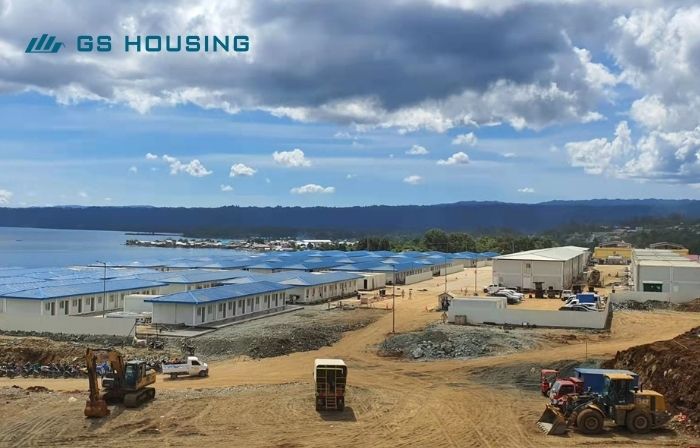
Flat packaging is the core feature that distinguishes Chinese prefabricated container houses from other modular building forms. In the transportation process, over 90% of the components of the container can be prefabricated in the factory, then disassembled into flat boxes for transport. Compared to transporting entire containers, this model can save approximately 3/4 of the shipping costs. This advantage is particularly pronounced for projects in remote areas, islands, high-altitude regions, and other locations with inconvenient transportation.
2.4 Environmental Protection and Sustainability: A Natural Practitioner of Green Building
Flat-pack prefabricated containers have multi-dimensional advantages in terms of environmental protection. First, the primary building materials – steel and composite wall panels – are recyclable, and the carbon emissions in their manufacturing are far less than those of conventional cast-in-place concrete buildings. Besides, the high reusability of modular container building can greatly save resource consumption in the whole life cycle by adopting the closed-loop mode of "design-production-transportation-installation-recycling."
2.5 Flexibility and Scalability: Building Living Spaces Like Building Blocks
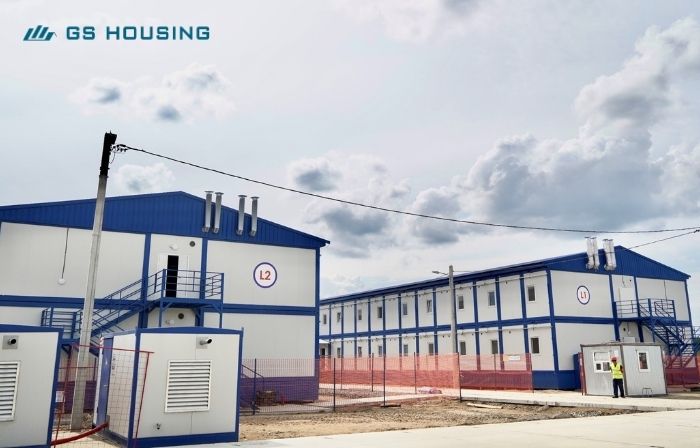
The modular design of flat-pack accommodation determines its extremely high flexibility and scalability. A single prefabricated container can be used as a small office, dormitory, or tool shed; multiple units can be combined horizontally and vertically to form various architectural forms such as office buildings, dormitories, hotels, and commercial streets; the maximum number of floors can be three.
This "Lego-like" construction method allows flat-pack accommodation units to be flexibly added, reduced, and recombined according to actual needs, adapting to project scenarios of different scales and functional requirements.
2.6 Safety performance: trustworthy structure and advanced technology
The safety performance of China's container houses is guaranteed by various technical indicators. The Q235B high-strength steel frame structure has good wind resistance and earthquake resistance capacity. High-quality products can withstand a wind of level 12 and an earthquake of degree 8. In terms of fire protection, Class A fire-resistant materials such as rock wool are used to ensure that the prefabricated container homes meet various fire safety standards. Regarding electrical safety, the factory-prefabricated circuit system undergoes standardized design and testing, and the on-site procedural installation process effectively guarantees electrical safety.
2.7 Traditional Building vs. Chinese Container Houses: A Multi-Dimensional Comparison
|
Dimensions |
Traditional Building |
Chinese Container Houses |
|
Construction Cycle |
Months to Years |
Hours to Weeks |
|
Cost Structure |
High cost, highly susceptible to market fluctuations |
Transparent pricing, low initial investment |
|
Transportation Method |
On-site casting, raw material transportation, |
finished product transportation, flat packaging facilitates long-distance transport |
|
Mobility |
Immovable |
Disassembled and Reusable |
|
Environmental Impact |
High construction waste,high resource consumption |
construction waste reduced by over 80%, materials are recyclable |
|
Lifespan |
50+ years (permanent buildings) |
10-20 years (semi-permanent/temporary) |
III. Diverse Application Scenarios—Chinese Prefabricated Container Buildings Are More Than Just “Temporary Facility Building”
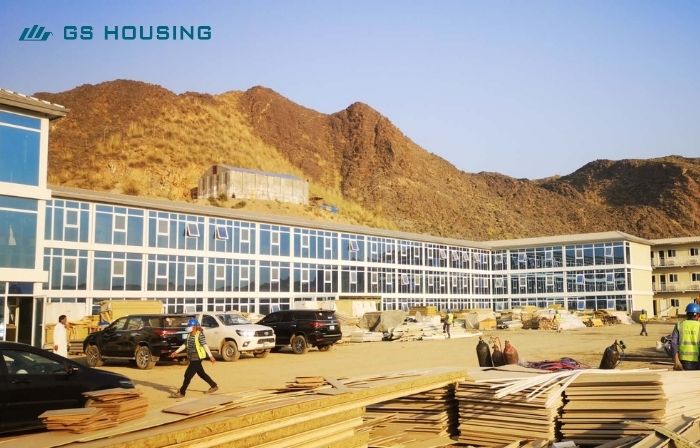
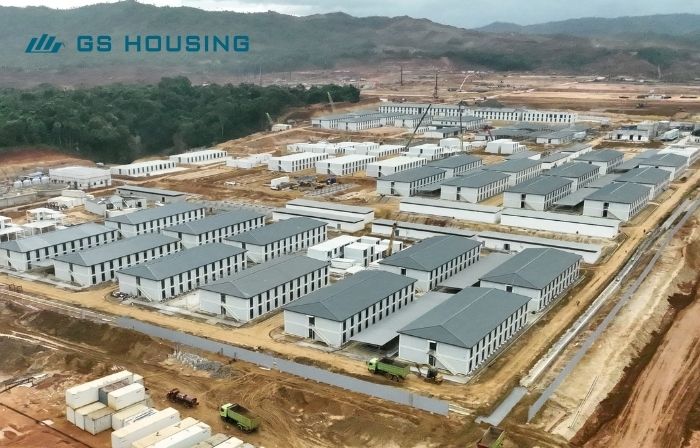
3.1 Construction Sites and Temporary Engineering Facilities
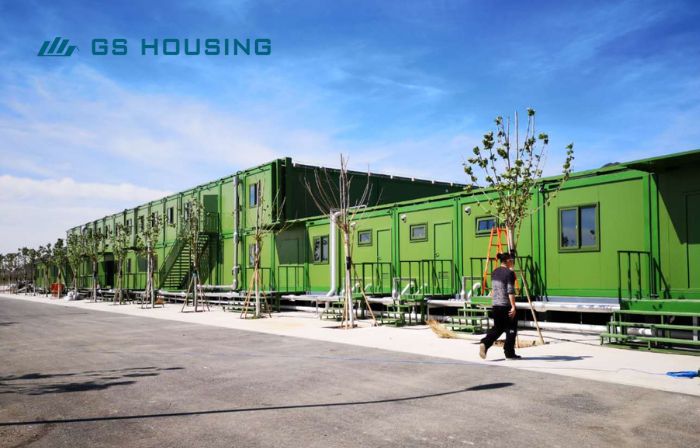
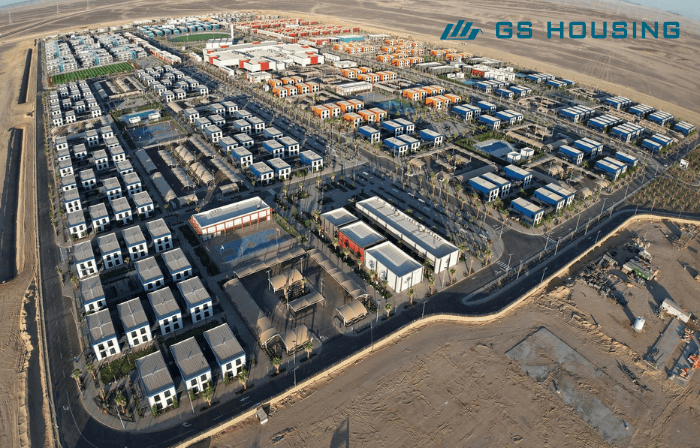
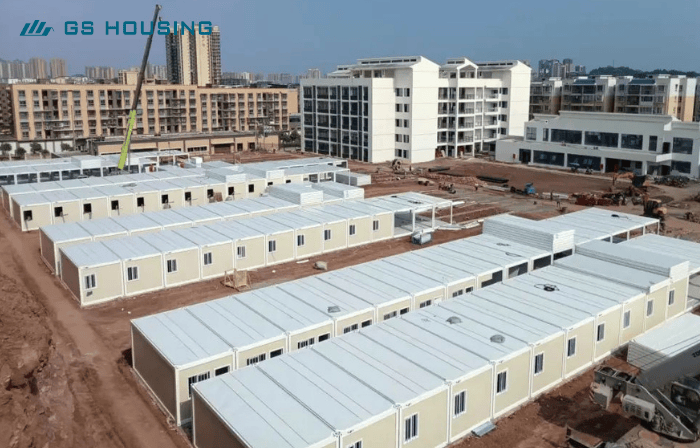
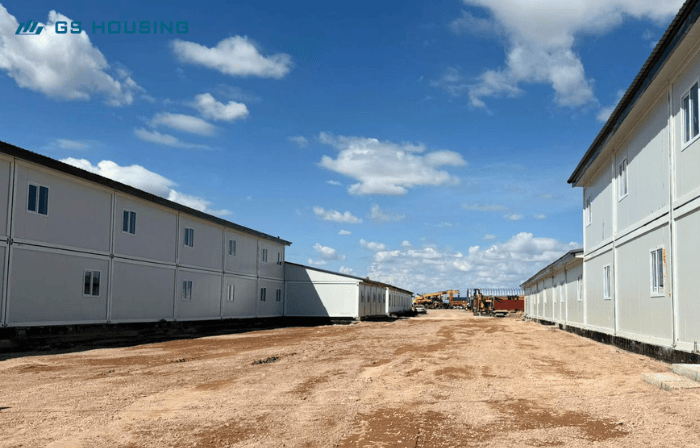
This is the most traditional and common application scenario of Chinese flat-pack houses. Prefabricated container houses with fast deployment and controllable cost have become a common sight in engineering construction, ranging from workforce dormitories and management offices to project modular canteens, temporary sanitation facilities, and security posts.

3.2 Emergency Resettlement and Disaster Relief
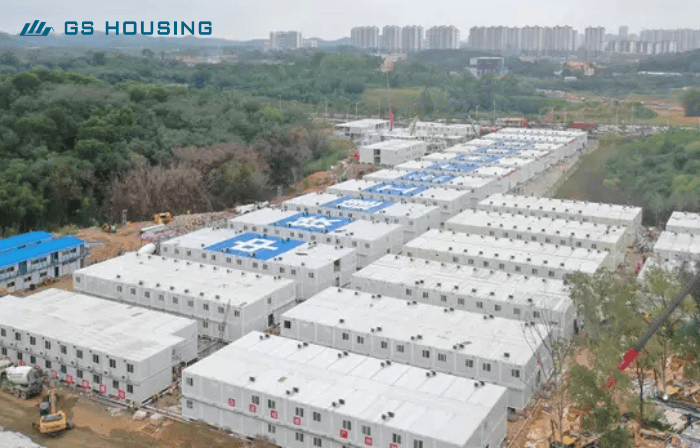
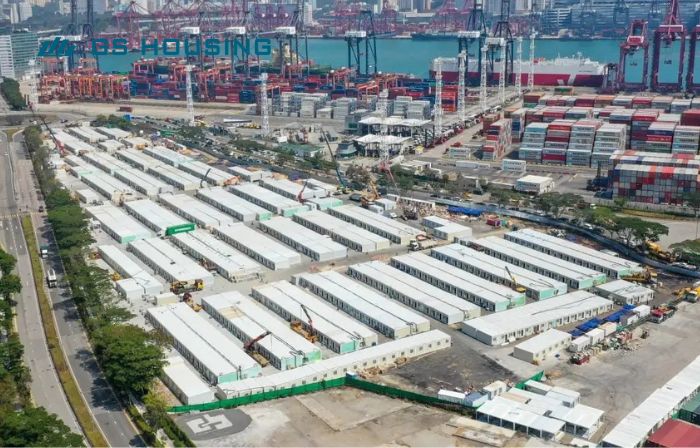
The quick deployment of prefabricated container houses is of great significance for emergency disaster relief. In case of natural disasters like earthquakes and floods, the urgency of resettling the affected people does not allow the luxury of waiting for a long period for the construction of permanent buildings. Prefabricated container homes can be put up in hours and provide safe, disaster area transitional housing.


3.3 Cultural Tourism and Commercial Applications & Featured Homestays
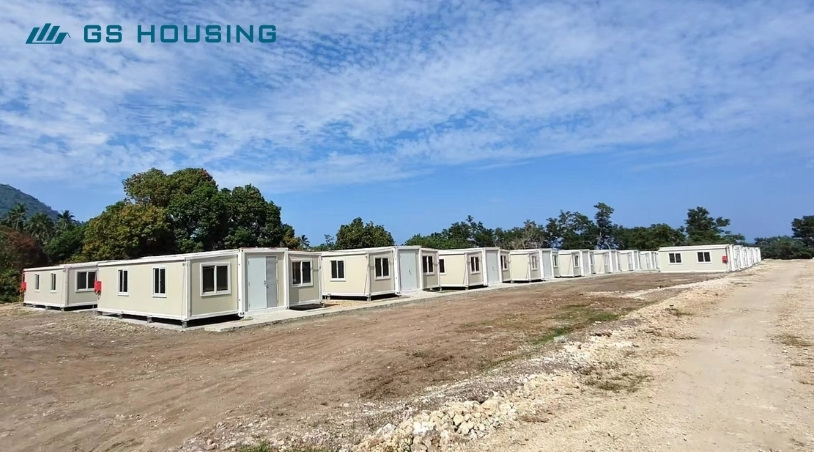
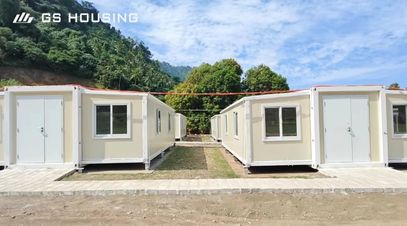
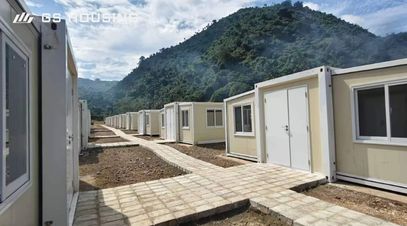
In recent years, the cultural tourism and commercial fields have seen rapid development of prefabricated container buildings, and their market share has increased greatly. The appearance is unique, and the installation method is flexible, making prefabricated container houses particularly popular in applications such as featured container homestays, flat-pack vacation cabins in forest log cabin style, pop-up shops, and scenic area reception centers. Their customized features that can be tailored to meet branding and scenario needs—exterior wall paint, roof design, and interior decoration—make them a distinctive charm in creative commercial spaces.
3.4 Commercial Offices & Public Facilities
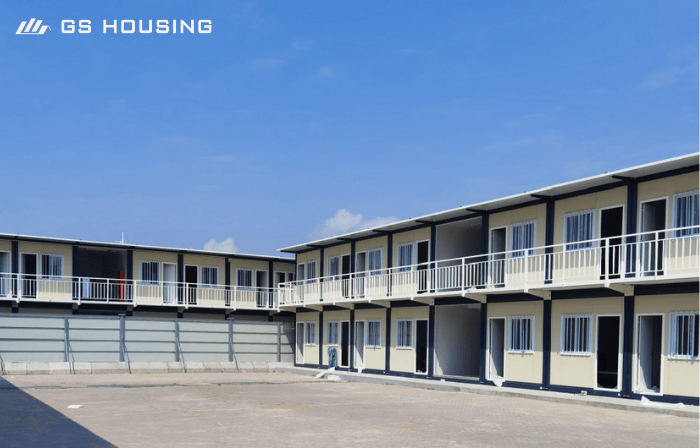
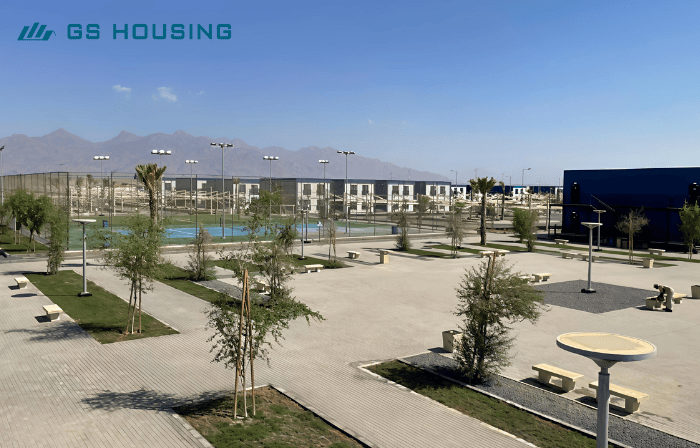
From outdoor offices in office buildings and supporting facilities in industrial parks to school classrooms, community health stations, and public restrooms, the application boundaries of prefabricated container houses are constantly expanding. Of particular note is that flat-pack modular houses have already achieved the quality of permanent buildings in some high-end applications. In the field of permanent or semi-permanent multi-story buildings, such as hotels, apartments, and student dormitories, leading flat-pack container house manufacturers, such as GS Housing Group, have developed mature modular building solutions, with product quality and architectural aesthetics reaching a high level.


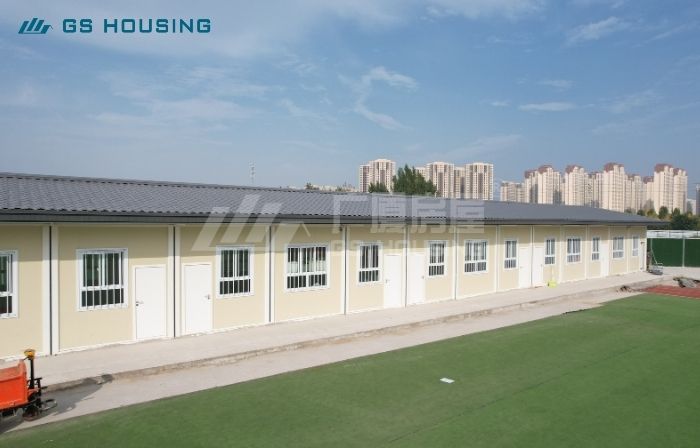

3.5 Military and Border Logistics Facilities
Prefabricated container buildings are also widely used in military logistics and border support, including border outposts, field barracks, field hospitals, and temporary command posts. Their key advantages are rapid deployment, high mobility, and a high degree of standardization of support facilities, enabling a rapid response to operational and exercise requirements.
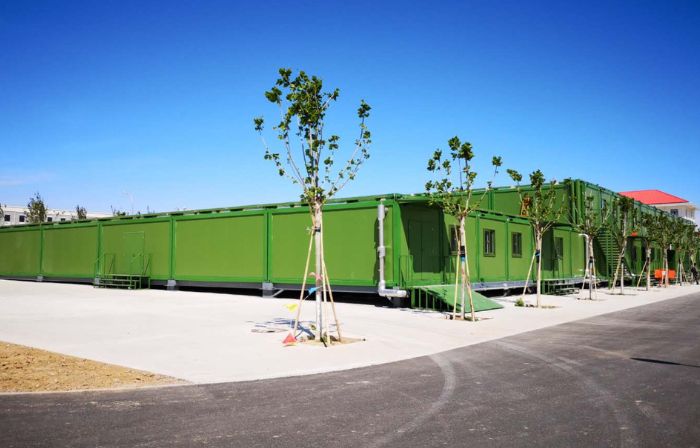
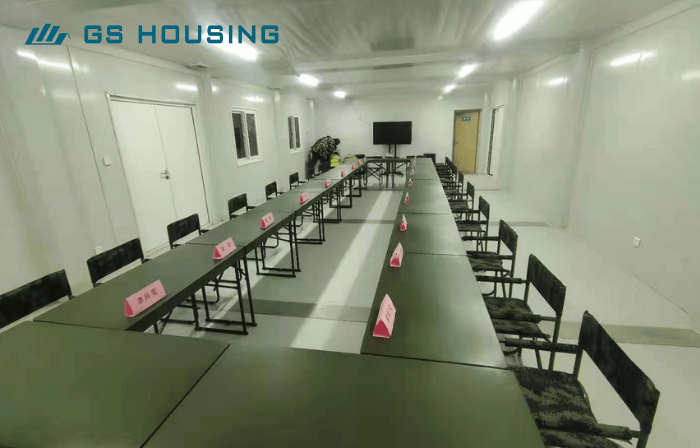

3.6 Scenarios of high altitude and extreme environments
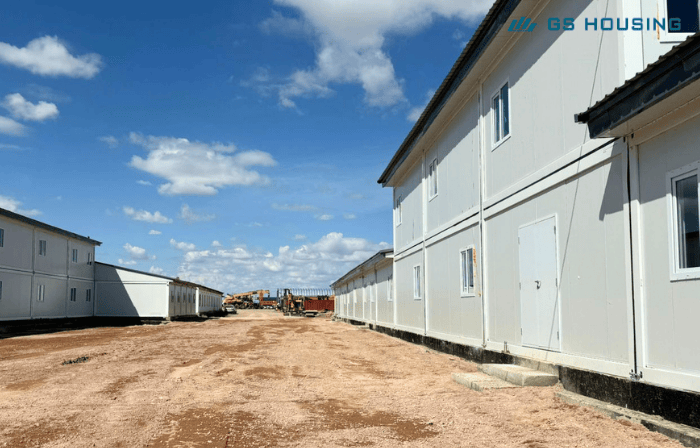
The demand for prefabricated modular buildings in extreme environments such as plateaus is constantly increasing, with a compound annual growth rate of more than 18.7%. The demand in this scenario is expected to reach 21.3% in 2026.
In environments with high altitudes, strong ultraviolet radiation, and large diurnal temperature variations, prefabricated modular houses need to possess stronger thermal insulation, wind resistance, and structural durability. China flat-pack container house factories, GS Housing, have developed specialized plateau-resistant, freeze-resistant steel structure containers using low-temperature toughness steel, which can maintain structural stability even at -40℃.

IV. Market Overview and Industry Trends – Who is Driving This Billion-Dollar Market?
According to data from several authoritative market research institutions, the modular construction market is experiencing rapid growth: The global prefabricated building systems market is estimated at approximately US$207.39 billion in 2025 and is projected to reach US$282.95 billion by 2030, with a CAGR of 6.41%-22%.
The core drivers of this growth include the global housing shortage and affordability crisis, the impetus from sustainable and green building policies, the need to reduce on-site work due to labor shortages, and the urgent need for disaster response and post-disaster reconstruction.
V. Industry Challenges
Although flat-pack accommodations are highly consistent with the government's policy agenda of promoting green building, prefabricated building, and low-carbon development, the variable climate in the application areas, the differences in regional building codes, and the restrictions on the temporary use period are all uncertainties that the industry needs to continue to face in its development.
VI. Conclusion
Flat-pack container accommodation is not only an innovative construction method but also a revolutionary building philosophy. It introduces the logic of industrial manufacturing into the construction field, making "building houses" as simple, efficient, and sustainable as "assembling building blocks."
From portable temporary dormitories on construction sites to uniquely designed holiday cottages, from transitional shelters for emergency relief to permanent buildings in high-end apartments, the application boundaries of flat pack container accommodation are constantly being pushed. Against the backdrop of global housing shortages, rising labor costs, and tightening carbon emission constraints, the high efficiency and low environmental footprint of flat-pack container housing inevitably make it a typical representative of industrialized construction and one of the future directions.
Of course, flatpack container camps also face objective bottlenecks such as compliance regulations, technological advancements, and market acceptance. However, for construction projects that pursue a balance between speed and quality, a win-win situation for economic development and environmental protection, and a harmonious coexistence of flexibility and sustainability, flatpack building undoubtedly represents a wise and forward-thinking choice.
Post time: 09-05-26