


Support of remote industrial development with flexible, efficient, and durable modular worker housing solutions
The growth of mining, energy, infrastructure, and large-scale construction projects across North America is creating a growing need for reliable worker housing. Many of these projects are far from major cities, where existing housing infrastructure cannot accommodate the hundreds or even thousands of workers needed at various stages of the project.
For project owners, EPC contractors, and construction companies, safe and comfortable accommodation is no longer a secondary consideration. It directly affects project timelines, the productivity of the workforce, employee retention, and the overall efficiency of operations. But it’s often difficult to build traditional housing in remote locations because of the high cost of labor, limited construction resources, transportation challenges, and long development timelines.
Modular workforce housing has become a logical choice for remote projects throughout North America in this environment. Modular housing combine the advantages of factory-based manufacturing with the flexible installation on site. This enables companies to create efficient worker accommodation facilities closer to project locations without compromising on quality, reliability, and adaptability.


The Growing Need for Remote Workforce Housing in North America
Much of the North American industry depends on a temporary or semi-permanent workforce in remote locations. Mining operations in Canada, energy developments in Alaska, renewable energy projects in rural regions, and major infrastructure programs across the United States often require workers to stay near project sites for extended periods.
The traditional accommodation methods are hard to use in such environments. Building permanent structures can take years to plan, require a large local workforce, and require major investment in infrastructure such as roads, utilities, and transportation systems. For projects that have fluctuating workforce requirements, permanent construction can also lead to unnecessarily high long-term costs.
Remote modular workforce housing provides a more flexible option. Rather than relying solely on the availability of local housing, organizations can establish purpose-built accommodation facilities tailored to the needs of the project. These facilities can support workers during different phases of development, from the initial construction and exploration to the long-term operation.
This flexibility is particularly crucial in industries where the size of the workforce is prone to significant change. A mining project, for example, may start out small with an exploration team and then expand to a large operational workforce. The modular workforce accommodation from China GS Housing means the project can be expanded rather than having to be built from scratch.


How Modular Workforce Housing Meets the Demands of Remote Projects
The biggest advantage of modular workforce housing is in reducing project complexity. Modular housings are built in controlled factory environments and are shipped to the project site, unlike traditional construction. This approach enables simultaneous site preparation and manufacturing, greatly reducing overall project timelines.
Time efficiency is critical for remote projects. Weather, labor shortages, or difficult site conditions can cause delays with a substantial financial impact. Factory production means more control over quality, materials, and delivery times, helping companies to reduce the unknowns during project implementation.
Another major plus is efficient transportation. Many industrial sites are remotely located, making traditional construction logistics costly and complex. Flat-pack modular buildings are designed for optimal transport and efficient assembly, making accommodation facilities available in places where traditional construction might be difficult.
Modern temporary modular workforce housing is not simply about speed and logistics but also about the worker's comfort and operational requirements. Modular worker accommodation is no longer seen as temporary shelter. Companies are increasingly requiring facilities that promote employee well-being, such as comfortable sleeping quarters, dining facilities, offices, recreation areas, and essential services.


Applications in Mining, Energy, and Infrastructure Projects
One of the strongest applications for modular workforce housing in North America is the mining industry. Large mining operations exist in remote locations in Canada and the United States that require modular housing for workers. Trustworthy site camp facilities are an integral part of project operations, as employees may be working away from urban communities for weeks or months at a time.
A mine site housing can be designed to provide complete living environments, including dormitories, administrative offices, kitchens, dining halls, medical facilities, and recreational areas. Modular construction camps allow mining companies to adapt accommodation capacity to production needs and project development phases, unlike traditional camp construction.
Modular housing for workers is also in demand in the energy industry. Often, permanent housing is unavailable in the areas where oil and gas development, renewable energy projects, and construction of power infrastructure occur. During construction, wind farms, solar installations, and energy facilities require large numbers of workers, but demand may fall after completion. Modular buildings offer the flexibility to accommodate these temporary workforce requirements.
Similar challenges face large infrastructure projects across North America. In areas with limited accommodation options for road widening, transportation improvements, industrial facility construction, and public infrastructure development, contractors usually need hundreds of workers. Modular workforce housing allows contractors to build effective project communities without dependence on existing residential infrastructure in the area.
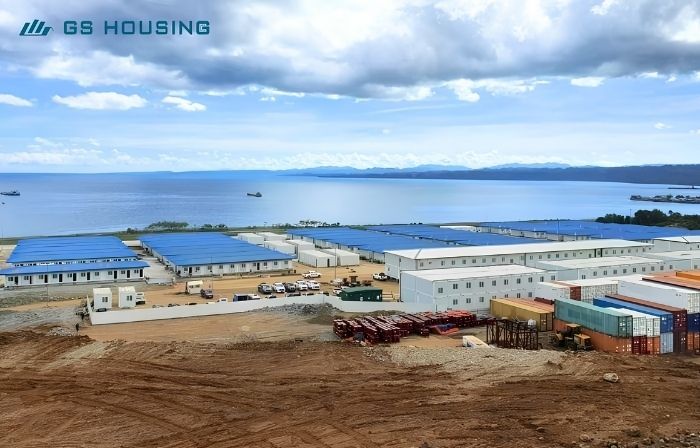
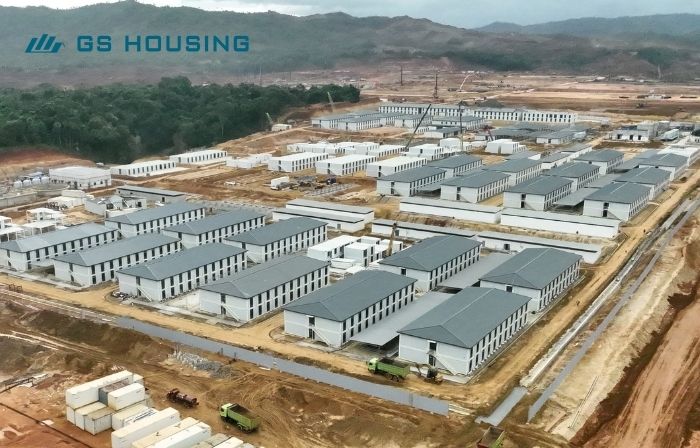
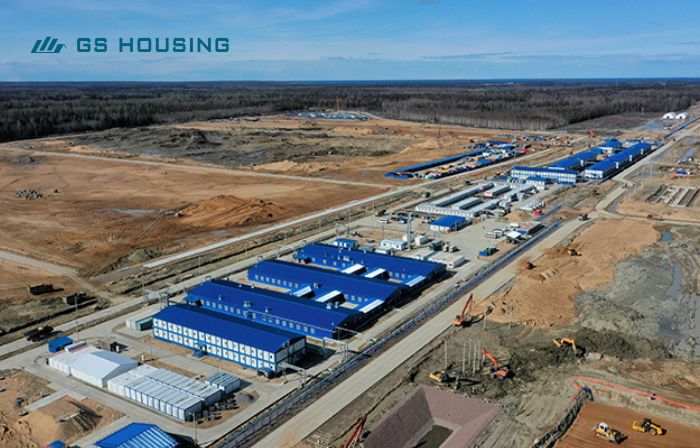
Designing Modular Housing for the Climate and Operating Conditions in North America
North America‘s environmental issues range from the very cold in the north to hot and dry areas. Transportation constraints, operational needs, and local climate conditions must be taken into account in a successful workforce housing solution.
For projects in Canada and the northern United States, insulation performance and structural durability are a must. Buildings must maintain comfortable indoor environments in the face of snow, freezing temperatures, and high winds. Ventilation, energy efficiency, and climate control are all equally important in warmer climates.
GS Housing's modular housings are designed with state-of-the-art insulation, rugged steel frames, and bespoke floor plans that can be tailored to a variety of environmental settings. This flexibility means the same modular concept can be applied in different industries and locations while still providing consistent performance.
For companies running remote projects, this means accommodation can be adapted to suit real site conditions, rather than retrofitting existing buildings that were never designed for industrial environments in the first place.
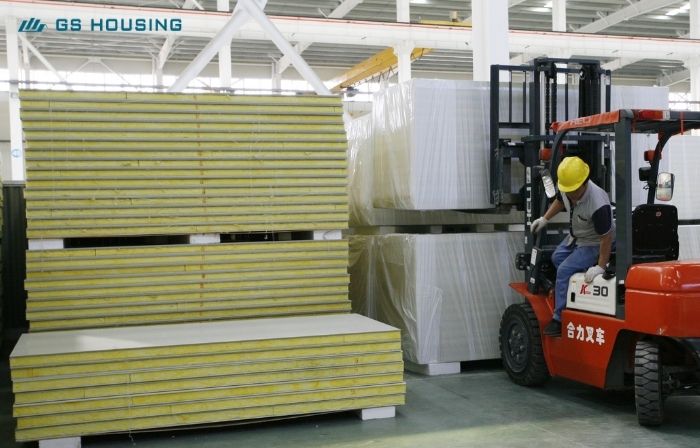


A More Sustainable Way to Modular Worker Accommodation Camp
Sustainability is becoming an increasingly important issue for North American companies. Many industries are looking for ways to reduce construction waste, improve resource efficiency, and reduce environmental impact.
Modular building enables these goals through controlled factory fabrication, efficient material use, and reduced on-site construction activities. Because the components are made in a controlled environment, the material waste can be more easily controlled than with traditional building techniques.
Modular buildings are also mobile or reusable once a project is finished. This offers greater lifecycle value than temporary structures designed for one-time-use applications.
Companies that have multiple projects in multiple locations can reap huge operational benefits from the ability to move and adjust modular facilities.
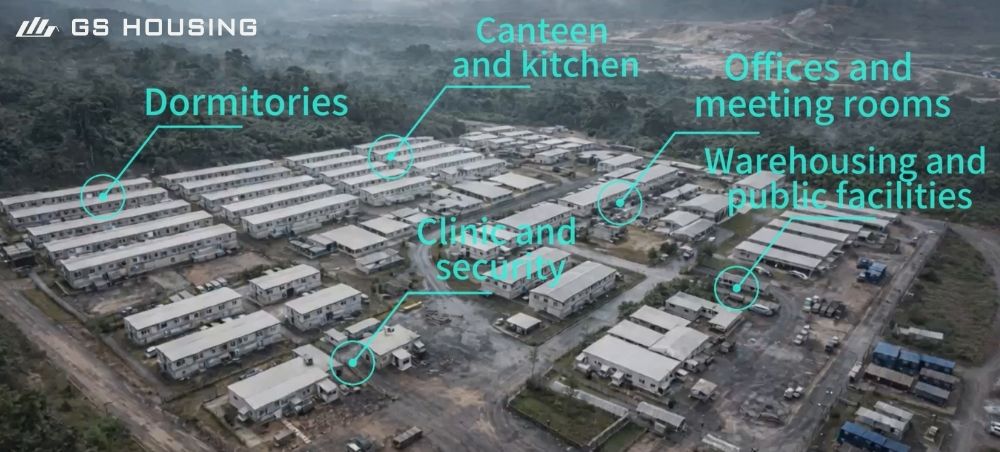
GS Housing Modular Workforce Housing Solutions for North America Projects
GS Housing delivers modular workforce housing solutions for industrial, infrastructure, mining, energy, and remote employment applications. GS Housing has experience with international projects in a variety of regions and industries and understands that a remote accommodation unit is more than a standard building product.
Each project must be considered with climate conditions, size of the workforce, method of transportation, installation requirements, and long-term plans for usage. GS Housing offers customized modular housing solutions that provide efficient manufacturing, flexible layout options, and robust structural performance.
GS Housing Group's flat-pack modular housing are perfect for a range of applications, including workforce accommodation camps, construction site facilities, mining camps, energy project accommodation, and temporary housing for construction workers.
GS Housing combines design, manufacturing, and project support, enabling companies to create reliable accommodation environments for workers wherever projects are located.
The Future of Modular Workforce Housing in North America
With industries moving further and further afield, the need for flexible accommodation for workers will only increase. Mining development, renewable energy expansion, infrastructure investment, and industrial construction all need faster and more flexible solutions than traditional construction can often deliver.
Modular workforce housing provides a practical answer to these challenges by offering speed, durability, flexibility and lifecycle efficiency. For companies that plan remote projects in North America, choosing the right modular accommodation strategy can improve project execution and provide better living conditions for workers.
GS Housing continues to develop modular camp solutions that support global industries and help organizations build efficient project environments in difficult locations.


Q&A: Solutions for Modular Workforce Housing
Q: Why do we need modular workforce housing?
A: Modular workforce housing is a solution to provide housing for employees working on remote mining, energy, infrastructure, construction, and industrial projects where traditional housing is unavailable or impractical.
Q: Can modular housing be used in cold weather?
A: Yeah. Modular buildings can be constructed with insulation systems and structural solutions appropriate for cold climates, including those with high snow loads and extreme temperatures.
Q: How long does modular workforce housing take to install?
A: One modular unit can be installed within 4 hours; it depends on the size of the project and site conditions. Modular construction is often faster than traditional on-site construction methods because manufacturing and preparation can be done simultaneously.
Q: Can modular workforce housing grow in the future?
A: Yes. Modular systems are built to be flexible so additional units can be added, moved, or changed as workforce needs change.


Post time: 07-08-26