


GS Housing’s First Myanmar Project for Religious Event Facilities and Temporary Accommodation
Large religious gatherings create a temporary demand that conventional buildings are not always designed to handle. The challenge is not limited to providing a place for people to stay. Event organizers may also need supporting spaces for administration, community activities, services, and daily operations, all within a defined period and around a fixed event schedule.
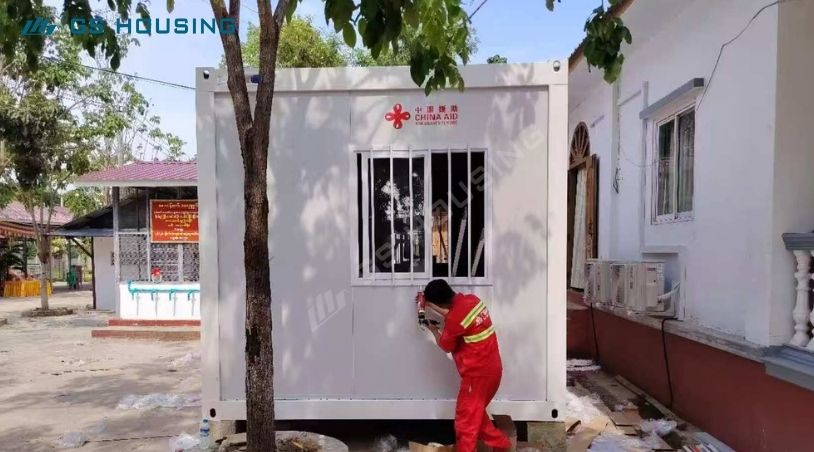
GS Housing supplied 814 sets temporary modules to Yangon as part of an overseas aid initiative. The temporary buildings were intended to support a local religious event, providing temporary accommodation and related space for people participating in the activities.
The Myanmar temporary accommodation modules project had one particularly demanding condition: the religious event had a fixed schedule, while the accommodation had to be prepared within a very short timeframe.
GS Housing completed the production and shipment of the 814 temporary modular units within 15 days, creating a practical example of how modular construction can support large-scale, time-sensitive projects in Southeast Asia.
Project Overview
| Project | Myanmar Temporary Accommodation Modules Project |
| Location | Yangon, Myanmar |
| Project Type | Overseas aid / emergency accommodation |
| Application | Religious event accommodation and supporting facilities |
| Quantity | 814 modular units |
| Delivery Cycle | 15 days |
| Building System | China flatpack temporary building |
| Market | Myanmar / Southeast Asia |
The building system was chosen based on the specific requirements of a temporary religious gathering, rather than considering the project as a standard residential development. This is an important distinction for contractors and project developers.
A religious event may need to rapidly create accommodation capacity, make intensive use of it for a defined period, and then convert it to other uses. And so the modular building solution has to balance speed and functionality, transport efficiency and future flexibility.
Supporting a Religious Event With More Than Accommodation
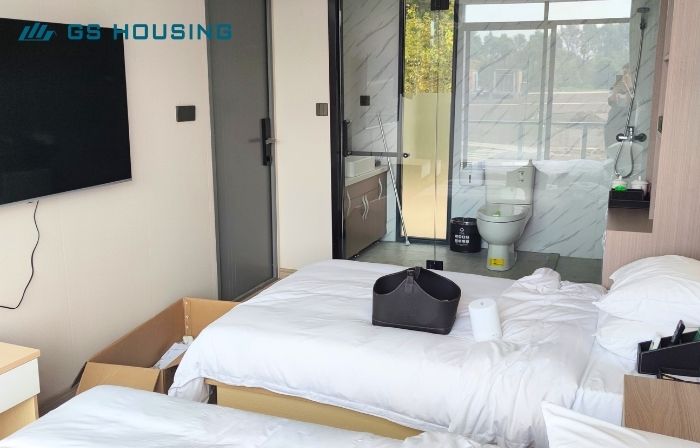
Temporary accommodation was one of the main applications, but the role of modular buildings in a large religious gathering can be broader. When large numbers of visitors, volunteers, staff or participants arrive at one location, accommodation is only one part of the temporary infrastructure.
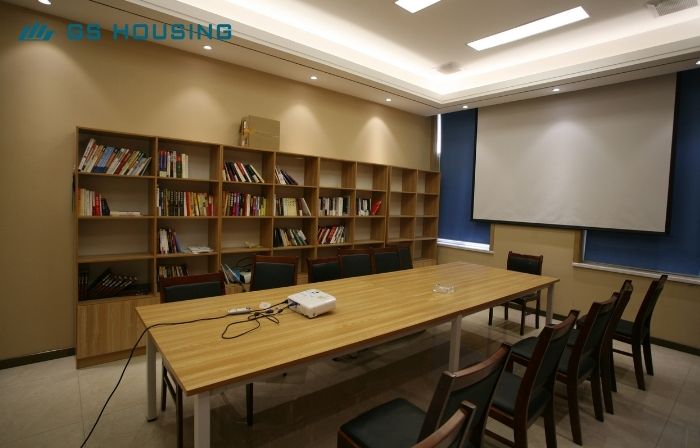
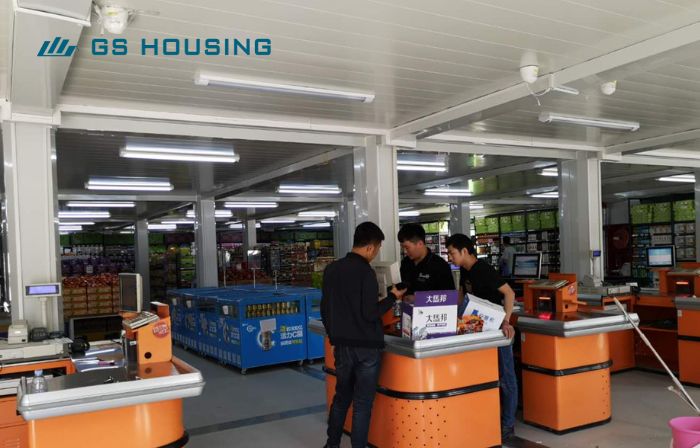
Depending on the event layout, modular buildings can also be configured as:
• Temporary religious activity spaces
• Community and gathering rooms
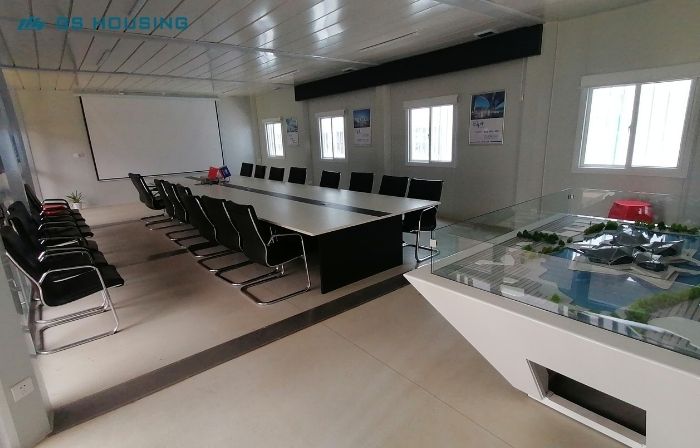
• Event administration offices
• Reception and registration areas
• Staff and volunteer accommodation
• Dining or service areas
• Temporary classrooms or training rooms
• Storage and support facilities
Rather than approaching the project as a standard residential development, the building system was selected around the specific needs of a temporary religious gathering.
This distinction matters for contractors and project developers.
A religious event may require accommodation capacity to be created quickly, used intensively for a defined period and then adapted for other purposes afterward. The building solution therefore needs to balance speed, functionality, transportation efficiency, and future flexibility.

Why Flatpack Temporary Building Suited the Yangon Project
The Yangon project involved 814 units, making consistency and delivery control as important as the speed of individual installation.
Building hundreds of rooms through conventional site construction would require a large amount of local labor, materials, and coordination. It would also expose the schedule to weather, material availability, and site productivity.
Flatpack Temporary Building changes where much of the work takes place.
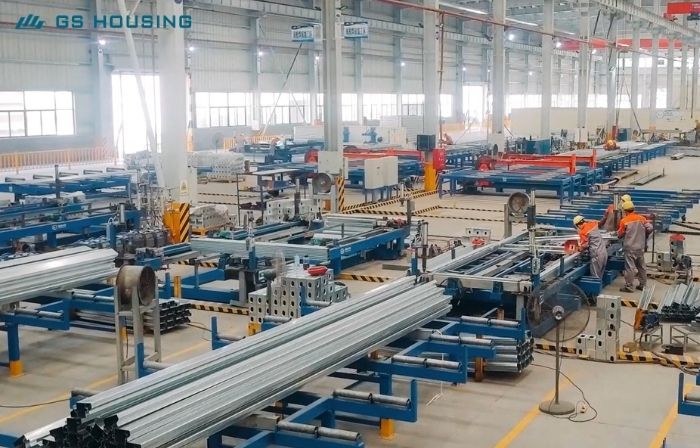
Instead of producing every component at the final destination, the main building system can be manufactured in a controlled factory environment. Structural frames, wall panels, doors, windows, and other components can be prepared according to standardized specifications before shipment.
This allows the project team to treat the buildings as a coordinated system rather than a collection of independent construction activities.
For a fixed-date religious event, that difference is significant.
The objective is not simply to construct faster. It is to create usable accommodation capacity before the event begins.
Designed for Temporary Use in Myanmar
Yangon presents a different operating environment from many of the mining and remote-site locations where modular buildings are commonly used.
The city has a tropical climate, with high humidity, significant seasonal rainfall, and warm temperatures. Temporary accommodation for religious events, therefore, needs to provide more than basic enclosed space.
The building envelope, insulation, waterproofing, and ventilation all influence occupant comfort during the period of use.
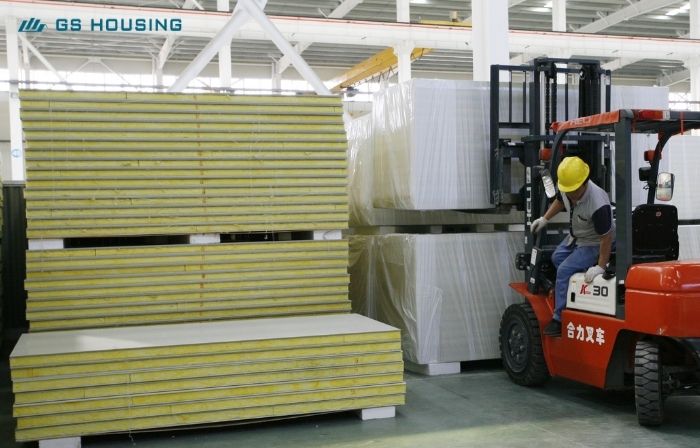
The flatpack temporary housing system used for the project incorporated steel structural components, insulated wall panels, and weather-resistant building elements designed to provide practical protection for temporary accommodation.
For Southeast Asian contractors, this is an important consideration when evaluating imported modular buildings.
A system developed for rapid installation still needs to be assessed against the local climate, intended occupancy period, site conditions and project function.


A First Project in Myanmar, With Wider Southeast Asian Relevance
The Yangon project marked GS Housing’s first project in Myanmar.
That makes the project significant beyond the 814 units themselves. It represents GS Housing's entry into a market where temporary accommodation, event infrastructure, humanitarian facilities, and rapid-build construction can create opportunities for flat-pack temporary building systems.
For regional contractors, flatpack construction can provide an additional procurement option when conventional construction does not align with the required timeline. Modular units can form one part of a broader construction package, alongside site preparation, foundations, MEP works, landscaping, and local installation.
This makes the system relevant to EPC contractors, general contractors, developers, event infrastructure companies, humanitarian organizations, and local construction partners.
From Religious Events to Southeast Asian Temporary Infrastructure
The application demonstrated in Yangon can extend beyond one religious event. The same modular approach can support temporary accommodation modules for large gatherings, pilgrimage-related facilities, community activities, humanitarian programs, public events, and seasonal projects.
For contractors in Southeast Asia, this creates an opportunity to offer clients a more flexible alternative to conventional temporary construction.


A Reference Temporary Accommodation Modules Project for Myanmar and Southeast Asia
The 814 Temporary Accommodation Modules to Yangon project represents an important milestone for GS Housing as its first project in Myanmar.
More importantly, it demonstrates how flatpack temporary buildings can be used to create both temporary accommodation and supporting facilities for religious events under a demanding schedule.
With 814 units produced and shipped within 15 days, the project combined factory manufacturing, flat-pack transportation and rapid deployment to address an urgent local requirement.
For Southeast Asian contractors, developers and project owners considering similar applications, the Yangon project provides a practical reference for evaluating flatpack construction where large capacity, short schedules, and temporary use come together.
Planning a Modular Event or Temporary Accommodation Project in Southeast Asia?
GS Housing works with contractors, developers, EPC companies, and project owners on prefabricated modular accommodation, temporary event facilities, emergency housing, and large-scale modular building projects.
Whether the requirement is for a religious gathering, community event, temporary accommodation program, or another time-sensitive project, the building system can be configured around the required quantity, layout, climate, transportation method, and project schedule.
Post time: 01-09-26