


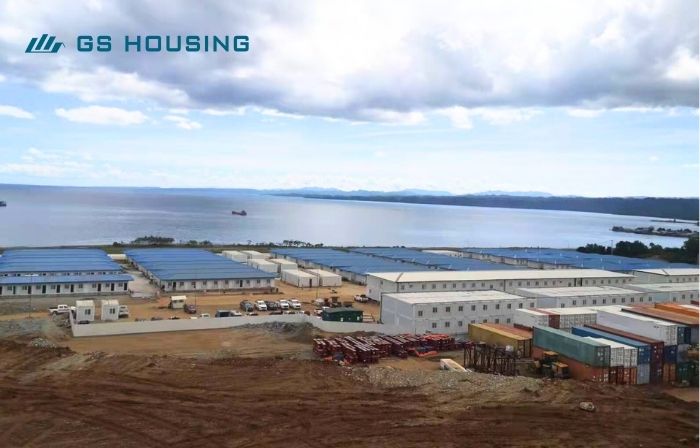
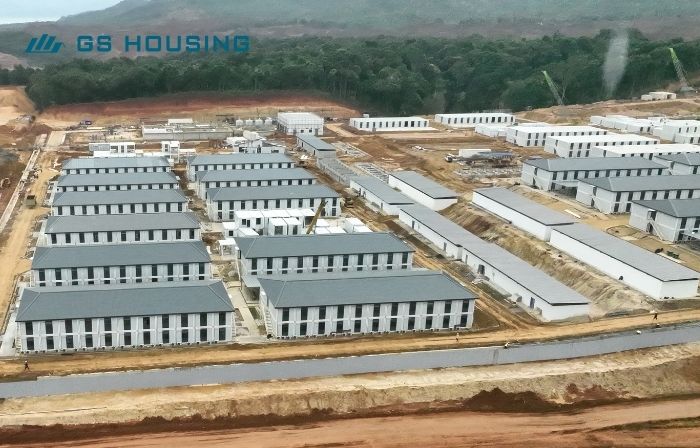
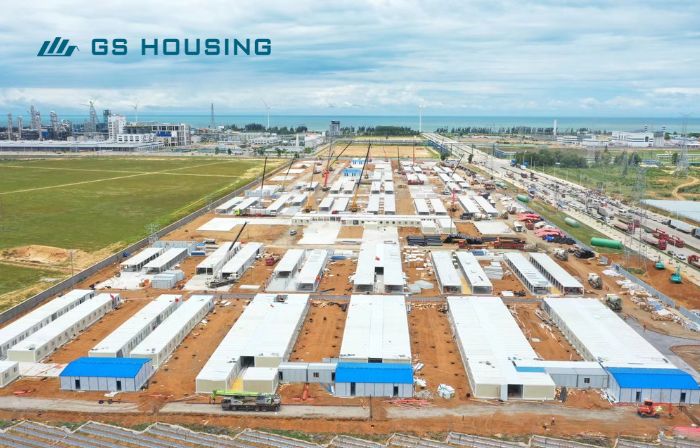
Mining camp accommodation is a modular housing solution for remote mining projects. It provides worker dormitories, dining establishments, offices, clinics, recreation facilities and utilities. Mining camps today can range from 50 to over 5000 workers and are usually built with flat-pack container houses, expandable container homes or permanent modular buildings.
What are mining camp accommodations?
Miners lived in temporary or permanent settlements called mining camp accommodations. Modular camps allow miners to live in areas where facilities are scarce and provide basic needs such as housing, food, recreation, and medical care.
Location: Mining camps are often located in remote and harsh areas.
Facilities: Facilities at mining camps may range from basic container units to fully functional mining villages with food, recreation, and medical care.
Which kind of house is better for workers in mining camps?
GS Housing suggests four types of sustainable mining housing construction to improve miners' lives and work and give them enough time to relax and have fun after work: permanent modular buildings, flat-packed container houses, and expandable container homes.
There are advantages and disadvantages to each option in terms of customization, portability, and speed of construction.
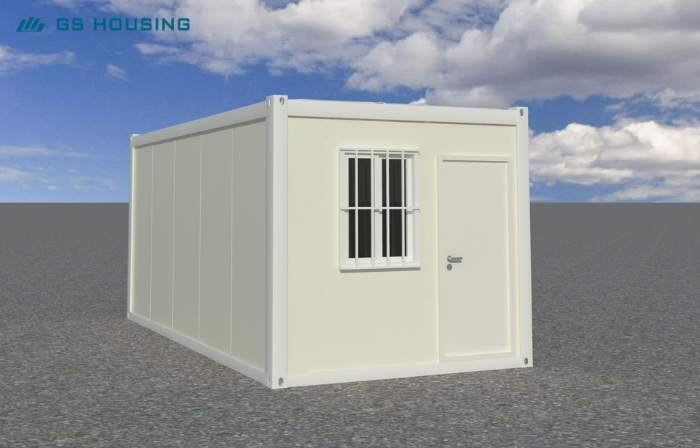
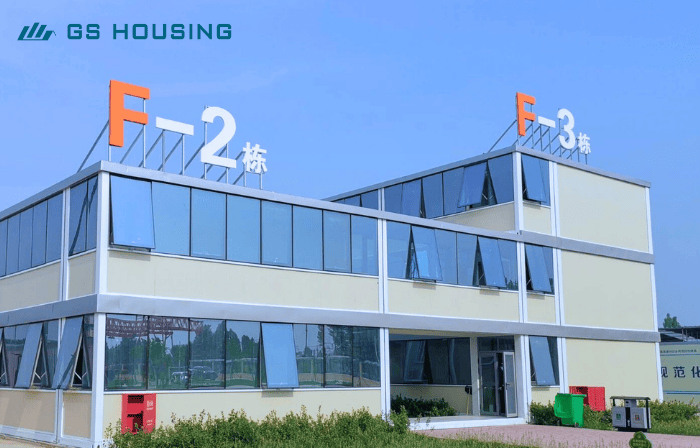
Flat-packed container homes: Flat-pack housing is great for those who need to grow quickly; the house can be put together and taken apart quickly and is cost-effective.
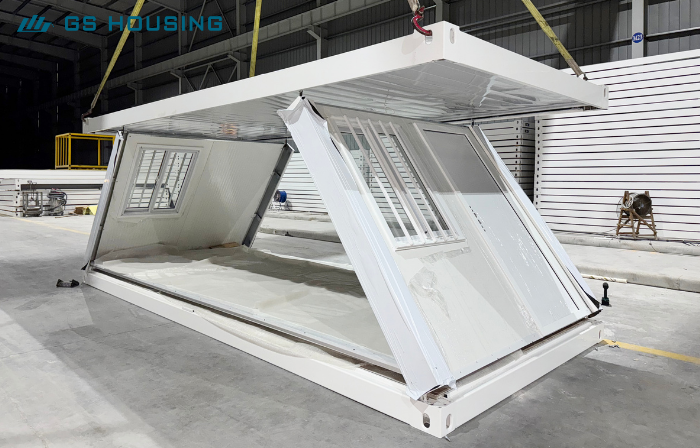
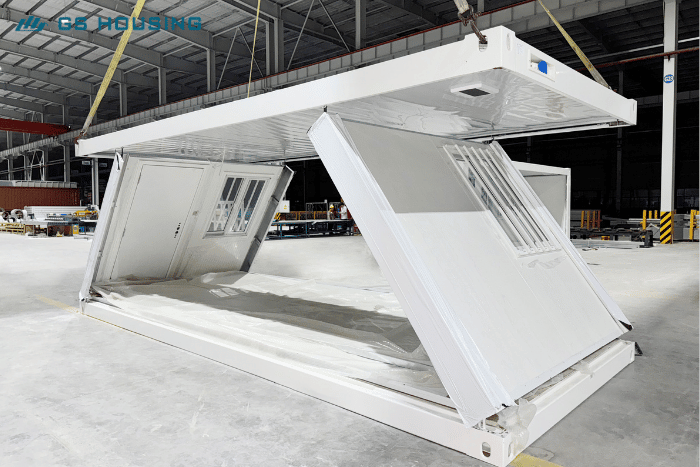
Z-Type Container House: a foldable modular building that can be installed within 10 minutes. Ideal for worker camps, mining projects, and emergency temporary housing.
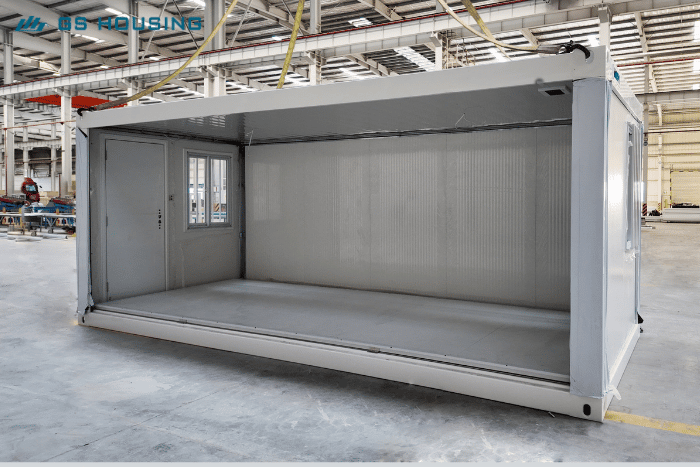
Expandable container homes: These mobile homes are easy to expand, serve as living and working spaces for about 10-20 years.
Permanent modular construction: the modular buildings are made up of prefabricated modules, which makes it easy and quick to build permanent buildings. The building can be made according to your needs.
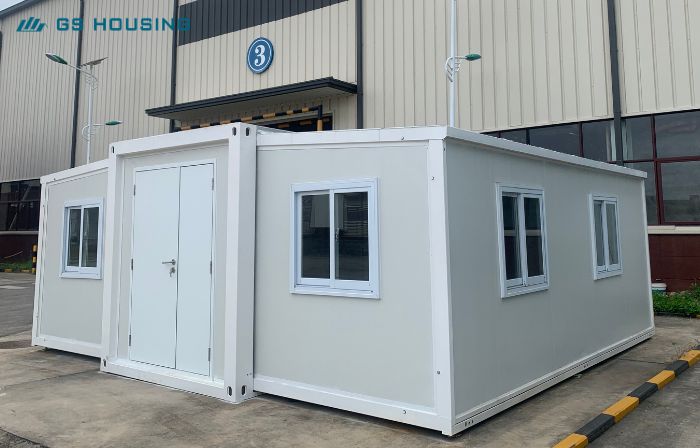
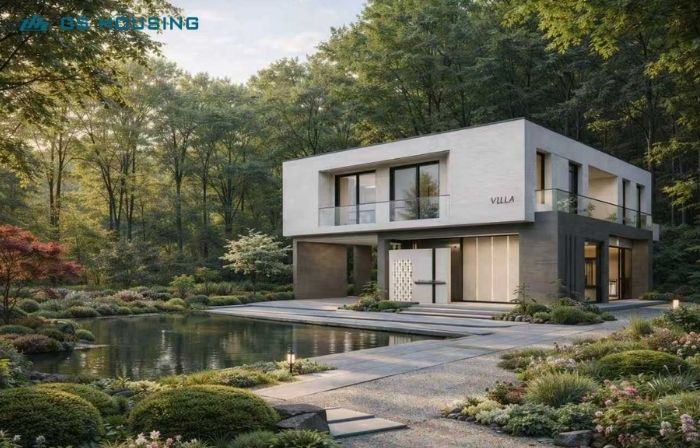
Which kind of prefabricated labour mine camp is best for you?
Choose the suitable mining camp accommodation solution that works best for you based on things like cost, speed, comfort, durability, and how long the project will take:
1. Flat-packed container house
Foldable Transport: Its flat design drastically lowers logistics costs by reducing its volume to only 25% of its unfolded size.
Simple Assembly: three to four workers can finish installing a single unit in a few hours.
Ready to Use: The flat-pack housing can be placed directly on flat ground.
Low Cost: Compared to permanent modular buildings and pop-up foldable container homes, it offers lower costs.
Modular Expansion: It can be spliced together to create larger spaces (offices, cafeterias, etc.).
No Site Requirements: Suitable for complex terrain such as steep slopes and muddy ground, and can even be constructed overhead.
All done. Basic features: Wiring ducts that are already in place, door and window openings, and easy access to water and electricity.
A standard container unit (2.45 m / 3 m x 6 m) can hold 4 to 6 people for living or working.
Cons:
Technical Requirements: skilled workers are needed to install the house; otherwise, the installation time will be longer.
Regular inspection: after long-term use, the container house needs to be checked and maintained on a regular basis.
Suitable for: emergency housing, various worker camps.
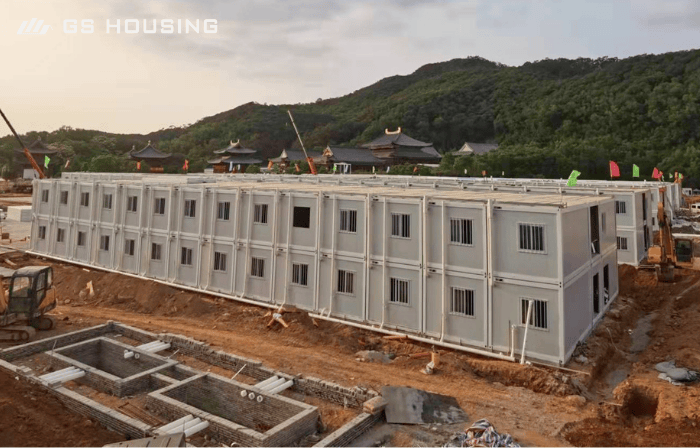
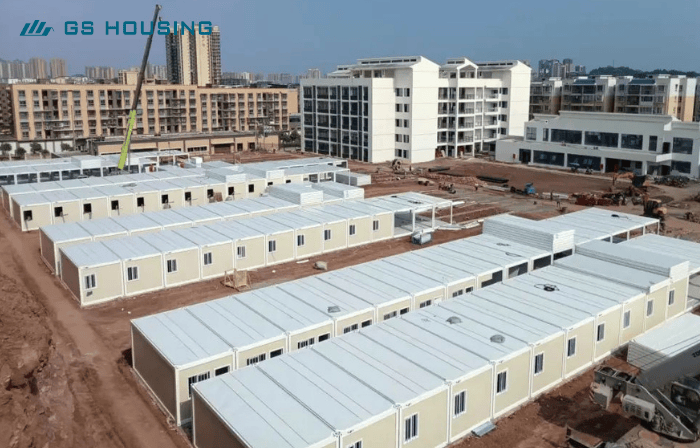
Z Type Container House
Benefits:
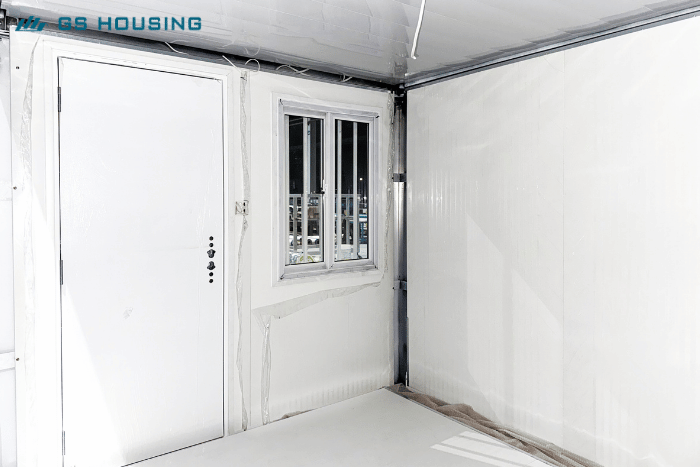
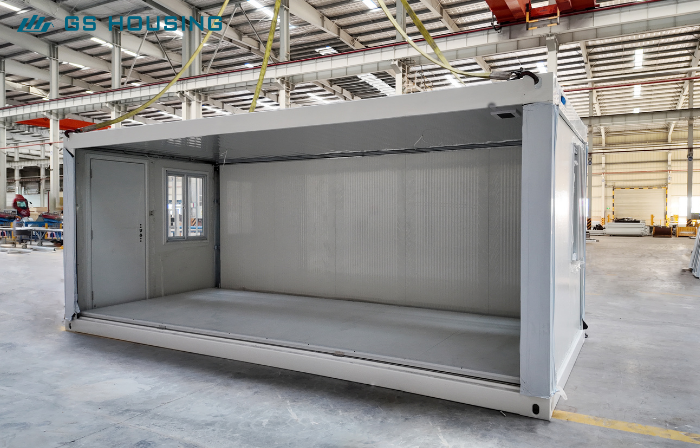
Cut your transportation cost: The Z-shaped fold design allows you to stack multiple units together for shipping, which saves you lots of money for shipping.
Easy installation: most of the parts in factory are pre-assembled. You can usually fit standard units in minutes.
Portable: The folding house can be folded up and moved to a new place when the project is completed.
Economical solution: Z type container house is cheaper than many temporary buildings due to the low transportation, installation and labor costs.
Multi-purpose: Ideal for worker dormitories, site offices, security rooms, medical clinics, classrooms and disaster relief shelters
Drawbacks:
Low story: The design of container houses is for use in one or low-rise buildings.
Limited customization: The folding mechanism can restrict the ability to create certain architectural features, like expansive open areas and intricate designs.
3. Expandable container house
Advantages:
Quick to install: Installations are quicker than traditional buildings and standard prefab homes.
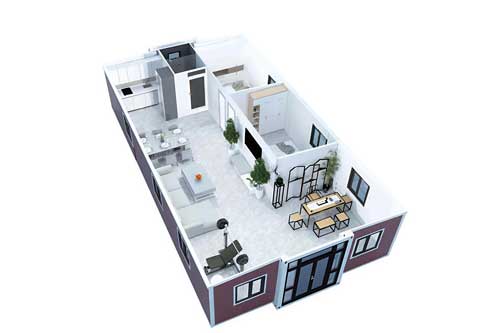
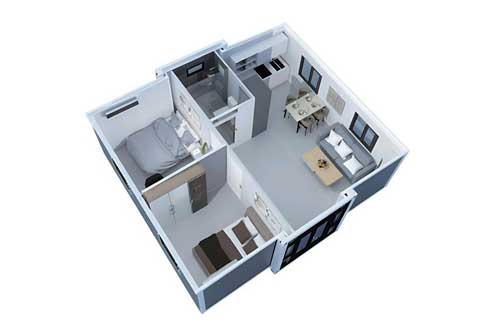
Comfort: It has more room inside than a regular container building or a prefab building when it opens up.
Durability: The house is made of robust steel structure, easy to transport and can withstand harsh conditions.
Modular and scalable: Can be stacked or overlaid. The number of module units can easily be increased or decreased to increase or decrease the size of the worker camp.
Relocation: Can be moved easily to another place.
Disadvantages:
Higher Cost: Cost more than flat packed prefabricated houses but less than permanent modular houses.
Assembly: at site assembly required
Best suited for projects that prioritize employee comfort and retention, as well as medium to long-term work camps (10-20 years).
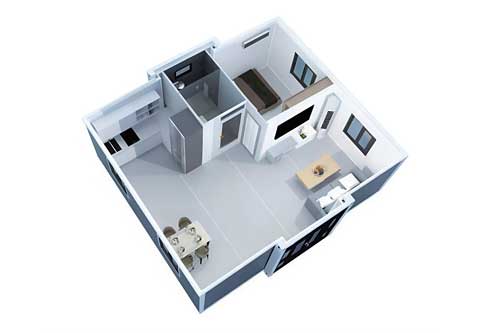
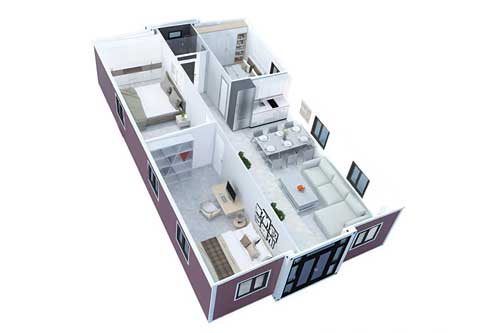
4. Volumetric Modular Construction
Advantages:
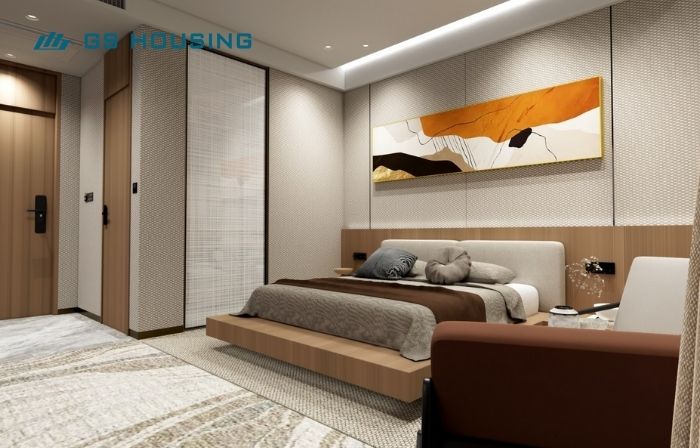
Superior Quality & Comfort: constructed to traditional building standards, with premium finishes, superb insulation, roomy designs, and contemporary amenities. Suitable for long-term letting.
Speed (Compared to Traditional Homes): Modules are built in factories, so site prep can happen at the same time, which speeds up the whole construction process. Also, on-site labor will be cut by 70%.
Scalability and Flexibility: Module units are combined in different configurations for different needs (dormitories, apartments, offices, clinics, gyms).
Lifespan: Over 50 years, similar to normal buildings. Relocatable: PMCs are heavier, but they are well-made and can be moved.
Compliance: A modular complex can be designed to meet local building codes.
Disadvantages:
Most expensive upfront: Upfront costs are way higher than other kinds of prefabricated or containerized housing solutions.
Longer lead time: need to plan for design, factory build, and shipping
Site needs: Large modules and cranes can access the site easily. Often, there’s a lot of site foundation engineering required.
Lack of short-term flexibility: Too complex for short-term projects.
Best for: Large, long-term mines (50+ years); “company towns"; luxury projects; locations with strict building codes; on-site headquarters; and permanent facilities. Best at transforming “camps” into "communities."


Key considerations in choosing the best mining site accommodation option
Mine Housing Life Expectancy: 10, 20, or Forever?
Mine camp budget: Total vs Upfront Cost
Velocity: How fast do you need to be up and running?
Comfort and Retention of Workers: What is the standard of living required or expected to attract and retain talented workers?
The site conditions: ground conditions, accessibility, remoteness and climate.
Scalability/Flexibility: Need to change the size of the worker camp?
Relocation: one-time use or multi-time use labour camp accommodation?
Regulations: Local building codes and health and safety standards for worker accommodations
General recommendations for mining camp accommodation
Medium Term (10-20 years) : Expandable container housing or flat pack portable cabin.
Long-Term/Permanent (50+ Years): Modular Construction (PMC)
Mixed mine camps: the best solution, using PMCs for central admin/recreational facilities and long-term senior staff, expandable containers, and flat pack porta cabin for general staff, short-term contractors or ancillary buildings.
By taking into account these factors, in addition to the pros and cons of each solution, mining companies can decide on the best labour accommodation camp strategy for their specific project.
Mining Camp Accommodation Cases Provided By GS Housing
The IPIP Modular Accommodation Camp is a large scale mining workforce accommodation project delivered by GS Housing for Indonesia’s rapidly growing nickel mining industry. The camp, located inside the Indonesia Pomalaa Industrial Park (IPIP), was designed to provide comfortable, efficient and self-sufficient living and working facilities for thousands of construction and mine personnel.
Mining Camp Accommodation FAQ’s
Question 1: How much does a mining camp cost?
Answer: The price of a mining camp depends on a number of factors such as the size of camp accommodation, the standards of accommodation, location, climate conditions, and supporting facilities.
A small mining camp for 50-100 workers may cost tens of thousands of dollars, while a fully equipped mining camp for 1,000-5,000 workers can require a multi-million-dollar investment.
Question 2: What is the life expectancy of a building in a mining camp?
Answer: The lifespan of a modular mining camp building typically spans between 15 and 20 years, contingent on the structural design, materials used, maintenance practices, and environmental conditions. High-grade galvanized steel structures and insulated wall panels can be made durable enough for long-term use in tough mining conditions.
Question 3: What's the perfect building type for remote mining sites?
Answer: Flat-pack container houses and permanent modular construction are often the preferred choice for remote mining locations. Flat-pack units can be quickly installed and transported cheaply, while permanent modular buildings provide greater comfort, durability, and long-term performance for large workforce accommodation camps.
Question 4: Can mining camps be moved?
Answer: Yes. Most modular mining camps are designed to be moved and reused. Buildings can be deconstructed, transported, and reassembled at new project sites, providing an ideal solution for temporary mining operations, exploration camps, and infrastructure projects that require flexibility and mobility.
Question 5: How long does it take to construct a mining accommodation camp?
Answer: Construction time varies with the size and complexity of the project. A small mining camp can often be set up in a few weeks, while a large accommodation camp for hundreds or thousands of workers can take several months.
Question 6: Why are modular buildings often constructed for mining camps?
Answer: Modular buildings are cost-effective, simpler to expand, easier to relocate and quicker to construct than traditional builds. They also provide comfortable living conditions, energy efficiency and the ability to adapt to remote and challenging mining environments.
Question 7: What facilities are provided in a modern mining camp?
Answer: A modern mining camp usually consists of worker dormitories, site offices, dining halls, kitchens, laundry rooms, recreation areas, medical clinics, security stations, warehouses, and utility systems. Larger camps may also have supermarkets, gyms, places of worship, and training facilities.
Question 8: Can modular mining camps withstand extreme climates?
Answer: Yep. Modular mining camps can be designed to suit extreme environments such as deserts, tropical areas, high altitude, arctic climates, and coastal locations. Extra insulation, ventilation, anti-corrosion and climate-control systems can be added to suit the particular site needs.
Question 9: Why should you choose GS Housing for mining camp accommodation projects?
Answer: GS Housing provides a complete range of mining camp solutions from design, fabrication, transportation, installation to after-sales service. With experience in mining projects in Asia, Africa, the Middle East and South America, GS Housing provides scalable accommodation camps for 50 to 5,000+ workers, helping mining companies reduce costs and accelerate project deployment.
Get Your Mining Camp Accommodation Soluion?
Post time: 18-08-25