


The selection of a flat-pack module supplier is an important decision for construction contractors, project developers, engineering companies, and international distributors. A supplier may have competitive prices and attractive product specs, but these alone do not assure the successful delivery of a modular building project.
For overseas buyers, supplier reliability is about much more than manufacturing a building unit. This includes production consistency, engineering support, material quality, customization, transportation and installation coordination, and the ability to handle project-specific requirements.
So is GS Housing a reliable flat pack modules supplier?
GS Housing is a Chinese prefabricated building and modular construction solutions manufacturer. Established in 2001, the company offers flat-pack container houses and other modular building systems for construction camps, workforce accommodation, offices, schools, and infrastructure projects.
However, rather than taking supplier claims at face value, buyers should assess its capabilities against the real demands of their projects. The seven factors below are a hands-on guide to evaluating GS Housing as a prospective flat-pack modules supplier.
1. Production capacity: Can the supplier handle large orders?
Manufacturing capacity is one of the first things an international buyer should think about. A supplier may build a few sample units, but delivering hundreds or thousands of flatpack modules on a set project schedule requires a different level of operational chops.
Delays in production can impact site preparation, labor arrangements, and overall construction schedule for large EPC projects and construction camps and workforce accommodation facilities.
GS Housing has established several manufacturing bases in China with a production area of around 400,000 square meters. It has the capacity to produce flat-pack container modules and other prefabricated building products for different project needs through its manufacturing network.
2. Product Consistency – Are the flatpack modules built to the defined specifications?
Flat-pack modules are constructed as separate units and assembled on-site. Variations in dimensions, connection locations, or component specifications between production batches can cause alignment issues, extra adjustments, or avoidable delays for installation teams.
Thus, a reliable flatpack container module supplier should have well-defined product specifications and manufacturing procedures.
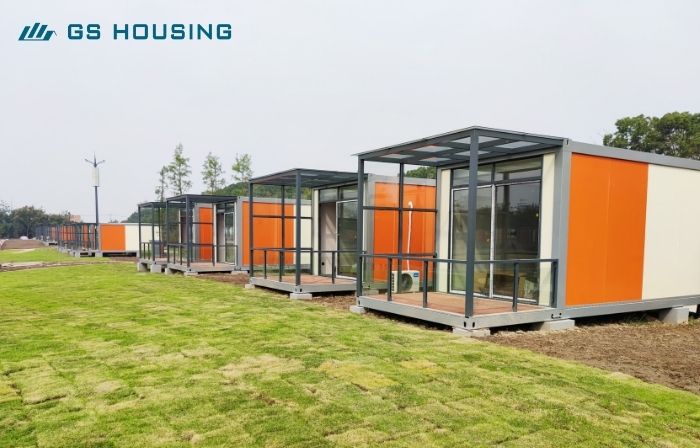
GS Housing flat-pack container houses are based on a standardized modular system. Typical module dimensions are 2.4 m × 6 m and 3 m × 6 m. . Custom configurations can be designed to meet the project requirements.
The standardized system coordinates significant building components such as
l Main steel frame and supporting structures.
l Floor, wall, and roof panel systems.
l Insulating materials and interior finishes.
l Doors, windows, and connectors.
l Electrical and plumbing provisions.
Standardization does not mean all the projects will have the same building configuration.
The most important thing for procurement teams to do is to make sure the approved drawings, technical specifications, and final production documents match up. Any changes in materials, dimensions, or accessories have to be documented prior to manufacturing.
3. Engineering and customization: Is the supplier able to adapt to the real project conditions?
A good supplier of flat-pack modules will know that modular buildings are not just interchangeable containers.
A construction office, a mining accommodation facility, a temporary school, and a medical building have different requirements in terms of layout, occupancy, utilities, circulation, and building performance.
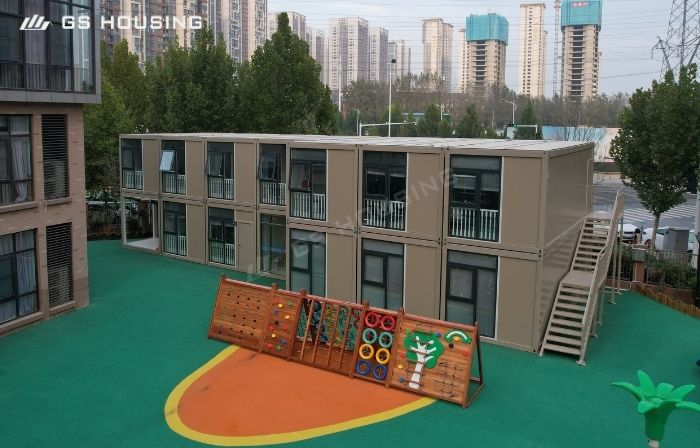
A temporary school project, for example, may need classrooms, administrative offices, teacher preparation rooms, sanitary facilities, and storage areas. These spaces have to be coordinated in an overall layout and not as unconnected single units.
GS Housing offers project-based design support, which includes:
Planning functional space and building layout.
Personalized settings and module structure.
Technical drawings & product specifications.
Material selection as per project requirements.
Coordination of electrical, plumbing, and other utilities.
Engineering coordination is very important, especially for projects located in environmentally challenging areas.
Wind loads, seismic requirements, snow loads, temperature variations, humidity, and corrosion exposure can affect structural design and material selection.
4. Quality Control: How does the supplier control product quality?
You cannot judge the quality of the product by photos or sample units. For large volume orders, the buyer needs to be confident that the goods received will meet the agreed specifications.
The quality control should also cover the whole manufacturing process from raw materials to finished modules.
Key inspection areas for flat-pack container houses:
Raw materials control: Verification of steel grades, material thickness, insulation specifications, and surface treatments in accordance with the approved technical documents.
Production: During production, the cutting dimensions, welding quality, drilling positions, and component accuracy must be supervised.
Assembly inspection: Inspect structural joints, frame measurements, panel fit, and parts compatibility.
Inspection of Finished Product: Inspect doors, windows, electrical provisions, plumbing arrangements, and surface finishes as per the agreed scope of work.
Pre-shipment inspection: Check the package and identification of components, arrangements, and documentation for shipping before dispatch.
GS Housing manufactures and supplies its products through factory production, quality control, transportation, and on-site assembly coordination.
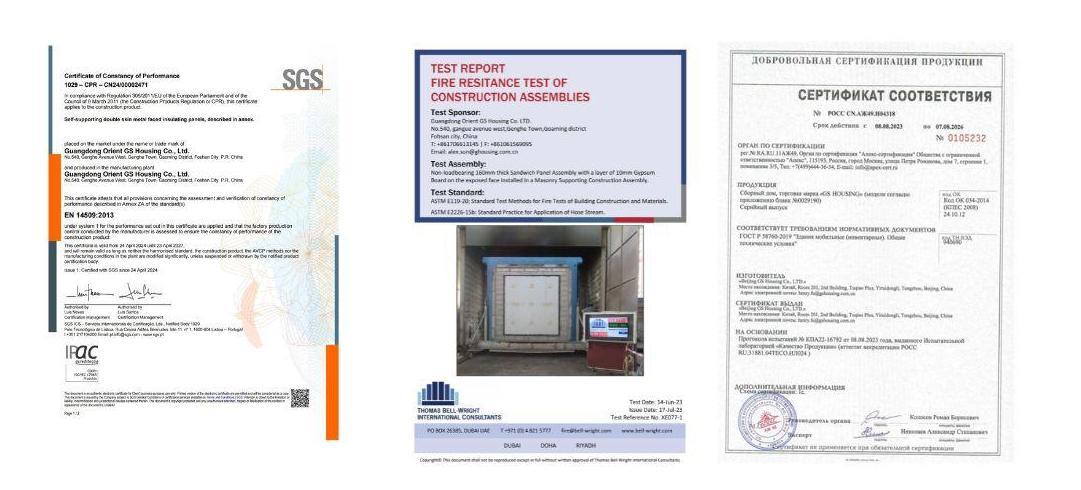
International purchase: Buyers are required to ask for the inspection records, relevant test reports, and certification documents applicable to the product chosen and the target market.
5. Transportation and Installation: Does the supplier know about overseas delivery?
Producing a modular building is only one part of an international project; transportation and installation can greatly affect the final project cost and schedule.
This is where flat-pack buildings come in.
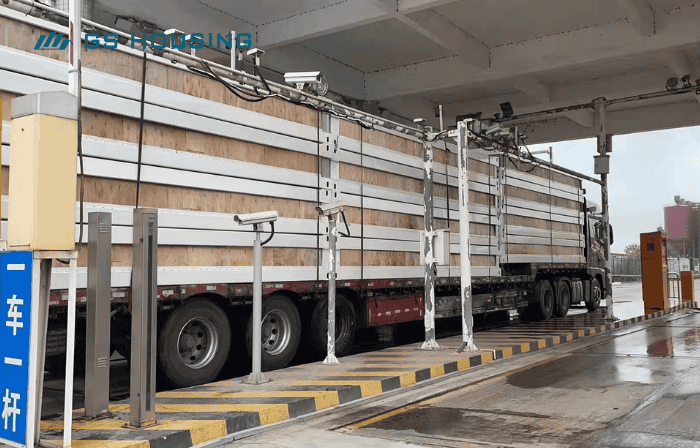
Flat-pack modules are designed to pack more efficiently in space than shipping each building as a fully assembled unit. This can result in better utilization of shipping, particularly for projects requiring multiple classrooms, offices, or accommodation units.
GS Housing’s flat pack modules are intended to be easily transported and assembled on site. One unit can typically be installed in about 2-4 hours under suitable conditions, depending on configuration, site preparation, and the installation team.
Buyers should not look at the speed of installation on its own. Proper location of the foundation, coordinated utility hook-ups, proper lifting equipment, and trained personnel are also dependent on success.
GS Housing does this through a process of project assessment, design, manufacturing, quality inspection, transportation, and assembly.
This integrated approach helps buyers coordinate factory production and site preparation with one another. While modules are being fabricated, contractors can prepare foundations, organize access routes, and coordinate utility connections.

6. Project Experience: Has the Supplier Worked on Different Applications?
The project history of a supplier can be a good indicator of its ability to cope with different requirements.
GS Housing has more than 20 years of experience in the manufacturing of prefabricated buildings and modular construction.
Flatpack modular building applications:
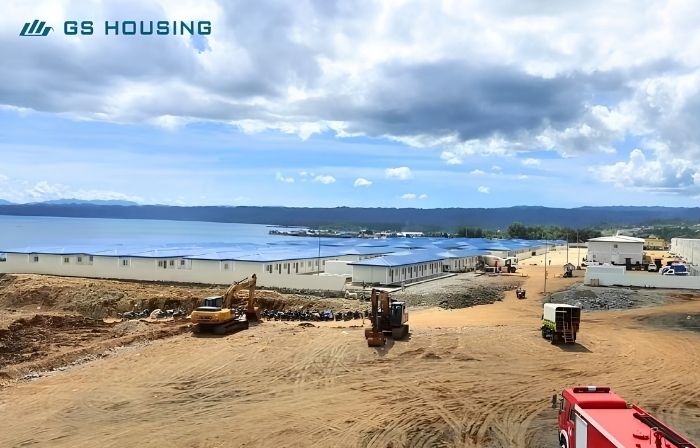
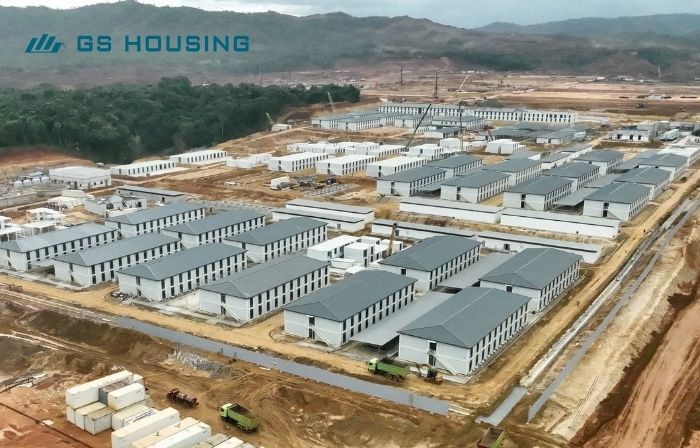
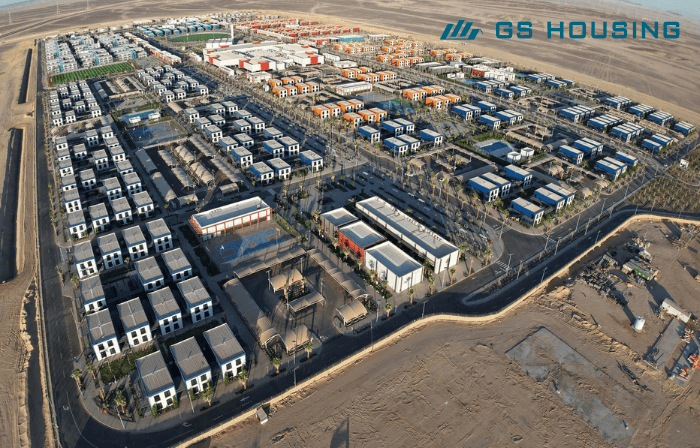
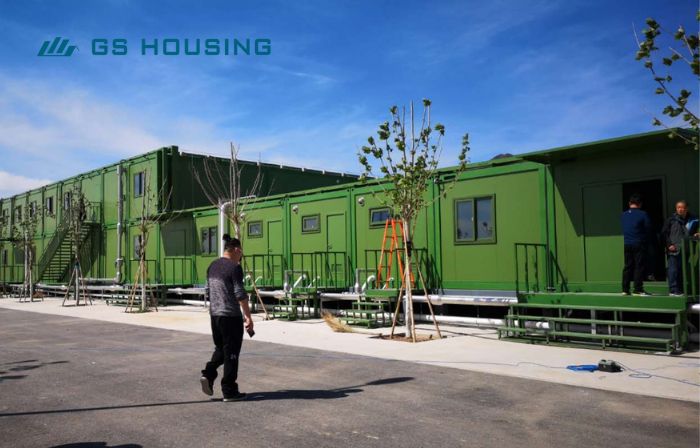
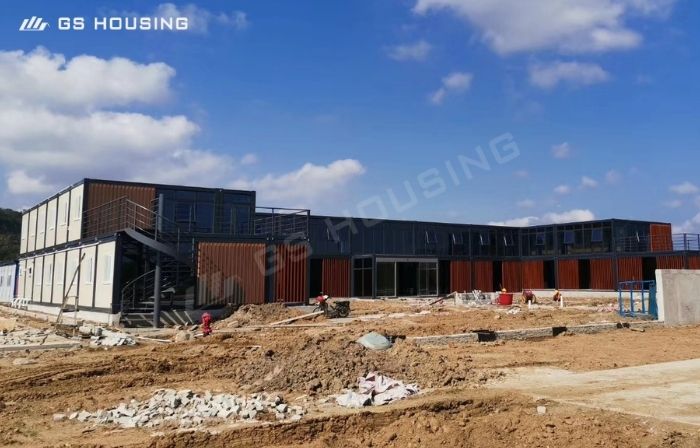
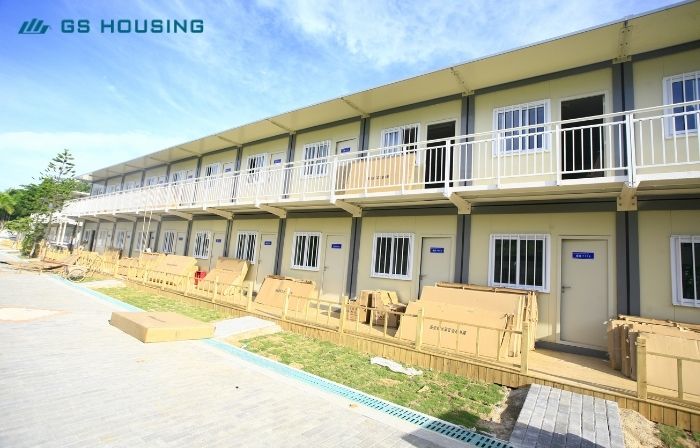
Construction and workforce camps: Man accommodation, site offices, canteens, and related structures for infrastructure and industrial projects.
Mining and energy camp projects: Modular buildings for telecommuting environments where transport and construction logistics are key.
Education facilities: Classrooms, modular schools, teacher rooms, and administrative buildings (temporary).
Government and public infrastructure: Prefabricated buildings for projects with organized procurement and coordinated delivery.
Commercial & residential uses: modular offices, accommodation facilities, and other functional buildings.
Each of these applications has different operational requirements. For instance, a mining camp may emphasize accommodation capacity, utilities planning, and environmental durability. A temporary school would call for careful attention to classroom layouts, student circulation, ventilation, and safety.
Procurement managers should check for relevant case studies, project photographs, technical references, and details of the supplier’s actual scope of work to assess project experience.
7. Communication and project management: Does the supplier facilitate the entire procurement process?
International modular building projects typically involve multiple stakeholders, for example, the manufacturer, the EPC contractor, the local construction firm, the logistics provider, the installation crew, and the project owner.
A good product can also have problems of execution if the technical information is not complete and the responsibilities are not well defined.
A good provider will be clear in their communication right from the start.
Before production, the buyer and supplier should verify:
l Building quantities and functional requirements.
l Approved drawings and technical specifications.
l Requirements for material grade and quality.
l Production lead time and inspection arrangements.
l Includes packing, shipping, and delivery.
l Extent of installation & technical assistance.
l After-sales arrangements and warranty conditions.
GS Housing helps coordinate your project through product specifications, technical drawings, manufacturing arrangements, transportation planning, and installation assistance.
Early coordination is particularly helpful for government procurement and EPC projects. This allows parties to assess the scope of supply, technical requirements, delivery terms, and division of responsibilities before entering into commercial commitments.

Conclusion—Is GS Housing a Dependable Flat Pack Modules Supplier?
GS Housing is a potential supplier for international flat-pack modular building projects with an established manufacturing background, multiple production bases, standardized product systems, project-specific design support, quality inspection procedures, and experience across different building applications.
For EPC contractors, project developers, construction companies, and international distributors, GS Housing is a suitable candidate for the supplier evaluation process.
Looking for a supplier of flat-pack modules for your next project?
GS Housing can help you with project evaluation, modular construction layouts, product specifications, and production arrangements for construction camps, labor camps, temporary schools, offices, and other modular building applications.
Contact GS Housing to discuss your project requirements and request a customized flat-pack module solution.
FAQ
1. Is GS Housing a trading company or a manufacturing company?
GS Housing is a Chinese manufacturer of prefabricated buildings with multiple production bases.
2. What types of projects are modular buildings built for by GS Housing?
GS Housing flat-pack modules can be adapted for use as construction camps, mining accommodation, site offices, temporary schools, staff facilities, and other modular building applications.
3. How do foreign customers evaluate the quality of GS Housing's modular buildings?
Buyers may require technical specifications, materials documentation, test reports, certification documents, and factory inspection records. Also, third-party inspection can be arranged as per the purchase agreement.
4. What information do you require from me to quote a flat-pack module?
The important information would be: location of the project, quantities required, size of building, the use, preferred layout, technical standards, site conditions, delivery schedule, and installation requirements. The supplier can provide a more accurate proposal with drawings or preliminary project specifications.

Post time: 05-11-26