


The UAE construction market is witnessing a holistic shift from traditional cast-in-situ concrete to prefabricated construction. Portable cabins are emerging as one of the most promising product segments. Portable container houses differ from conventional converted second-hand shipping containers; they adopt a new design of lightweight steel structure, are prefabricated in factories, and shipped in flat-pack packaging, making fast on-site assembly possible through bolts. Such a product form is a perfect match to the core demands of UAE contractors for ‘controllable shipping costs, rapid on-site installation and traceable quality.'
I. Definition of Product and Market Positioning of Porta Cabin
1.1 What’s a portable container house?
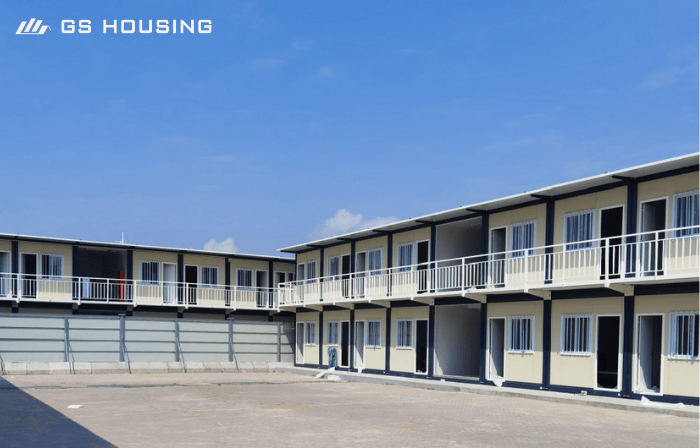
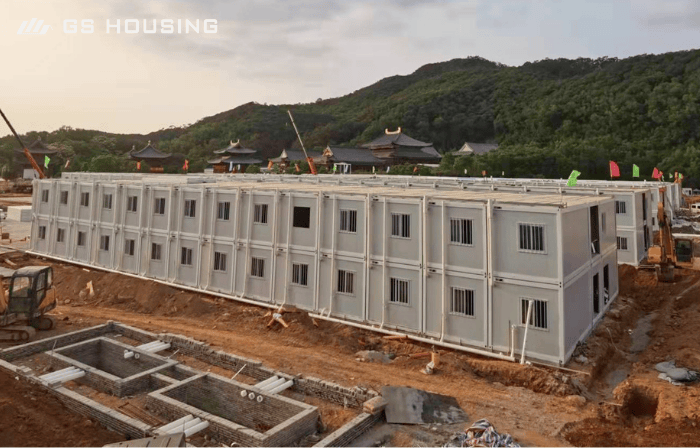
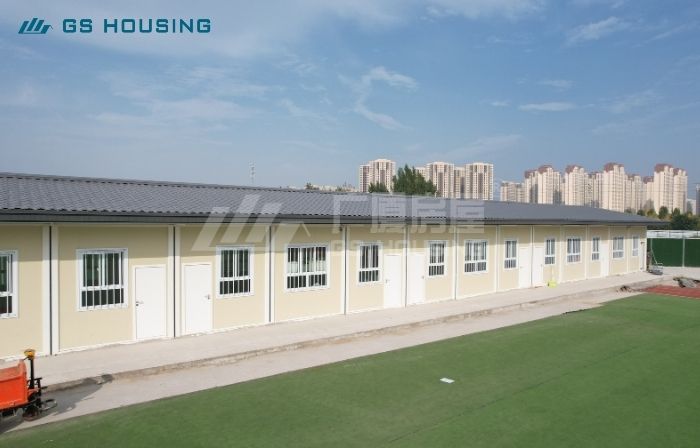
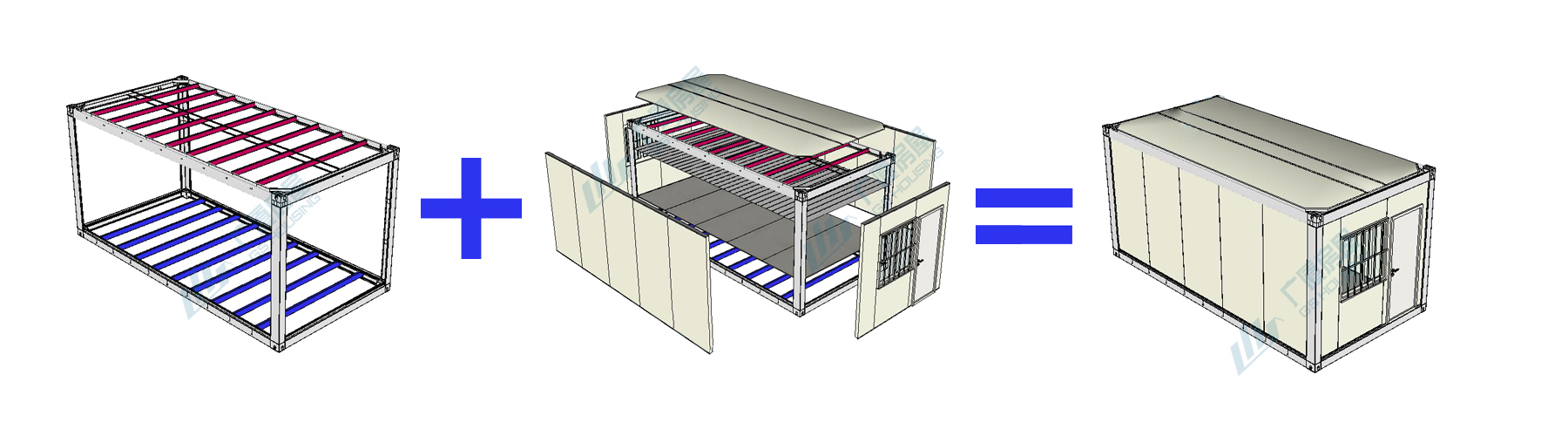
A portable container house is a modular building product that deconstructs the building structure into standardized components, prefabricates them in a factory, packs them flat for transport, and assembles them quickly on-site with bolts. The essence of its design can be described in four words:
Flat pack all structural elements—columns, beams, wall panels, roofs, doors, and windows—are stacked and packaged in the most compact form, making the best use of space for container shipping.
Bolted Assembly: All connections are bolted, so on-site welding equipment is not required; assembly can be performed with 4–6 workers.
Standardized Module: 20-foot or 40-foot units are supported for horizontal splicing and vertical stacking.
Reusable & Relocatable: Structural design allows multiple disassembly and reassembly cycles, reducing long-term operating costs.
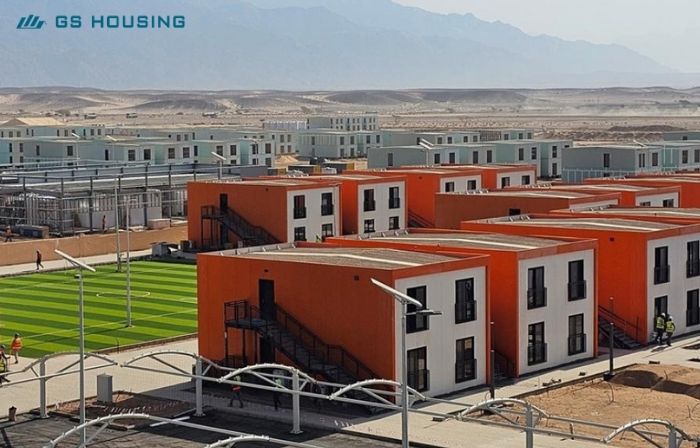
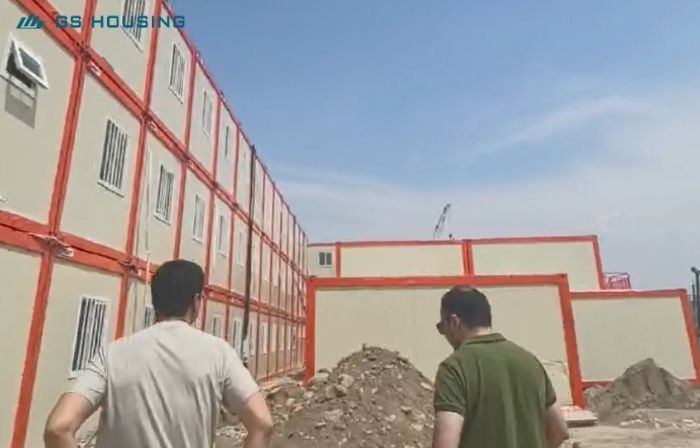
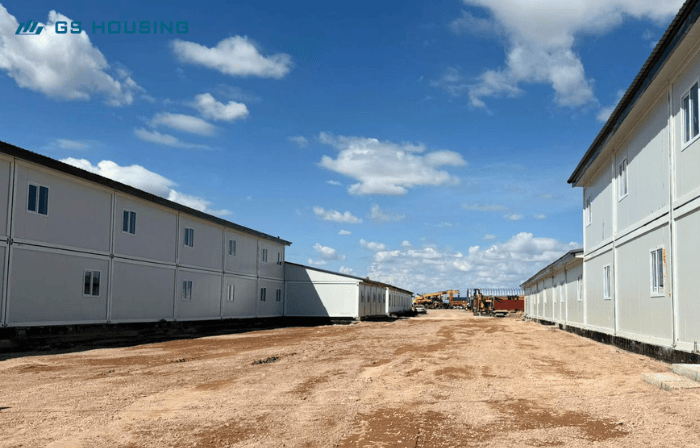
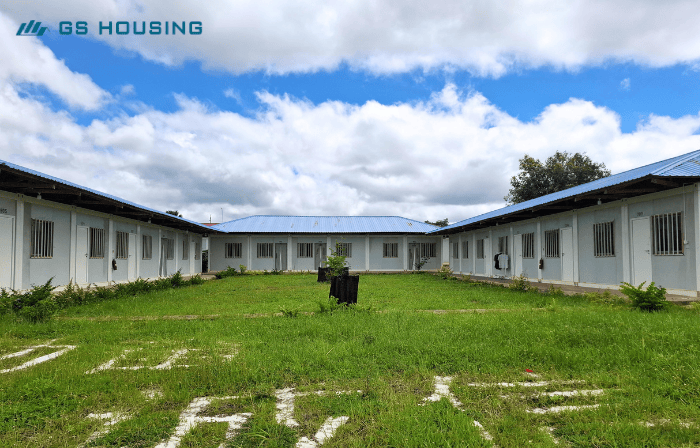
1.2 The difference between “portable container house” and “converted second-hand shipping container."
In the UAE market, the term “container house” is commonly used to describe two completely different products. Here’s a comparison table showing the major differences between flat-pack container houses and traditional converted shipping containers:
|
Comparison Dimensions |
Portable container house |
Converted Shipping Container |
|
Structural Origin |
Newly designed, factory-manufactured light steel structure; |
Used decommissioned shipping containers |
|
Thermal Insulation Performance |
rock wool sandwich panels specifically designed for the UAE climate |
Relies on an additional insulation layer, resulting in significant thermal bridging. |
|
Size Flexibility |
Customizable (width, length, and height are adjustable). |
Limited by standard container dimensions (20/40 feet). |
|
Installation Method |
Bolted connection, no welding required. |
Requires cutting and welding, resulting in significant on-site work. |
|
Appearance Design |
Customizable facade, gable roof, and other architectural styles. |
Limited by container structure, the appearance has a more industrial feel. |
|
Transportation Costs |
Flatbed packaging, high efficiency by sea. |
Whole-unit transportation, large volume, high cost. |
|
Service Life |
Over 20 years. |
10–15 years (existing structural fatigue). |
However, there is still some demand for converted shipping containers in the UAE market, mainly targeting budget-conscious short-term projects. For energy projects, government contracts, and large-scale long-term operations, portable container houses are a more rational choice due to their controllable design, stable performance, and complete compliance.
1.3 Market Positioning: An “Efficient Product” for Big Projects
The main use cases of portable container houses are medium- and large-scale industrial and mining camps, housing expansion projects, and emergency housing after disasters. It is competitive in the market in three respects:
Logistics Efficiency: Flat-pack packaging can carry three to four times as much per container as traditional full-size containers.
Installation Speed: After arriving at the construction site, GS Housing’s modular container houses can be basically installed within 4 hours.
Factory prefabrication by Quality Consistency eliminates quality deviations during on-site construction and meets the compliance requirements of regulations such as those of the Dubai Municipality.
II. UAE Modular Container House Market Overview, 2026
2.1 Size and Growth of the Market
The UAE modular container house market is growing rapidly. Market research data indicates that the UAE portable container houses market was valued at roughly US$18.29 million in 2025 and is anticipated to reach US$58.29 million by 2032, expanding at a compound annual growth rate (CAGR) of 18.01% over the forecast period (2026–2032), more than twice the growth rate of the overall prefabricated building market in the UAE.
Container prefab houses have the largest advantage of logistical efficiency in prefabricated construction and are growing at a rate well above the industry average.
2.2. Market Driver
The ironclad requirement for “rapid deployment” in large-scale engineering projects is a key market driver.
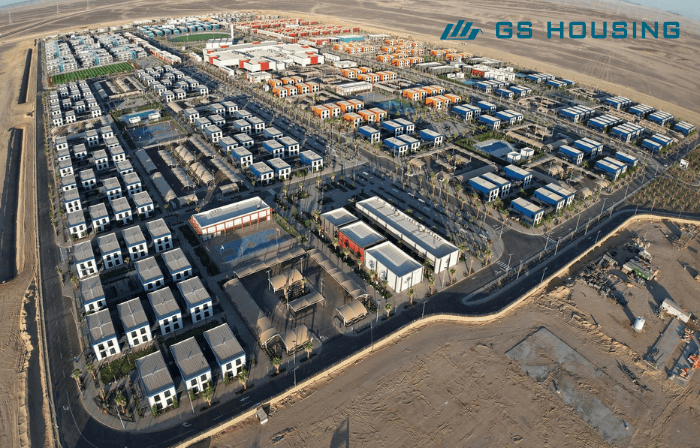
National strategic projects like Saudi Arabia’s NEOM and the UAE’s “Projects of the 50” have established unprecedented demands for the speed of infrastructure construction. Project contractors don’t need “temporary structures"; they need industrial-grade modular buildings that can be built in weeks and put in service for 10-20 years. A case study of GS Housing’s supply of prefab housing solutions for 30,000 people in the NEOM project is typical of this demand.
The need for optimized shipping costs.
In the context of fluctuating global shipping costs, the flat-pack design of portable modular houses makes the shipping costs of such houses significantly lower than traditional containers or on-site cast-in-place materials of the same building area. GS Housing’s modular container houses can be 90% prefabricated in the factory for each 20-foot container module, greatly reducing the consumption of on-site resources.
A more and more mature regulatory environment.
One institutional advantage of portable container houses is that the factories are traceable and the quality is controllable. Dubai Law No. (3) of 2026 on Building Quality and Safety requires the buildings to be monitored for quality and safety throughout the whole life cycle.
III. Technical Analysis of the UAE-Adaptive Portable House
3.1 Structural system: light steel frame + bolt connection
The proposed flat-pack container house product for the UAE market from GS Housing is based on a high-strength galvanized steel structural frame. Proven by wind load testing, it can withstand the onslaught of severe UAE sandstorms and maintain structural stability for over a decade in harsh environments.
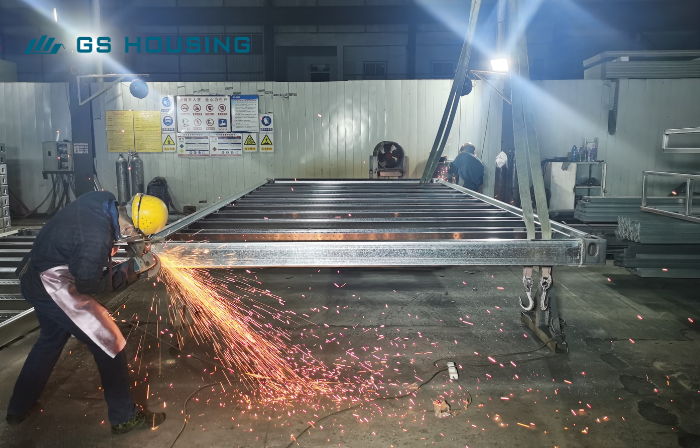
We can pre-fabricate 90% of each 20-foot container module in the factory and install the foundation in just 4 hours after it arrives at the construction site. Multi-unit expansion allows for a man camp, complete with offices, dormitories, and restrooms, to be built quickly.
Take GS Housing's portable container camp project delivered in the Red Sea for example. Each standardized unit has 4 columns, a prefabricated roof/foundation frame, insulated wall panels, and doors and windows, all of which are assembled entirely with bolts, without the need for welding, which greatly reduces the complexity of on-site construction.
3.2 Enclosure System: Dual Thermal Insulation and Fire Protection
GS Housing has developed a type of enclosure system solution for the extremely high-temperature environment of the UAE:
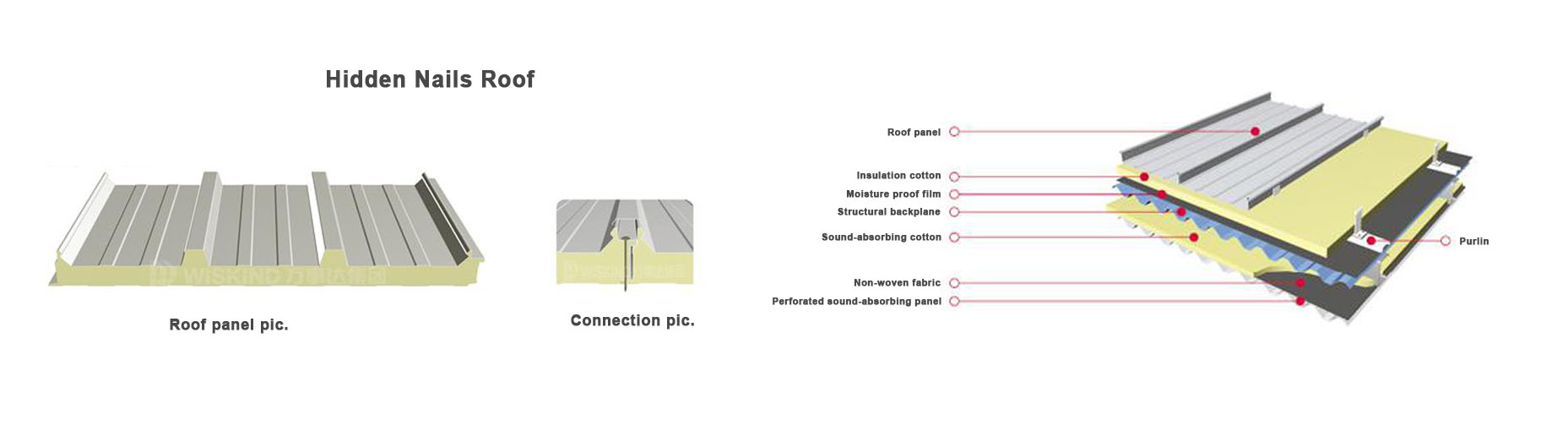
The prefabricated housing modules are constructed with a high-density, fireproof rock wool insulation core that helps maintain a constant indoor temperature and fully meets the 1-hour fire-resistance rating required by UAE fire regulations.
3.3 Modular Extension and Flexible Combination
One of the greatest competitive advantages of the prefab portable house is the possibility to join the modules "Lego-like." Support for standard units:
Horizontal expansion: Multiple container modules can be connected in a row horizontally using connectors to create larger office spaces or residential units.
Vertical stacking: Structural design enables up to 3 layers to be stacked to create a high-density living space in a limited land area.
Functional integration: Worker camps can be integrated with modules such as office areas, dormitories, toilets, restaurants, kitchens, laundry rooms, medical rooms, and recreation rooms.
It is this characteristic that makes the prefab house the preferred building form for worker camps on large-scale projects in the UAE.

IV. Major Application Scenarios
4.1 Worker Camps in the Energy and Large-Scale Engineering Sector
Application Needs: Oil and gas fields and large-scale infrastructure projects need quick deployment of worker camps that can house hundreds to thousands of workers in remote areas.
Adaptability Advantages: GS Housing has rich experience in the Middle East’s energy project, providing a large-scale and high-end worker camp for the country’s future city for the Saudi Arabia NEOM project.
4.2 Commercial and Public Facilities
Application Needs: Hotels, restaurants, educational institutions, and medical facilities are in high demand for fast delivery and consistent quality.
Advantages of Adaptability: Prefab porta cabins can be designed to meet different architectural style needs with standard exteriors or customized cladding. GS Housing has demonstrated the capability of the flat-pack housing system to respond well to emergency situations, such as during the COVID-19 pandemic, when GS Housing quickly delivered tens of thousands of modular medical units.
V. Why choose GS Housing?
√ Production Capacity: 6 Factories, 3.6 Million Square Meters Per Year, 500 Pieces Per Day, More Than 170,000 Pieces Per Year, 5 Major Production Bases
√ International Experience: 70+ countries of project delivery, experience deploying Middle Eastern giga-projects, including NEOM
√ Product Completeness: A complete range of standardized housing types, such as flat-pack houses, expandable houses, Z-type folding houses, and permanent modular buildings, from budget to mid- to high-end
√ Technical Capabilities: 30+ R&D experts Automated production lines for composite panels Graphene electrostatic spraying and other advanced manufacturing processes
√ Extreme Environment Adaptability: Proven engineering capability in extreme environments of -40°C to +45°C
√ Multi-system certifications:including CE / ASTM / SGS / SASO / ISO / GOST-R / CNAS
√ Team Stability: 80% of employees >8 years of service experience, 2,000+ project installation experiences
VI. FAQS: Common Questions About UAE Portable Container Houses
Q1: How long does it take to construct and deliver a portable house that can be mounted and dismounted?
Typical delivery times for projects of various sizes:
Single module: 90 percent factory prefabrication rate; foundation installation completed in 4 hours after arrival on site.
Small Staff Camp (30-50 people):. Usually, 4-6 weeks from order confirmation to on-site use.
Large man camp (over 200 people): Off-site 200-person camp installation is about 1 month.
GS Housing: 4 skilled workers can install an average of about 100 m2 of main structure per day.
Q2: How does the detachable portable house perform in the high-temperature environment of the UAE?
The design takes into full consideration the climate needs of the UAE. GS Housing’s flat pack container houses can be equipped with rock wool insulation cores, with a thermal conductivity as low as ≈0.022 W/m·K, maintaining a constant indoor temperature during the UAE summer and effectively reducing air conditioning energy consumption, and fully meeting the requirements of Dubai Civil Defense for 1–2 hour fire resistance rating in flammable areas.
Q3: Is it possible to make two or three-story detached container houses?
Yup. Support a standardized detachable container house system stacking vertically, up to three stories.
Q4: Are flat-pack container houses portable and reusable?
Yes. Flat-pack container houses are designed to be disassembled and reused many times. No welding is required for installation. All connections are bolted, making removal just as easy. For those clients requiring deployment over multiple project sites, this translates into dramatically reduced long-term operating costs.
Post time: 04-06-26