


In Europe, a product once considered “temporary building construction” is quietly becoming a core infrastructure for various large-scale projects—the knockdown container house.
From the renowned Glastonbury Festival in the UK to the globally touring Formula 1 European races and large-scale infrastructure sites in Germany, France, Austria, and other countries, portable cabins have fully penetrated Europe’s event economy, sports industry, and construction sector, becoming an efficient, flexible, and sustainable space solution.
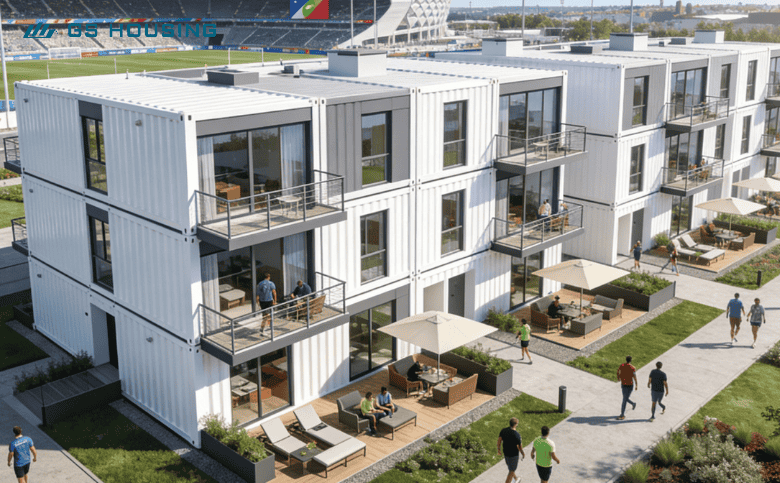
I. Why are knock-down prefabricated container homes becoming so popular in Europe so quickly?
Many things about the European market make it a prime place for modular building construction to grow:
1. A lot of events in a small area
Europe hosts the most cultural and sporting events in the world.
In the UK, there are hundreds of music festivals every year.
France hosts many international sporting events and exhibitions.
Many big industrial and public events happen in Germany
These events have a lot in common: they don’t last long, they are big, and they only happen once.
2. High Costs of Labour and Building
Traditional construction in Europe has to deal with high labour costs and long construction times.
Factory-made prefabricated modules that are knocked down significantly reduce on-site construction costs.
3. Strict Rules and Requirements for the Environment
European countries have strict rules for buildings, such as the performance of thermal insulation, standards for fire safety, and conditions for worker accommodation in containers
The EU is also strongly promoting a circular economy at the same time. Detachable prefab modules can be used again, which is in line with green development trends.
4. Time Efficiency as a Key Competitive Edge
The traditional temporary construction cycle lasts from 6 to 8 months.
Deployment of detachable prefab modules: 2 to 4 weeks is money for big events and engineering projects.
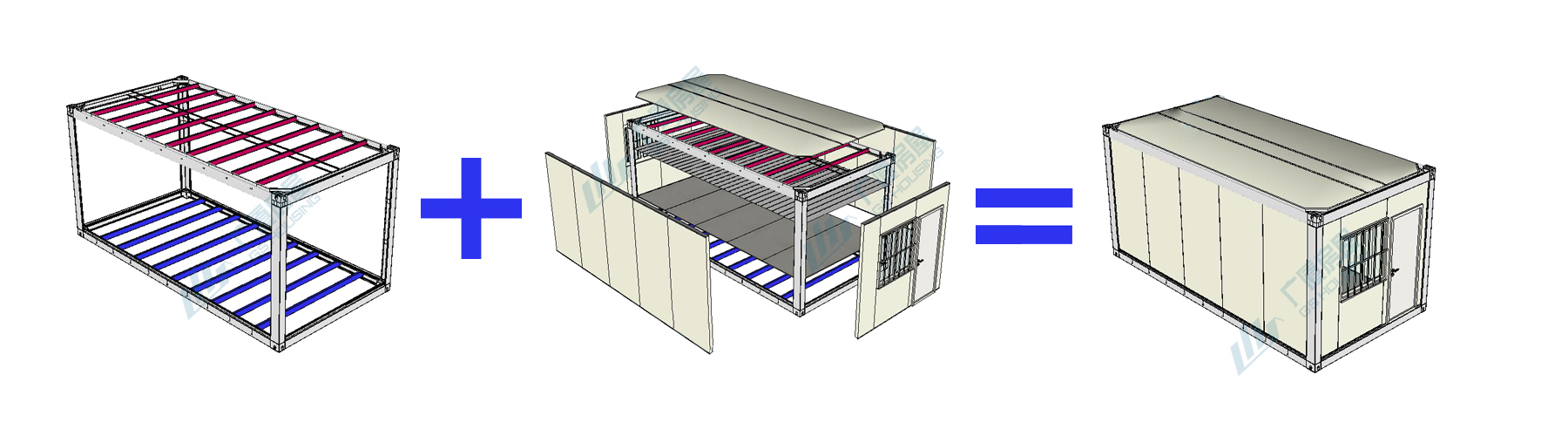
II. Core Application Scenarios Analysis of Knockdown Container House
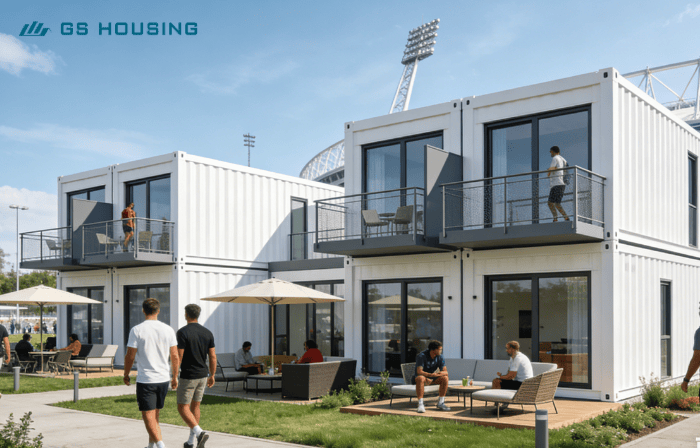
1. Music Festivals and Cultural Events: Creating a “Temporary City”.
Taking the Glastonbury Festival in the UK as an example, it is essentially a “short-lived city.”
✔ Typical Applications
Backstage and operational space: artist lounge, dressing rooms, production and control Center
Commercial and consumer spaces: container bars, pop-up shops, food and beverage areas
Infrastructure: restrooms, medical Stations, storage
✔ Advantages of the festival container house
Rapid setup, reusability, and a customisable exterior for branding
Detachable prefab containers have become an indispensable part of music festival operations.
 |
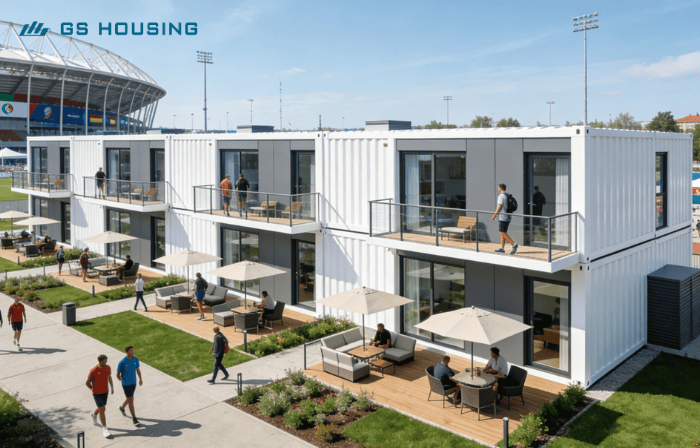 |
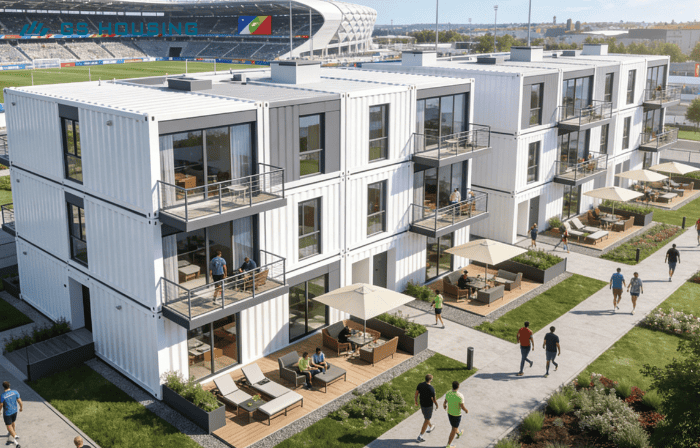
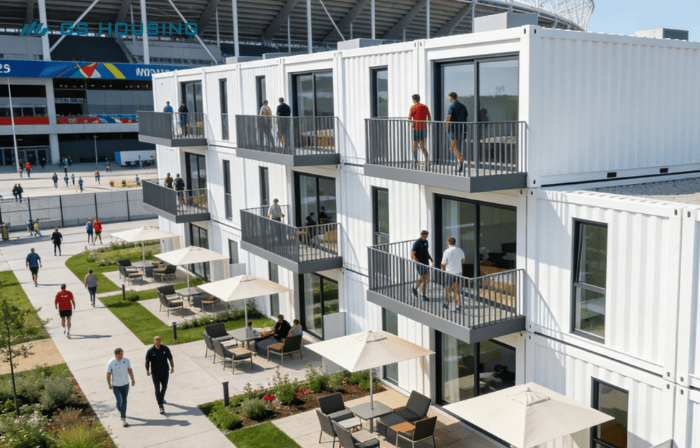
2. Sporting Events: Mobile Space Solutions
Modular buildings have become standard in the Formula 1 European season.
✔ Specific Applications
Team operations center: data center, engineering management units, logistics support building
VIP and commercial Space: brand showcase area, dining area
Media Center: broadcasting and streaming room, media office space
✔ Advantages of the event container house
Movable with the event, rapid installation, strong, and high-end customization capabilities
 |
 |
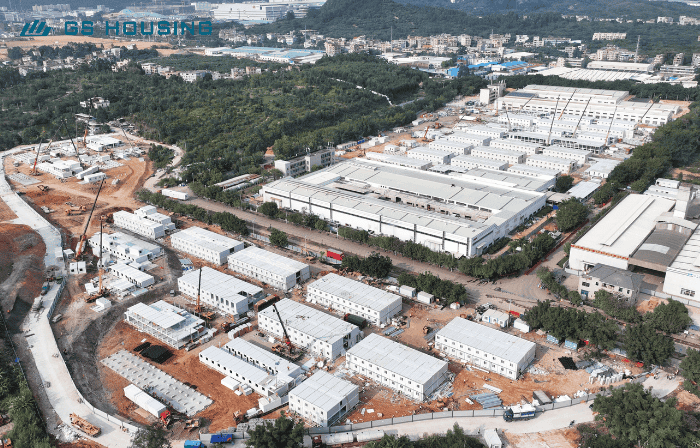
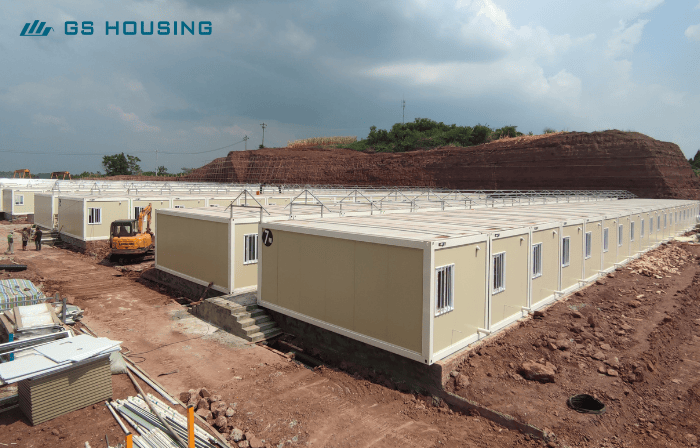
3. Construction Sites: From Site Office to Labour Accommodation Modular Units
Germany, Austria, and other countries have widely adopted modular housing in infrastructure construction.
✔ Application
Site Offices: project management office, meeting rooms, container data center
Worker Dormitories for VIP, engineers, and staff
Supporting Facilities: modular canteens, changing rooms, equipment storage facilities
✔ Advantages of the site container camp
Industry drivers, labor shortages, strict regulations, and tight project schedules
 |
 |
III. GS Housing’s Containerized Mobile House Solutions Advantages
As a leading containerised mobile building supplier, GS Housing is:
Global Project Experience: GS housing container camps serving 100+ countries, which cover events, mining, energy, infrastructure, emergency response, medical, school, and others
Rapid Delivery Capability: GS Housing owns six large-scale factory modular container house productions. We can ship 500 sets of modular units in one day, with the capability of large-volume, rapid delivery.
Standardisation and customisation go hand in hand: GS Housing’s modular houses can be made to fit the project’s needs.
Integrated Mobile Camp Solutions: GS Housing not only sells detachable container homes, but it also helps with planning the project, designing the container camp, moving it, and putting it up.
IV. Future Trends: Growth That Lasts
In the future, more people in Europe will want movable container homes.
Green energy that works with solar panels and other materials that save energy
High-end design: a more comfortable home and better ways to show off your brand.
V. FAQ
1. What is a house made of flat-pack containers?
A flat-pack container house is a type of building that is designed in modules, built in a factory, and put together quickly on site. All parts come in flat packs and are put together on-site, which cuts down on transportation expenses and speeds up installation.
2. What are the main uses of flat-pack container houses in Europe?
They are commonly used in Europe for building site camps, music festivals and exhibitions, sporting events, refugee housing, schools, temporary classrooms, medical facilities, site offices, hotels and resorts, and military and emergency projects.
3. How well does the insulation work in the climate of Europe?
You can change it to fit different areas: 50 mm, 75 mm, or 100 mm thick walls.
4. How long do prefabricated container buildings last?
In general, 15 to 20 years (with normal use) is the lifespan. With good care, it can last longer.
5. Is it difficult to install the ready-made container house?
It’s effortless; the time to install each container unit is 2 to 4 hours. GS Housing can help with installation or projects in other countries.
6. Does it let you customise it?
Yes, the outside colour, the inside layout, the bathroom system, the electrical system, and the high-end finishes all come included.
7: Do detachable container houses meet European standards?
Yes. By designing them specifically, detachable container houses can meet CE certification standards for insulation, fire protection, and structural safety.
8: Is it cost-effective to move flat-pack container homes from China to Europe?
Yes. The flat pack design significantly reduces transportation volume, offering a cost advantage compared to traditional modular houses.
9: What are the benefits of modular temporary buildings over regular buildings?
• Short time to build
• Cost that can be controlled
• Able to move
• Can be used again
10. How do you get a quote?
Please provide us with the project purpose, quantity, location (country), and configuration.

In Europe, prefabricated modular housing has gone from being a ‘temporary solution’ to ‘a tool for strategic infrastructure’.
Not only have prefab modular houses changed how buildings are made, but they have also
How well the project works
Structure of costs
How to use space effectively
Modular construction has become a trend for businesses and government agencies seeking modular solutions that are efficient, flexible, and long-lasting.
Post time: 09-04-26