


September 28th–October 1st, 2026 | Paris, France | H1-A030
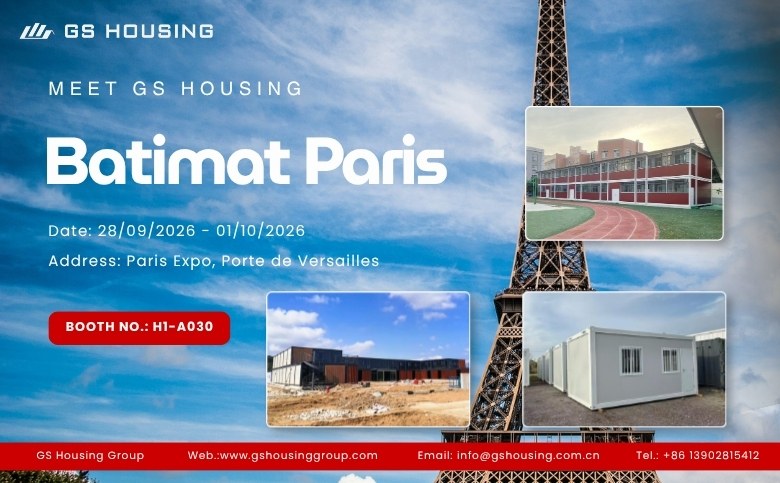
GS Housing Group will be present at BATIMAT Paris 2026, one of the main professional events for the European building and construction industry, from 28 September to 1 October 2026 at Paris Expo Porte de Versailles. GS Housing will be at Booth H1-A030, where the company will exhibit its flat-pack modules and discuss modular construction opportunities with European developers, contractors, distributors, and project partners.
For GS Housing, BATIMAT 2026 is more than just an exhibition. This is an opportunity to meet face-to-face with European construction professionals who are looking for new ways to deliver projects, off-site manufacturing, modular buildings, and industrialized construction.
Event Information
Event: BATIMAT Paris 2026
Date: September 28–October 1, 2026
Venue: Paris Expo Porte de Versailles
Address: 1, Place de la Porte de Versailles, 75015 Paris, France
GS Housing Booth: H1-A030
Focus: Modular Building Solutions and Flat Pack Modules
Why GS Housing will be at BATIMAT 2026
A cocktail of pressures is reshaping the way buildings are designed, manufactured, and delivered in European construction.
Construction speed, labor availability, material efficiency, cost control, site constraints, and environmental factors are increasingly required to be considered in projects. Developers and contractors are also looking for building systems that can be standardized without making every project the same.
This is where the flat-pack modules can offer a practical alternative.
Compared to traditional site-built construction, a flat-pack modular system moves much of the construction process from the building site to a controlled factory setting. The modules can be prefabricated before transportation so that more work can be done before the modules even arrive at the project site, including structural components, wall panels, flooring, electrical systems, and other elements of the building.
The result is not merely a “container home. The value for professional projects is in developing a repeatable building system that can be configured, transported, assembled, and expanded to project requirements.
GS Housing will be looking to discuss this wider application of modular construction with its European partners at BATIMAT Paris 2026.
Flat Pack Modules for Construction Projects throughout Europe
The main showpiece for GS Housing will be its flat-pack modules. A modular building system for projects where transportation efficiency, quick assembly, and flexible layouts are important.
The modules are designed within a standard structural system but can be provided in a range of configurations for accommodation, offices, welfare, temporary buildings, and other project requirements.
This method can help developers and contractors to divide the building process into a number of manageable stages:

This workflow is particularly well suited for projects with repetitive building units or tight construction schedules.
For shipping, flat-pack modules are packed very efficiently and assembled at the destination instead of shipping fully assembled buildings long distances. Once on site, the standardized components can be assembled into larger building layouts according to the design of the project.
This system can be used in large multi-unit developments and in standalone modular buildings.
From a Standard Container Module to a Project-Specific Building
One of the key messages GS Housing will bring to BATIMAT is that modular construction does not have to mean standardized architecture.
A flat-pack container module provides the structural and manufacturing framework. The final building can still be adapted according to the project's intended use, climate, site conditions, local requirements, and spatial planning.
For example, a developer may require:
· Modular accommodation buildings
· Workforce housing
· Temporary or semi-permanent offices
· Construction site facilities
· Student or staff accommodation
· Modular welfare facilities
· Commercial or service buildings
· Multi-unit modular developments


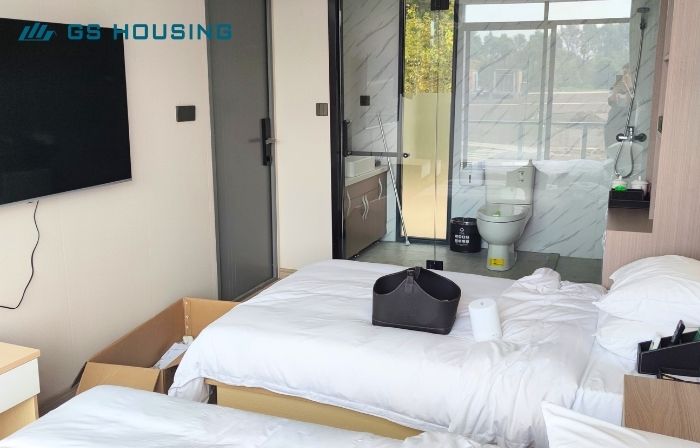

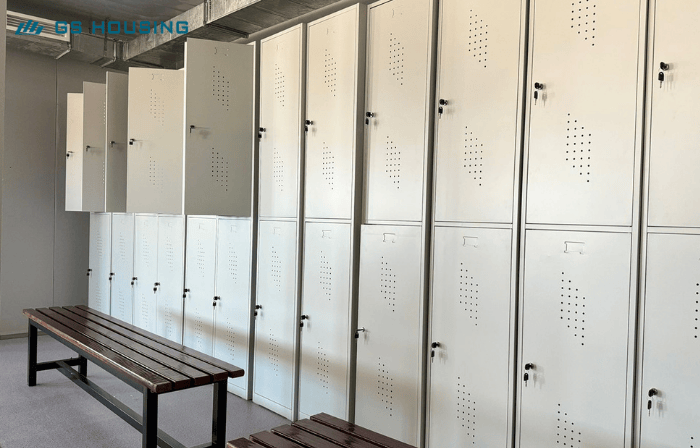
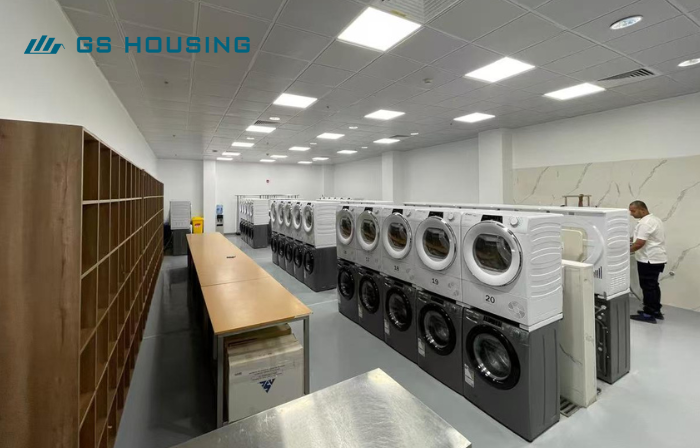
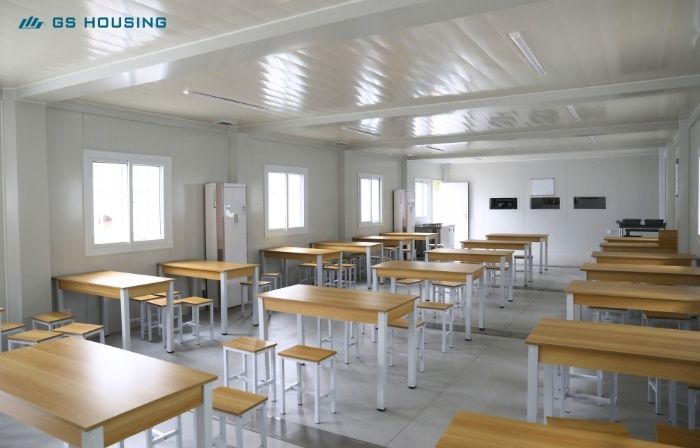
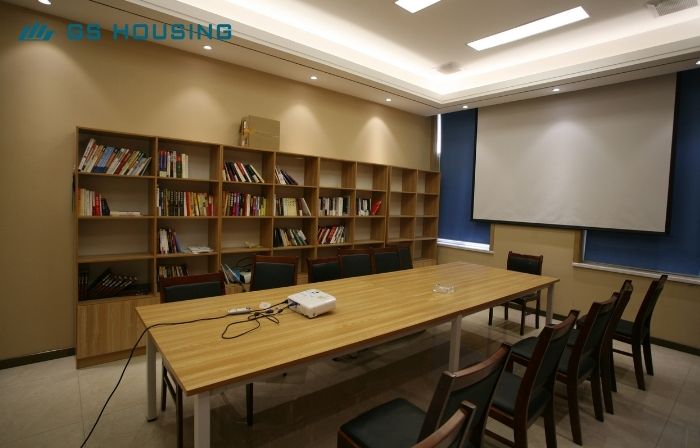
The same basic modular principle can therefore support different building programs.
For European projects, this flexibility is important because building requirements can vary significantly between countries and even between individual projects. Site access, transportation routes, planning requirements, climate conditions, building regulations, and architectural expectations all need to be considered before a modular solution is selected.
GS Housing's objective at BATIMAT is therefore not simply to promote a product but to discuss how a flat-pack modular building system can be integrated into a project's wider construction strategy.
Why Developers Are Embracing Modular Construction
For property developers, one of the key questions is not whether a flat-pack modular building can be manufactured, but whether it can result in a more predictable project process.
Factory-based production can reduce part of the construction workload from the project site. This opens opportunities for coordination of manufacturing with foundation preparation and other site activities instead of sequential execution of all stages.
Standardized modular components can also make it easier to purchase and repeat production for projects involving multiple buildings. Therefore, if the project needs it, a developer may think about modular construction.
Repeatability—the same dimensions and specs for multiple units.
Faster site installation—more construction work is performed before flatpack modules arrive at the project site.
Transportation efficiency—flat-packed components are easier to transport than fully assembled structures.
Modular design—modules can be combined into different building configurations.
Factory quality control—production takes place in a controlled manufacturing environment.
They do not remove the need for professional design, engineering, or local compliance. Rather, they provide an alternative means of structuring the construction process.
A Flatpack Modular Building Partner for European Contractors
The flatpack modular building supplier has to mesh with an existing project delivery system for a general contractor or EPC company. Product quality is just one consideration. Equally important can be engineering coordination, production capacity, documentation, packaging, logistics, installation requirements, and communication throughout the project.
GS Housing is therefore visiting BATIMAT with a view to establishing contacts with European contractors and construction companies and not simply to make one-off sales of products.
Potential cooperation can be project-based supply, customized modular building programs, and longer-term cooperation for contractors managing multiple developments.
On bigger projects, the discussion does not have to begin by providing a fixed product catalog, but rather the project requirements:
What is the purpose of the building?
How many pieces do you require?
Where is the project site?
What are the limits of the site?
How will the modules be moved?
How much customization are you looking for?
What will the assembly look like?
These questions help us assess whether the flat-pack modular solution is right and how the system needs to be configured.
European Distributors & Agents Opportunities
GS Housing is also looking for relationships with European distributors, dealers, and agents who are interested in developing modular building solutions in their local markets.
A local partner can be key to understanding market-specific requirements, identifying project opportunities, and supporting customers post-delivery.
For the distributor, modular construction can offer opportunities beyond the sale of individual units. A standardized modular building system can be used to support applications in construction, accommodation, site facilities, commercial projects, and other sectors.
The goal is to build a network in Europe for a long-term market and not individual deals. See GS Housing's flat pack modules projects in Europe

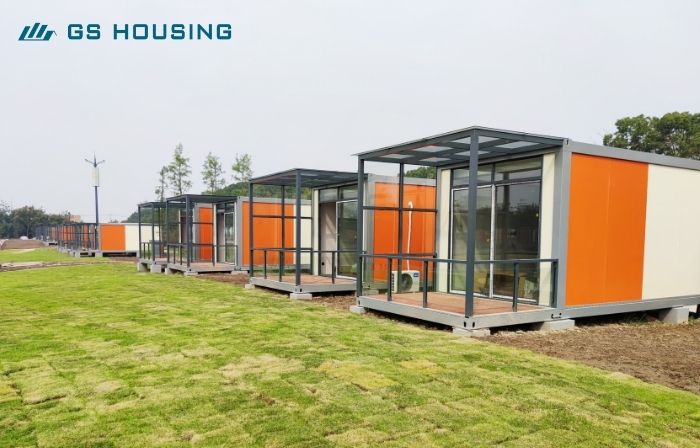
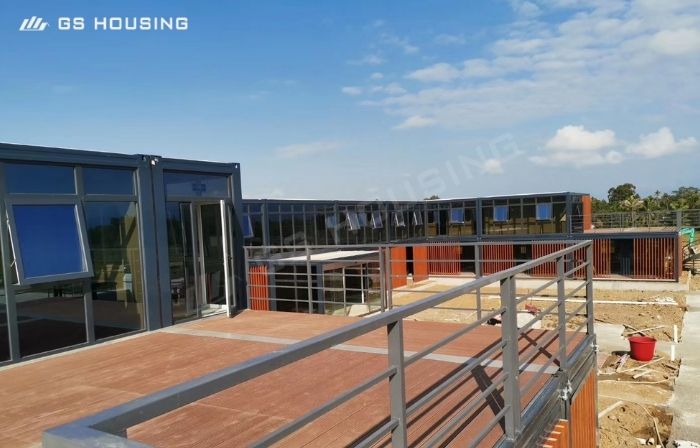
GS Housing’s Approach to International Modular Building Projects
GS Housing has built its flat-pack modular building business for large-scale project applications, not for single portable units.
The company has experience in workforce accommodations, construction camps, offices, emergency buildings, infrastructure facilities, and other multi-unit modular projects.
This project-oriented experience is relevant for European customers because large modular building projects require coordination across multiple stages – from initial requirements and design to manufacturing, quality control, transportation and site installation.
GS Housing will use its BATIMAT Paris 2026 booth as a meeting point for professionals wishing to investigate the possibilities for adaptation of these capabilities to European projects.
The company will concentrate on practical discussions on project feasibility, modular design, manufacturing, logistics, and long-term cooperation.
Meet GS Housing at Booth H1-A030.
Planning a modular housing, accommodation, site office, or multi-unit building project in Europe? Meet GS Housing at BATIMAT Paris 2026, Booth H1-A030, 28 September – 1 October 2026. Talk to the team about your project requirements, view bespoke flat pack modules, and find out about supply or distribution partnership opportunities for the European market.
Post time: 14-09-26