


Project Summary
There is more to a good learning environment than simply having enough classroom space. Schools also need proper room heights, sound structural design, natural daylight, functional circulation spaces, and an indoor environment that supports students and teachers throughout the school day.
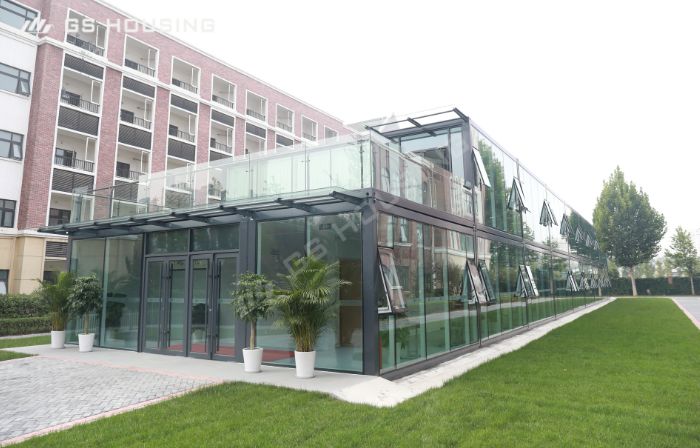
In Langfang, China, the Happiness Modular School Building project shows how modular classroom buildings made of flatpack modules can be customized to meet these requirements. GS Housing’s project features 45 sets of customized flatpack modules and includes several school-specific design elements, including increased module height, integrated frame reinforcement, a second-floor terrace with guardrails, a steel-framed corridor, and an intelligent education system.
The modular school building project shows how prefabricated construction can be adapted to the functional needs of an educational building, rather than being seen as a modular building that provides standard accommodation units.
| Project Name | Modular School Building Project in China |
| Location | Langfang,Hebei Province, China |
| Supplier | GS Housing |
| Building system | Customized Flatpack Modules |
| Quantity | 45 Sets of Modular Container Units |
| Main features | high modules, improved frames, a second-floor terrace, a daylight-oriented corridor design, an intelligent education system. |
Modular Classroom Building to Meet Educational Needs
The classroom buildings need a limited footprint to accommodate different activities. Lessons, group discussions, multimedia teaching, and movement between classrooms all place different demands on the layout.
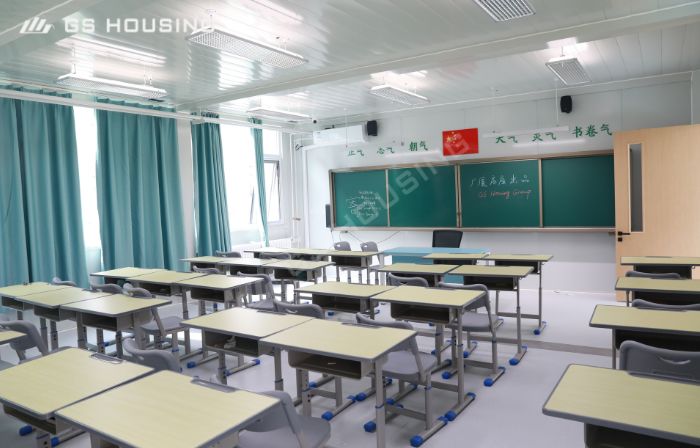
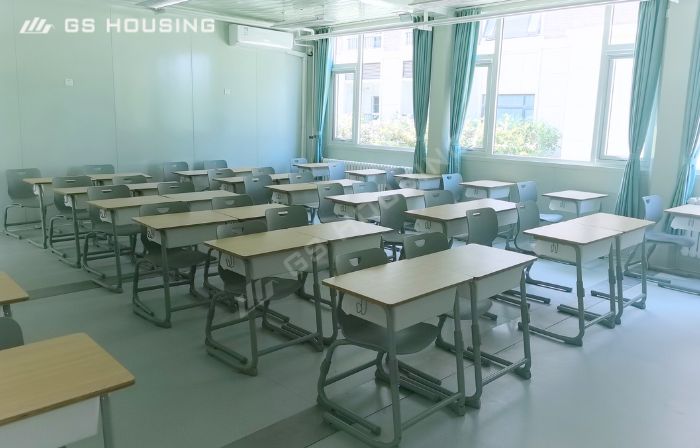
For the Happiness School project, the design strategy was to adapt the flatpack modular system to the intended use for education. The height of the modular building was raised, giving more space inside and helping to create a classroom environment that feels less confined than a basic site cabin.
This is especially important when choosing prefab classrooms. Purchasers need to look beyond the external footprint of a module and consider the internal space available, the ceiling height, the position of windows and how it will work with classroom furniture and teaching equipment.
The project also included an intelligent education system to help incorporate modern teaching facilities in the building. This illustrates an important consideration in planning for modular school buildings: that the building structure and the educational fit-out need to be considered together rather than as separate decisions post-installation.
This method is helpful to education authorities, school developers, and construction contractors in evaluating modular classrooms for new educational facilities, school extensions, or projects where conventional construction needs to be supplemented by modular buildings.
Structural Reinforcement for Multi-Level Layout
The design of the Happiness School involves integral frame reinforcement. This highlights the importance of coordinating the structural design with the building's desired configuration.
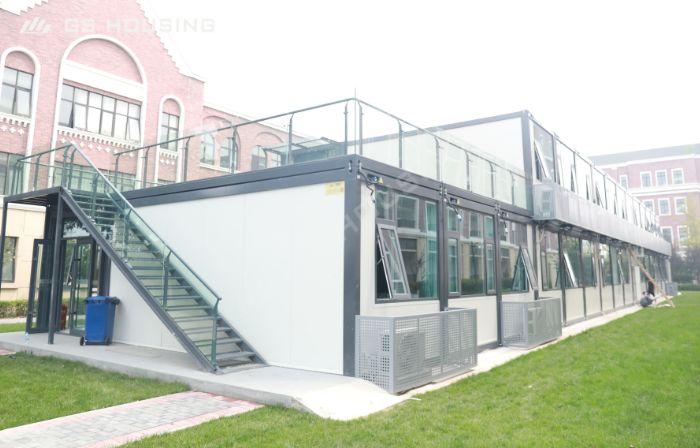
This is especially important when modular units are arranged across multiple levels. The two-story arrangement brings structural and connection considerations that are different from those of a single-story classroom. The engineering for each project must take into account the transfer of loads, connections between modules, performance of floors, access to stairs, and support of external features.
In this project, structural reinforcement was not an optional finishing detail but an integral part of the modular design.
“The second floor terrace and guardrails also had to be coordinated with the overall building arrangement.” These elements extend the range of spaces available to the school but require integration with appropriate structural support, access arrangements and safety provisions.
The main lesson for the would-be purchaser is to specify a multi-story modular classroom as a complete building system. Suitability does not depend on the number of modules.
A Second-Story Terrace That Adds Usable Space
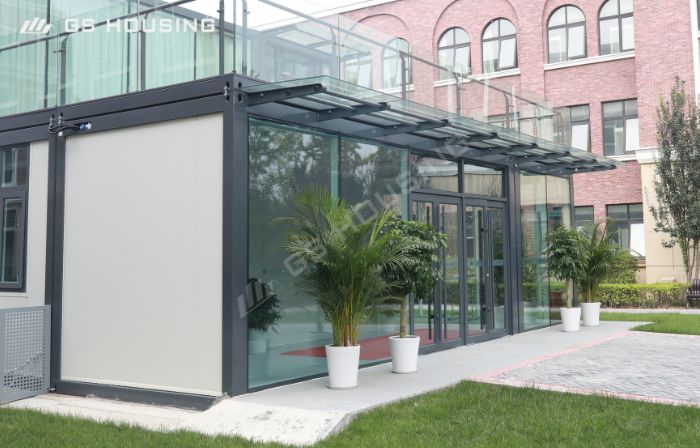
What distinguishes the project of the Happiness School is that it has added a terrace and guardrails on the second floor.
Educational setting usable space does not only refer to enclosed classrooms. Circulation areas and outdoor-accessible spaces can influence how a school arranges student movement and manages various activities.
If well planned for the intended use, access and safety arrangements a terrace can offer an additional shared area. It also provides another way for designers to organize the relationship between indoor rooms and the surrounding environment.
Modular school projects should not just tack on a terrace to a standard module layout. Its design must consider structural loading, waterproofing, drainage, guardrail requirements and local weather exposure.
The Happiness Modular School project shows the possibility of adapting flat-pack container modules to more than just conventional enclosed rooms. This flexibility is useful in educational projects where space planning has to adapt to the needs of students, teachers and school operators.
Enhancing Daylight and Corridor Performance
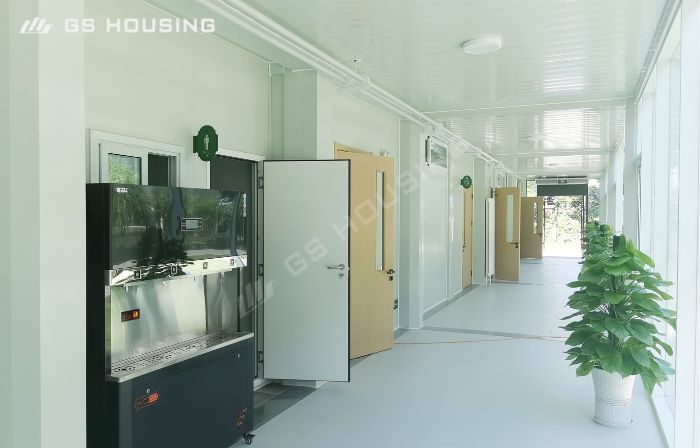
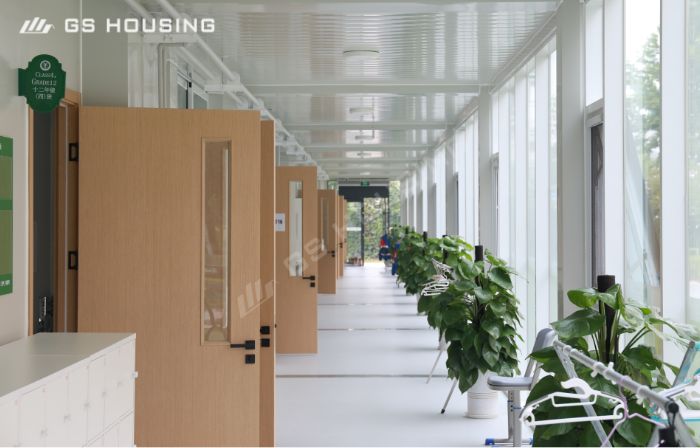
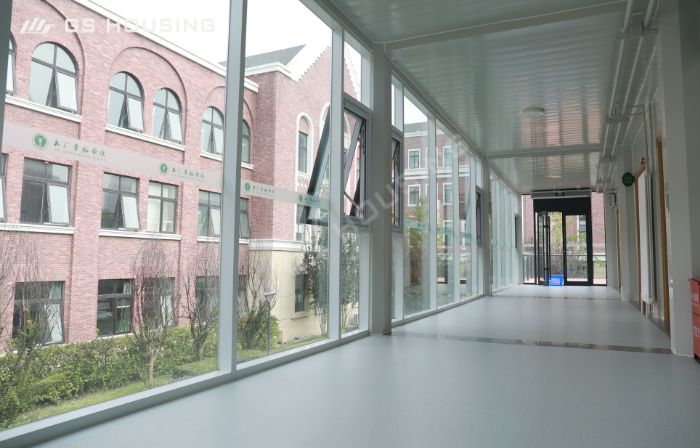
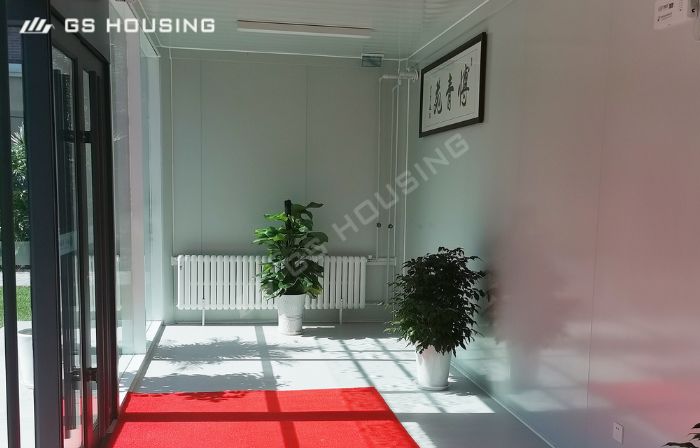
In the design of schools, consideration must be given to the use of natural daylight and to circulation design. The Happiness School project features a gray, open-frame corridor design with thermal-break aluminum and an aluminum-and-wall-panel combination around the rear window area.
These details indicate an effort to coordinate the corridor, openings and wall assemblies into a more integrated building design.
Daylight planning can create a more comfortable visual environment, but the real performance depends on window size, orientation, glazing, shading and the surrounding site. Corridor design also needs to take into account circulation width, access, weather protection and movement of students between teaching spaces.
For project planners, these details demonstrate why specification of a modular classroom should go beyond the modular frame and wall panels. Doors, windows, corridors and connections between modules affect the daily usability of the building and should be coordinated during the design stage.
Given the winter conditions in northern China
Langfang is in northern China, and winter conditions have to be considered when designing occupied educational buildings.
According to the original project description, the design approach includes localized reinforcement associated with heating equipment. This points to an important principle for modular classrooms: thermal comfort should be addressed through coordinated building-envelope and building-services design.
Insulation performance, window specifications, air leakage, heating capacity, and the treatment of junctions can influence indoor comfort and energy consumption. These factors should be considered in light of the expected occupancy of the project, operating schedule, and local climate.
Heating equipment shall be sized and installed to the actual heat-loss requirements of the building. Penetrations and module connections shall be detailed to minimize unwanted air leakage and thermal bridging.
These are critical considerations for a usable indoor environment for any schools open during the colder months.
Common Questions
1. What were the major design features of this modular classroom project?
The documented features are increased module height, integral frame reinforcement, a second-floor terrace with guardrails, a gray open-frame aluminum corridor, coordinated rear window details, wooden doors, and an intelligent education system.
2. Can flat-pack modules be used for other education buildings?
Flatpack modular systems may be considered for classrooms, teaching facilities and other school-related spaces, depending on the design, engineering and local regulatory requirements. Each application requires an appropriate layout, structural design, building services specification and compliance review.
3. What to look for in sourcing prefab classrooms?
Important considerations are usable classroom dimensions, structural configuration, daylight, ventilation, insulation, heating or cooling, fire safety, accessibility, indoor air quality, transportation, installation, and local code compliance. The specification should be prepared according to the intended educational use and site conditions.
Looking for a Modular Classroom Building?
GS Housing offers flat-pack modular solutions that can be configured to suit different project requirements. Langfang’s Happiness School project shows how modular container units can integrate educational facilities, improved interior space, structural reinforcement and coordinated architectural details.
If you are planning a school expansion, a new educational facility, or a modular classroom project, please let GS Housing know your location, required floor area, number of classrooms and intended occupancy.
Reach out to GS Housing to discuss a modular classroom building solution tailored to your project's needs.
Post time: 06-12-21