


When Saudi Arabia’s NEOM project required accommodation for 100,000 workers in remote desert terrain, or when mining operations in Africa needed housing that could withstand extreme temperatures for decades, the procurement challenge extended far beyond finding “temporary shelters.” These B2B clients needed industrial-grade detachable modular buildings engineered for 20-year operational lifespans, capable of shipping efficiently across continents, and assembling rapidly in locations where traditional construction proves impossible.
GS Housing Group Co., Ltd., established in 2001 as a China leading flat pack container house manufacturer, has spent over two decades developing precisely these solutions. With a registered capital of 100 million RMB, five production bases producing 500 modular units daily, and 3,000+ completed global projects, the company ranks among China’s top three prefabricated housing manufacturers—distinguished by exclusive focus on large-scale workforce camps, construction site accommodation, mining modular facilities, energy modular camp, and emergency housing for disaster relief and refugee assistance.
Understanding the B2B Modular Accommodation Market
The gap between portable homes and industrial modular accommodation is vast. GS Housing deliberately positions itself as a reliable professional flatpack house supplier serving construction contractors managing infrastructure megaprojects, mining corporations operating in isolated territories, energy companies requiring oil and gas field camps, government agencies coordinating disaster response, and international NGOs delivering humanitarian assistance.
This specialization shapes every engineering decision.
Worker camps in Kazakhstan’s oil fields face -30°C winters.
Mining operations in African deserts endure +50°C summers and exposure to sandstorms.
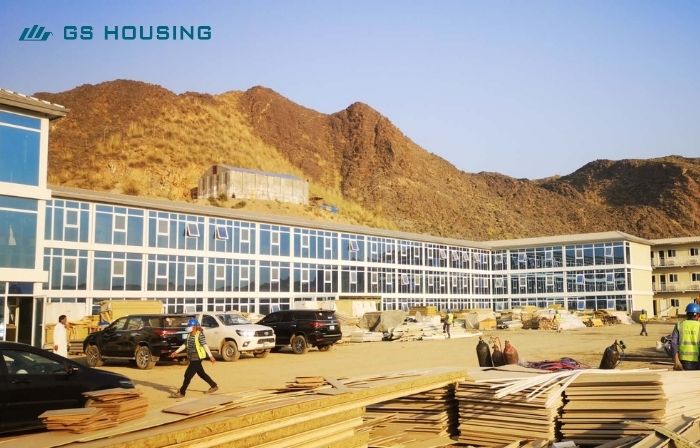
Construction sites from Pakistan’s mountainous hydropower stations to Chile’s remote regions demand structures surviving seismic activity, high winds, and challenging terrain.
These applications require certifications, including ISO standards, country-specific regulations like Saudi Arabia’s SASO requirements, and ASTM compliance for North American projects—specifications that define the difference between temporary building and the semi-permanent infrastructure GS Housing manufactures.
 |
 |
Core Product Line: Flat Pack Container House Technology
The foundation of GS Housing’s entire product portfolio is its flat pack container house system—a modular technology fundamentally different from converted shipping containers. These purpose-engineered structures ship as compact component packages, assemble on-site with minimal equipment, and deliver performance specifications matching permanent construction.
Engineering for Extreme Environments and Extended Service Life
Each flat pack container house begins with a reinforced steel frame constructed from certified mill steel, treated with multi-layer anti-corrosive coatings essential for coastal oil camps and desert mining camps. The frame design incorporates seismic reinforcement for earthquake zones and wind load calculations meeting international building codes—critical when cyclones strike energy installations or high-altitude construction sites experience severe weather.
Wall panel systems integrate thermal insulation rated for temperature extremes. The Russian Baltic Sea gas work man camp project demonstrated cold-climate engineering, where enhanced insulation maintains interior comfort at -30°C external temperatures with minimal heating energy.
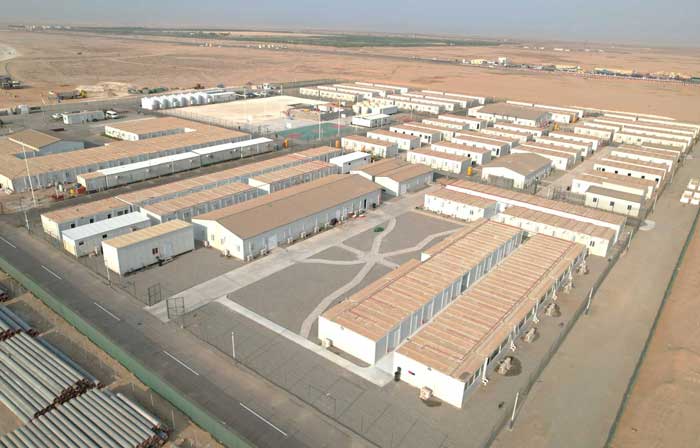
Conversely, the Saudi Arabia Red Sea worker camp utilizes double-layered wall panels and ventilation systems, managing +45°C desert heat.
 |
 |
This climate adaptability stems from wall panel design—the same structural frame accepts different insulation specifications, allowing China’s best modular accommodation manufacturer to configure units for specific project environments.
Customization Capabilities Within Standardized Systems
While standardization enables efficient manufacturing, GS Housing’s competitive advantage includes extensive customization within the modular framework. Standard worker accommodation units measure 6 meters * 3 meters and 6 meters * 2.4 meters, housing 4 to 8 workers depending on configuration.
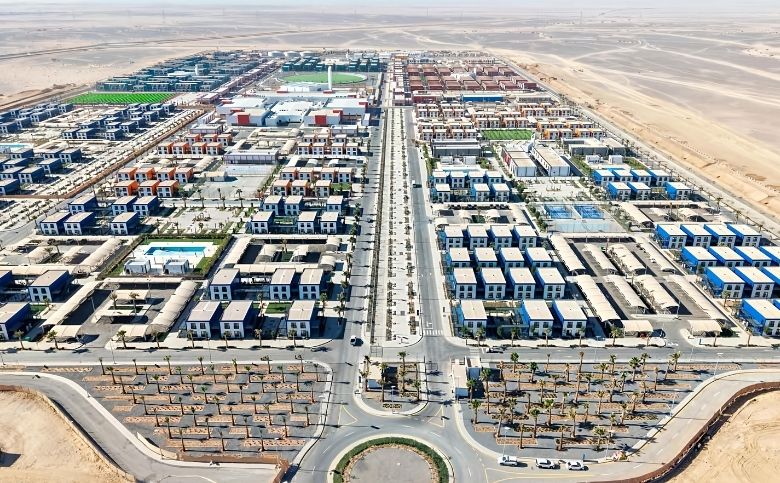
However, the modular system allows combining units into larger configurations—the NEOM labor camp includes double- and triple-wide units for supervisors, connected modules creating office complexes, and multi-story assemblies maximizing space in constrained sites.
Interior configurations of prefabricated containers adapt to diverse cultural and operational requirements.
Middle Eastern projects include prayer room conversions with specific orientation requirements.
Mining camps specify reinforced flooring for heavy equipment storage.
Energy sector installations require explosion-proof electrical systems and specialized ventilation.
The flat-pack housing technology accommodates these variations without abandoning the manufacturing efficiencies that enable competitive pricing.
Complete Worker Camp Solutions: Beyond Basic Accommodation
The leading flat-pack container house factory distinction emerges in GS Housing’s comprehensive product range, transforming isolated dormitories into complete man camp ecosystems.
Worker Accommodation
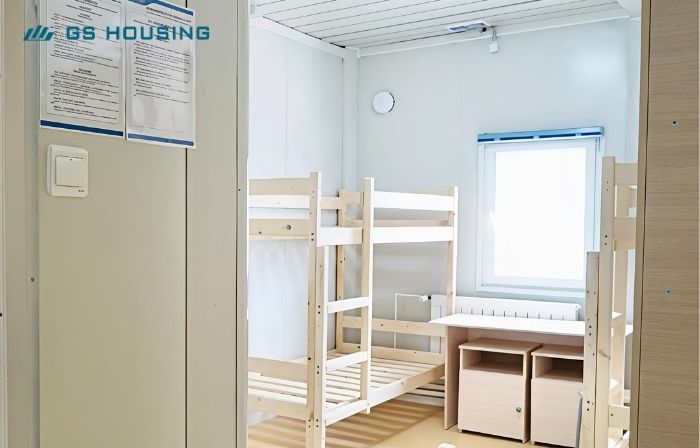
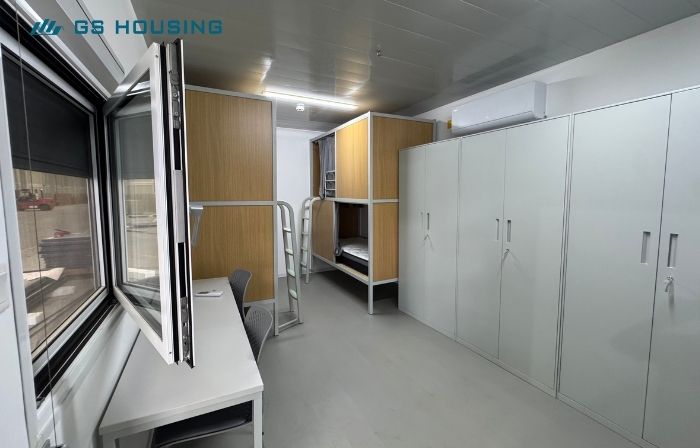
The worker modular accommodation product line spans single-occupancy supervisor units to eight-person dormitory configurations.
Each design considers not just sleeping space but the reality of workers living in these facilities for months or years.
Ventilation systems prevent the stuffiness plaguing cheaper units.
Electrical layouts accommodate personal devices and charging stations. Storage solutions provide dignity and organization.
Sound insulation between units maintains livability in high-density labour accommodation camps.
 |
 |
Ablution Facilities
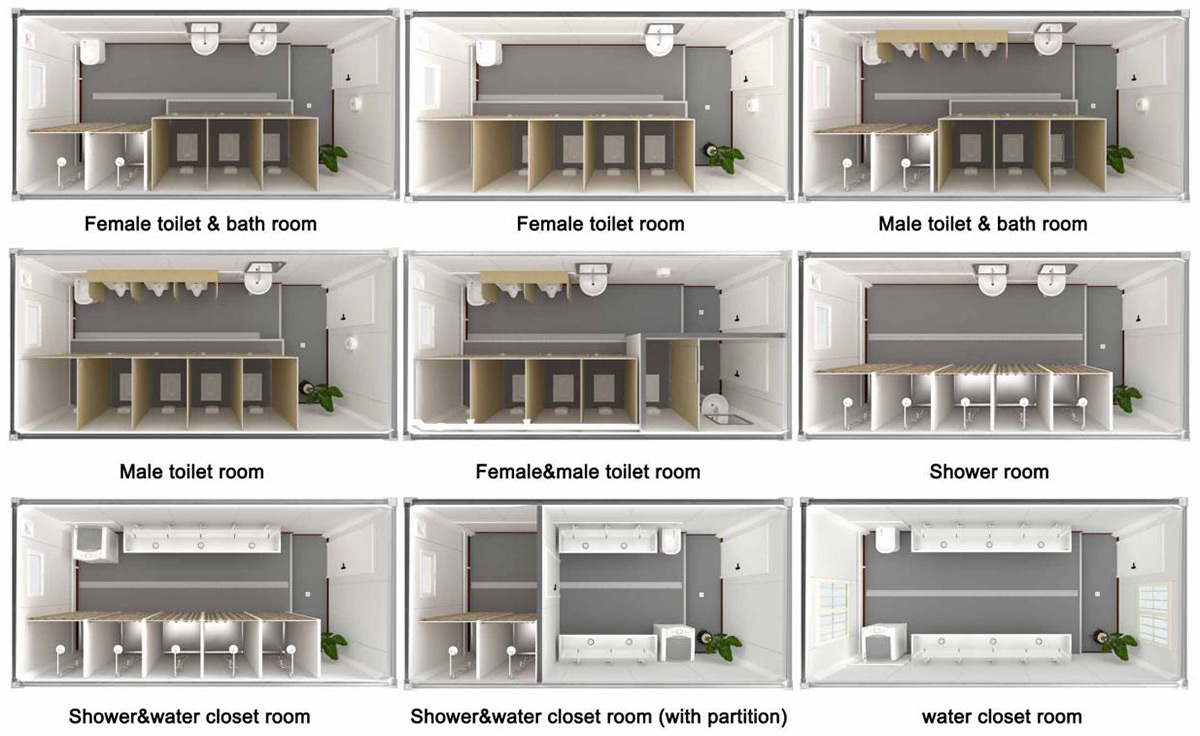
Ablution room modules—bathroom and shower facilities—represent critical infrastructure often overlooked in basic workforce camp designs.
Standard portable toilets fail within months in mining camps.
GS Housing’s ablution rooms feature:
waterproofing systems preventing moisture damage to structural steel,
plumbing rated for freezing conditions at cold-climate sites,
anti-slip flooring handling mud and dust,
ventilation managing humidity in tropical environments.
These modular units connect to standard worker accommodation modules, creating integrated living quarters rather than separated facilities requiring workers to cross outdoor areas in extreme weather.
Portacabin Site Offices and Administrative Buildings
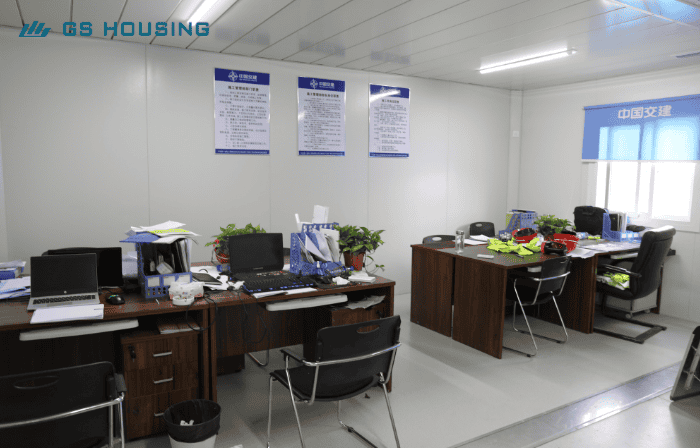
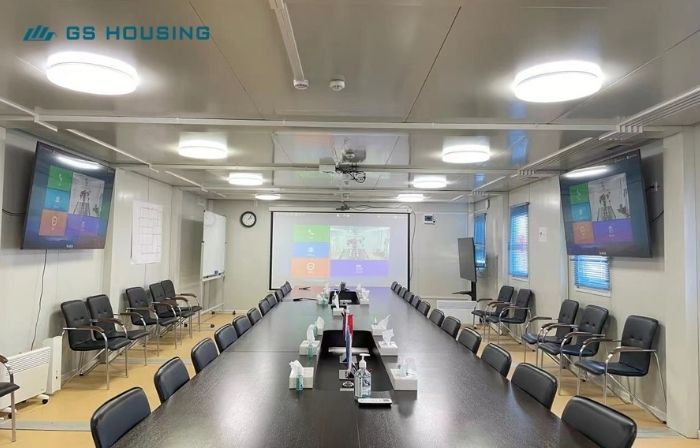
For construction sites requiring professional workspace, GS Housing manufactures portacabin and modular site office solutions that feature electrical systems pre-wired to local code requirements, HVAC-ready designs for climate control installation, data cabling infrastructure for modern office technology, and interior finishes suitable for client meetings and administrative functions.
 |
 |
Supporting Infrastructure: Guard Houses, Canteens, and Medical Facilities
Complete employee camp functionality requires supporting infrastructure beyond accommodation and offices. GS Housing’s product line includes:
Guard house modules controlling site access with visibility provisions and weather protection;
Aisle house connectors create covered walkways between camps where extreme weather makes outdoor movement hazardous.
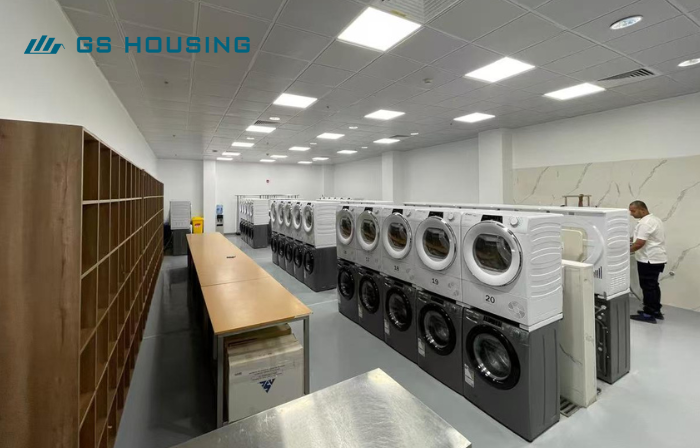
Laundry facilities with drainage and ventilation specifications for commercial equipment,
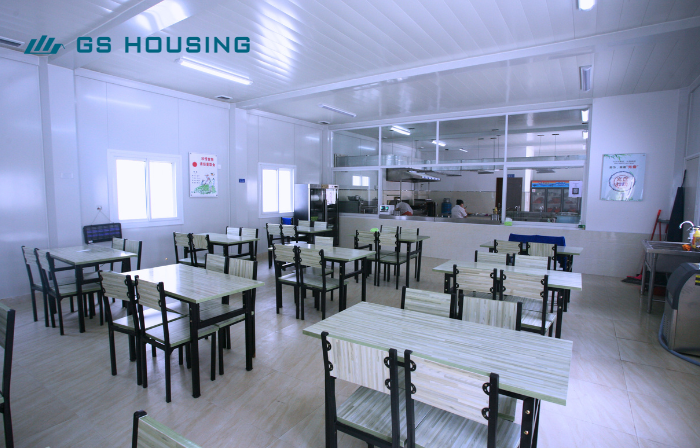
Canteen and kitchen modules with food safety features and utility connections for industrial cooking equipment,
Medical examination rooms meeting healthcare facility standards.
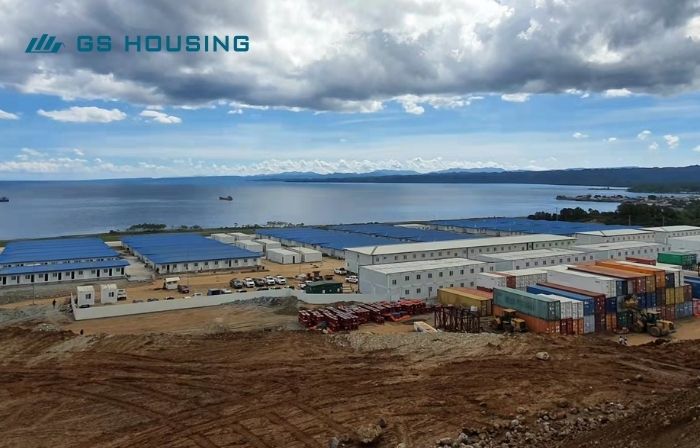
The IPIP mine modular camp project showcased this ecosystem approach.
 |
 |
Emergency and Humanitarian Applications: Resettlement Housing
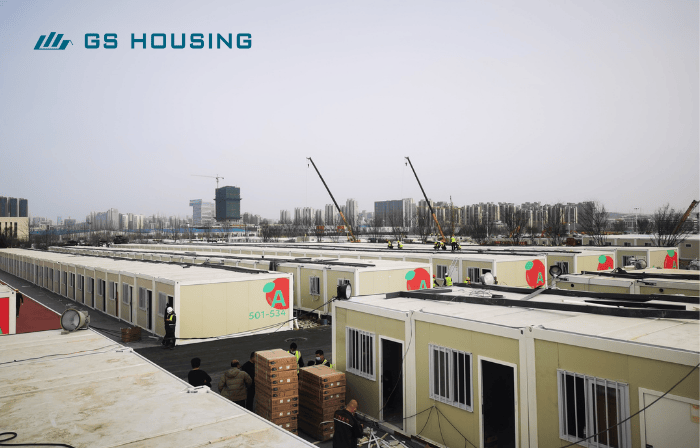
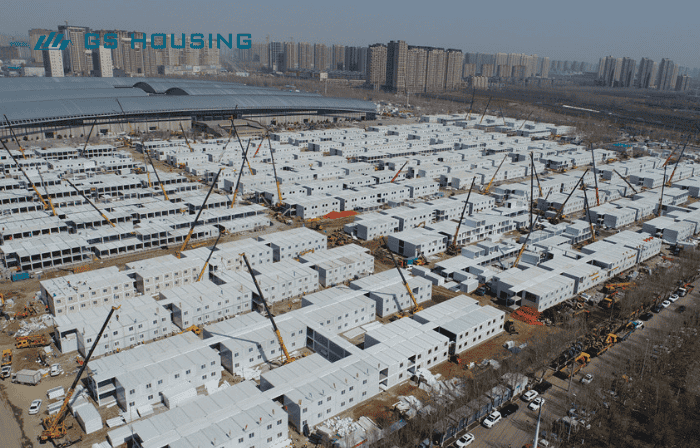
Beyond commercial applications, GS Housing’s modular buildings for emergency accommodation serve disaster relief and refugee assistance. The resettlement house product line provides rapid deployment capability—units ship flat-packed and assemble with minimal tools and unskilled labor, dignified living standards exceeding typical relief shelter specifications, durability transforming temporary solutions into semi-permanent infrastructure as situations persist for years, and modular expansion as displaced populations grow or needs evolve.
Post-disaster reconstruction projects in multiple countries have demonstrated this capability. When earthquakes, floods, or conflicts displace populations, the 20-year design lifespan means emergency shelters transition into community housing as reconstruction extends across years or decades. This durability matters to government agencies and NGOs managing long-term humanitarian situations where “temporary” assistance becomes semi-permanent infrastructure.
 |
 |
Manufacturing Excellence: Scale Without Compromise
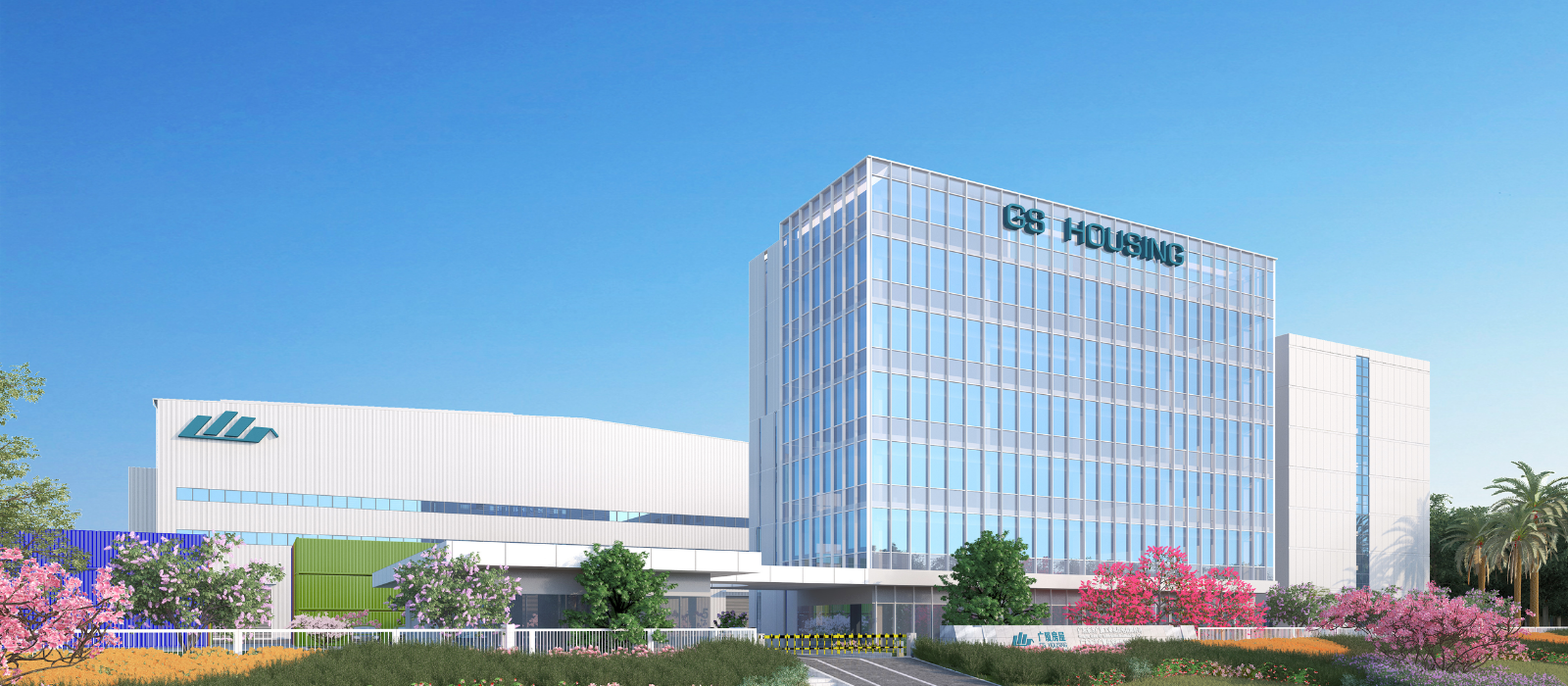
GS Housing’s six production bases collectively produce 500 container units daily—capacity addressing the critical B2B requirement for reliable large-scale delivery. The NEOM project’s 100,000-person camp required coordinating production across facilities, optimizing container loading, and maintaining quality consistency across tens of thousands of components. Annual capacity exceeding 200,000 prefab units enables this project scale while maintaining the precision essential for 20-year performance guarantees.
Automated cutting and welding equipment ensures dimensional accuracy across thousands of identical components. This systematic quality control, combined with material sourcing from certified suppliers, maintains the consistency that separates China top prefab house manufacturers from fabricators lacking industrial discipline..
Turnkey Services: Design Through Installation
As global infrastructure investment accelerates and humanitarian needs persist, GS Housing’s quarter-century focus on B2B modular accommodation—worker camps for construction, mining, and energy sectors alongside emergency housing—has refined product engineering and project delivery capabilities beyond generalist manufacturers. For procurement managers requiring proven performance in challenging environments, comprehensive information is available at https://www.gshousinggroup.com/ .
Post time: 30-01-26