


In large-scale infrastructure, energy development, mining, and overseas engineering projects, flat-pack prefab houses have become the mainstream choice for temporary and medium- to long-term buildings.
However, one of the core questions most frequently raised by procurement parties during decision-making is: Can a flat-pack prefabricated house withstand extreme climates and complex environments? What are their usage boundaries?
I. Environmental Adaptability Design Logic of Detachable Flat Pack House
Detachable prefab houses are not simply “temporary prefabricated houses.” Their design logic originates from industrialized building systems, aiming to achieve:
Standardized structure
Factory prefabrication quality control
Disassembly and reusability
Customized adaptation for different environments
In practical engineering applications, the environments in which detachable prefab containers are used typically include high-altitude and cold regions, desert and high-temperature regions, coastal and high-humidity regions, strong wind areas, and earthquake zones.
II. Structural Safety under Extreme Climate Conditions
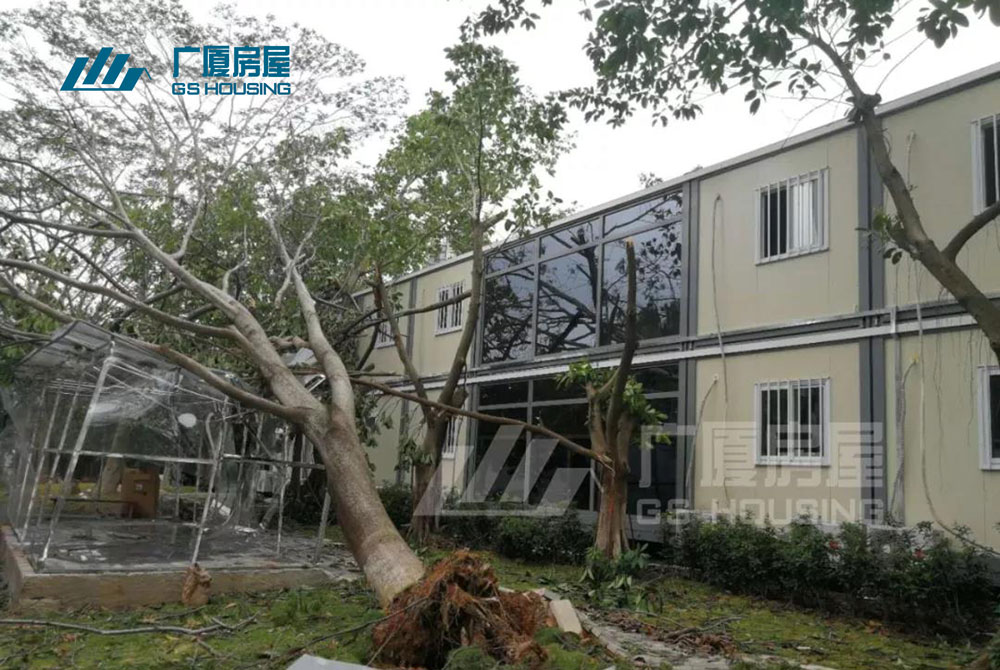
1. Strong Wind and Storm Environments
Strong winds are a major risk factor in coastal, island, and wind power projects and parts of the Middle East and Africa.
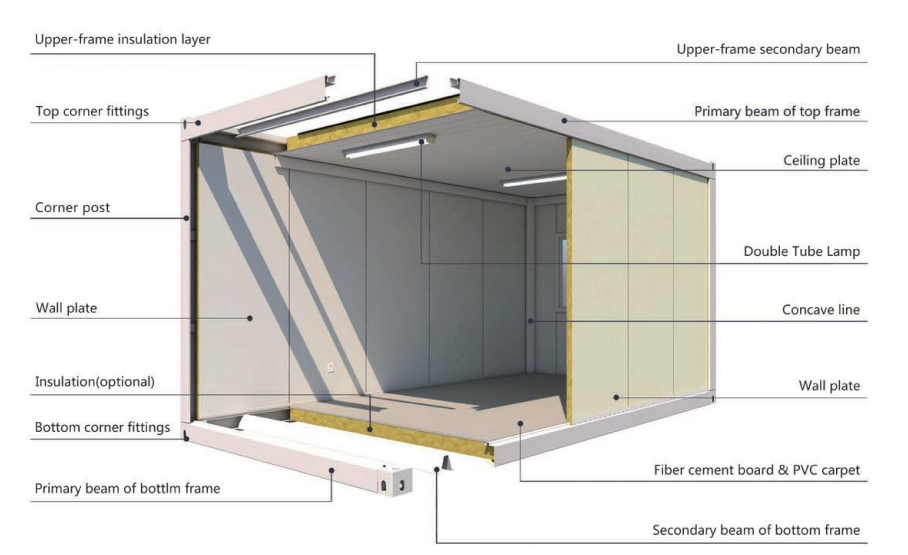
Mature flat pack units typically employ:
Framed steel structure system
Columns and beams form a complete load-bearing loop
The roof and walls are secured with bolts and structural connectors
With proper foundation design (strip foundations, concrete platforms, or steel foundations), flat-pack house units can meet wind pressure design requirements of 8–12 levels and are widely used in coastal and open-area engineering worker camps.
2. High-Altitude and Low-Temperature Environments (-30℃ and Below)
In Russia, Central Asia, and high-latitude regions, the challenges posed by low-temperature environments to buildings mainly focus on:
Insulation performance
Cold bridge control
Structural toughness
For cold regions, prefabricated containers are typically equipped with:
Double-layer or thickened insulated walls (rock wool/PU/PIR)
Integrated roof and floor insulation systems
Doors and windows using thermal break or multi-layer sealing structures
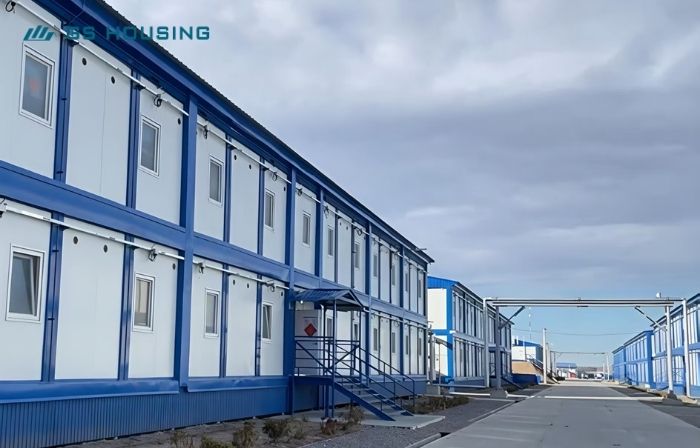
In actual projects, prefabricated containers designed for environmental adaptation can be used long-term in operating environments of -30℃ to -40℃ for oil and gas, mining, and infrastructure project labor camps.

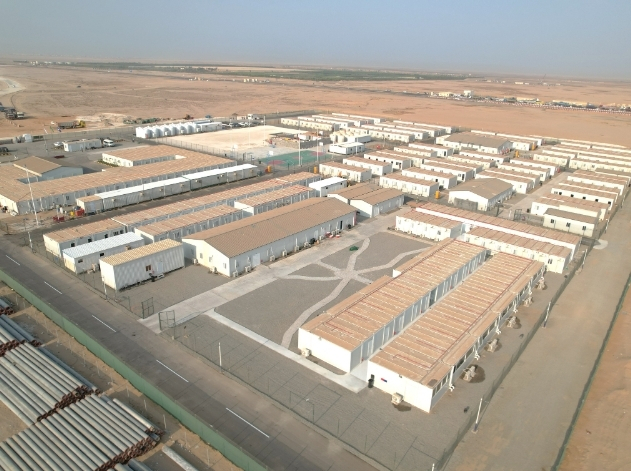
3. High-Temperature and Desert Environments (Above +45 ℃)
The high temperatures, strong sunlight, and dust storms in regions such as the Middle East and North Africa place higher demands on the durability of temporary buildings.
Key considerations for adapting flat-pack modular units to high-temperature environments include:
External wall and roof reflective and heat-insulating design
Redundant design for ventilation and air conditioning systems
Sand- and dustproof sealing structure
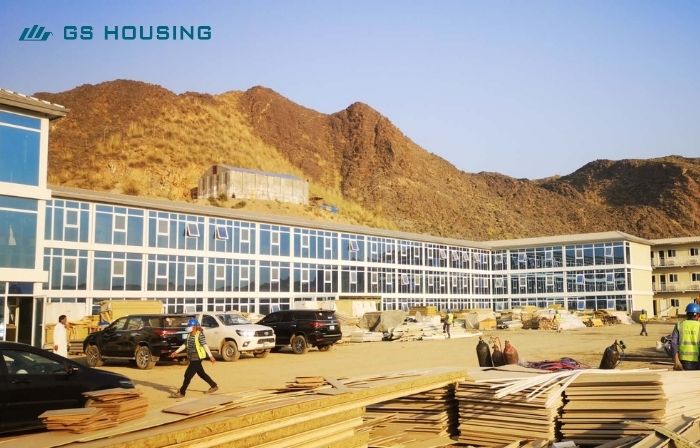
Through appropriate material selection and shading and ventilation design, flat-pack modular units can operate stably in long-term high-temperature environments and are widely used in oil fields, natural gas stations, and infrastructure projects.
III. Applicability to High Humidity, Coastal, and Corrosive Environments
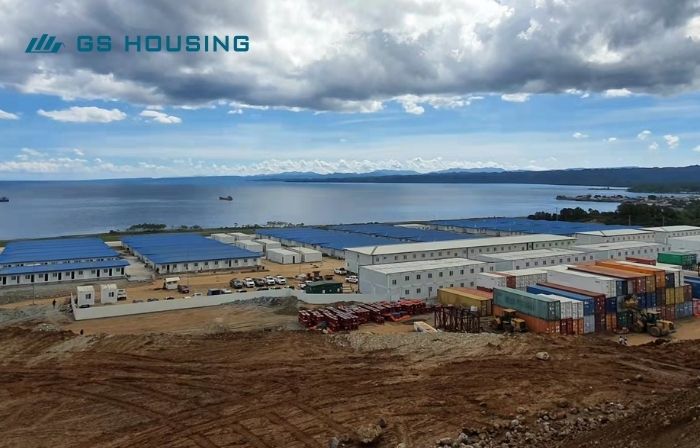
In Southeast Asian, island, and coastal engineering projects, air humidity and salt spray corrosion are major challenges.
Professional flat-pack container systems typically employ:
Hot-dip galvanizing or high-corrosion-resistant coating treatment on the steel structure
Corrosion-resistant and fire-retardant composite materials for wall panels
Rust-resistant bolts are used for critical connections.
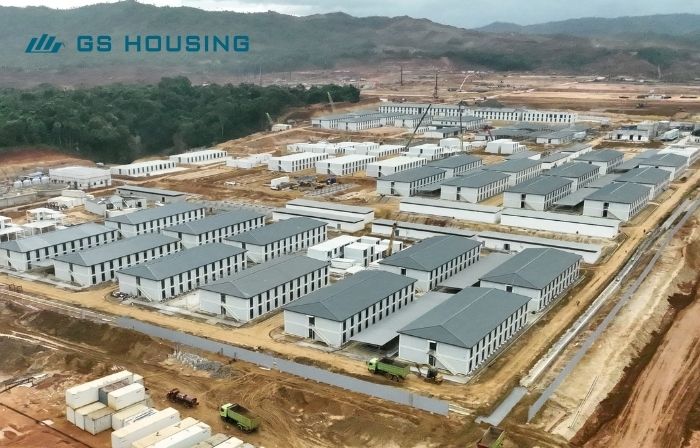
Under normal maintenance conditions, the modular containers maintain long-term structural stability and functional integrity in high-humidity and coastal environments.
IV. Safety Performance in Earthquake Zones
Flat Pack Modular units offer certain advantages in earthquake zones due to their relatively light weight and good structural flexibility.
Their seismic resistance characteristics are mainly reflected in:
Good ductility of the steel frame structure
Stress relief through inter-module connections
Seismic reinforcement design through foundations and connection methods
In infrastructure and emergency projects in many countries, flat-pack modular units have been used as temporary and semi-permanent building solutions in areas with low- to moderate-intensity earthquakes.
V. Relationship between Usage Environment and Service Life
It is important to clarify that environmental conditions do not directly determine the service life of flat-pack modular buildings. Factors that truly affect lifespan include:
Structural system and material grade
Corrosion protection and insulation design
Usage intensity and maintenance cycle
Whether it is customized for the local environment
Under reasonable design and normal maintenance conditions, flat-pack modular housing can achieve:
Short-term projects: 8–10 years
Medium- to long-term projects: 10–20 years
High-standard customized solutions: 20+ years
VI. Summary of Typical Application Scenarios
Flat Pack Units are suitable for the following environments and project types:
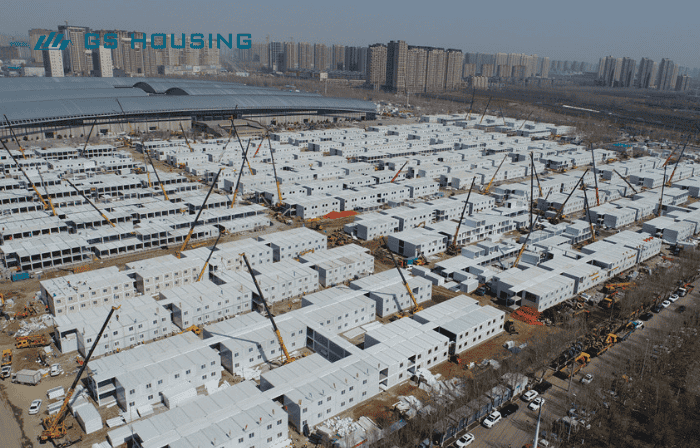
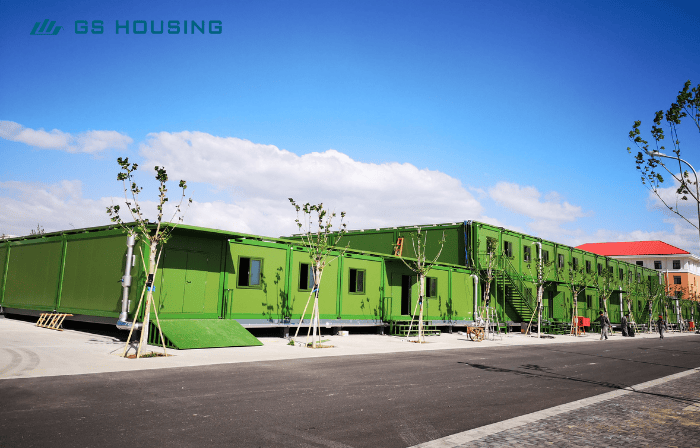
Large-scale infrastructure construction site camp projects
Mining, oil and gas, and energy development camps
Remote construction camps
Temporary or phased engineering offices and accommodations
Emergency shelters and post-disaster temporary buildings
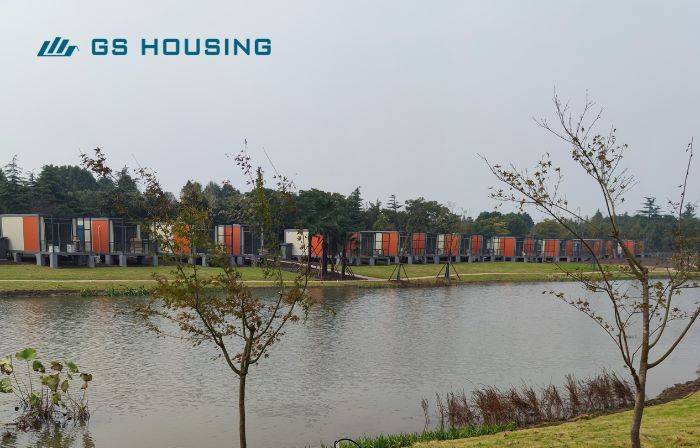
Through environmentally adaptable design, flat-pack modular units have evolved from “temporary buildings” into reliable engineering-grade modular building solutions.
 |
 |
 |
 |
 |
 |
Conclusion: Environment is not the limitation; design is key.
The safety of flat-pack prefab modules depends not on whether they are “flat-pack units,” but on whether they are designed with engineering standards based on real-world usage environments.
For purchasers, clearly defining the climate conditions, usage period, and functional requirements of the project location, and selecting a supplier with engineering experience and a complete technical system, is the core to ensuring the long-term stable operation of the project.
Post time: 12-02-26