


Against the backdrop of the rapid development of prefabricated construction, Flat Pack Container, Expandable Container House, and Folding Container House are gradually becoming important solutions in fields such as construction site camp, emergency housing, and commercial facilities.
While they may appear similar, they differ fundamentally in their structural logic, transportation methods, applicable scenarios, and long-term value.
This article will systematically analyze these three types of prefab houses from the perspectives of structural principles, transportation efficiency, installation methods, durability, cost structure, application scenarios, and market direction.
 |
 |
 |
| Flat Pack Container | Expandable Container House | Folding Container House |
I. Flat Pack Container
1. Structural Features
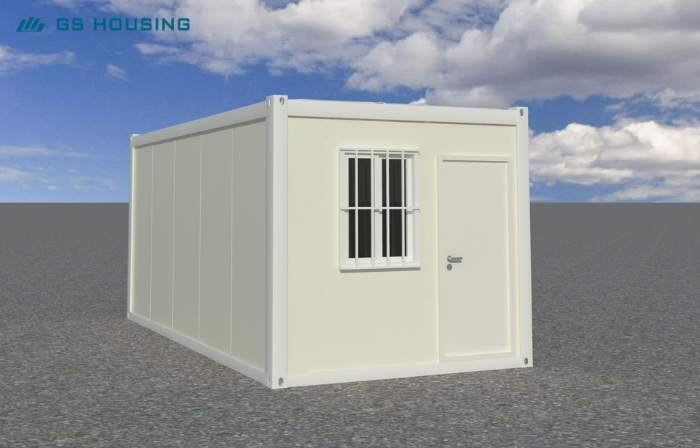
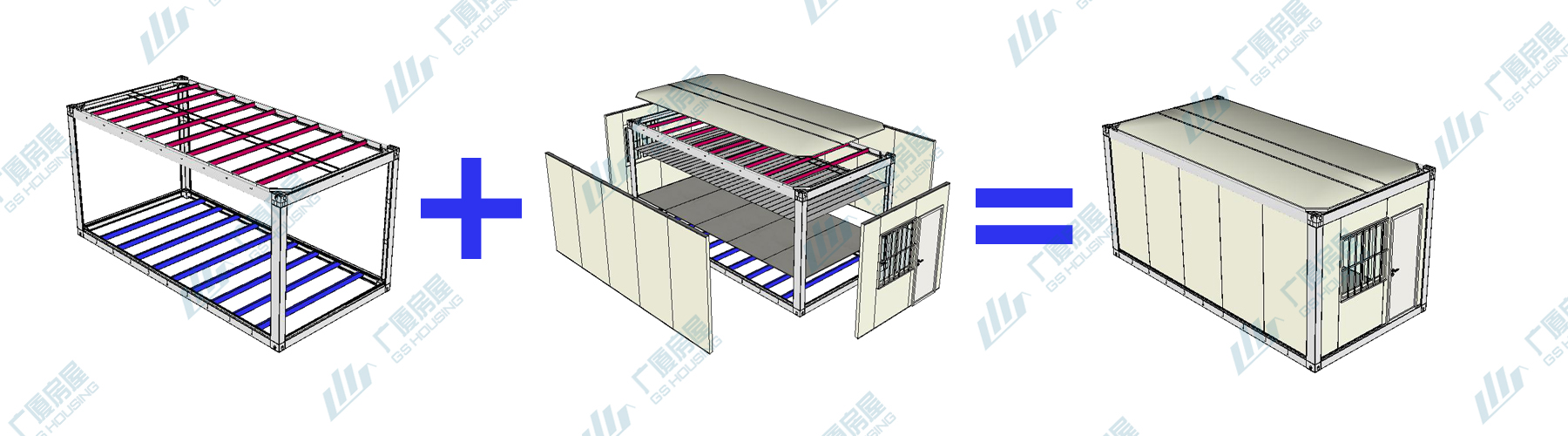
Flat-pack houses utilize a “frame + enclosure system modular packaging” structure.
✔ Top and bottom frames are integrally welded steel structures.
✔ Columns are detachable.
✔ Wall panels, doors, windows, and electrical systems are modularly integrated.
✔ During transportation, it is in a “flat-pack” state and assembled into a complete unit on-site.
Core Features:
✔ High frame strength
✔ Can be stacked in multiple layers (usually 2-3 layers, customizable to higher)
✔ High degree of modular standardization
2. Flat Pack House Advantages
(1) Strong structural stability
The overall stress distribution is clear, and its wind and earthquake resistance is superior to folding and expansion structures, making it suitable for long-term use.
(2) Reusable
It can be reused multiple times, making it suitable for long-term construction worker camps in EPC projects, mining areas, oil and gas projects, etc.
(3) Suitable for large-scale staff house building systems
It can be combined to form:
|
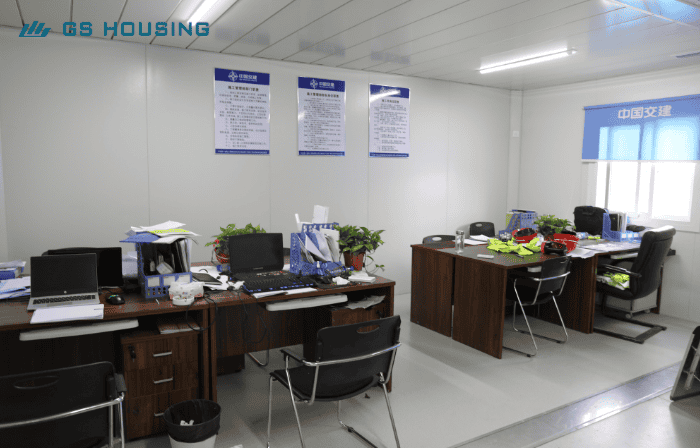
Site office building |
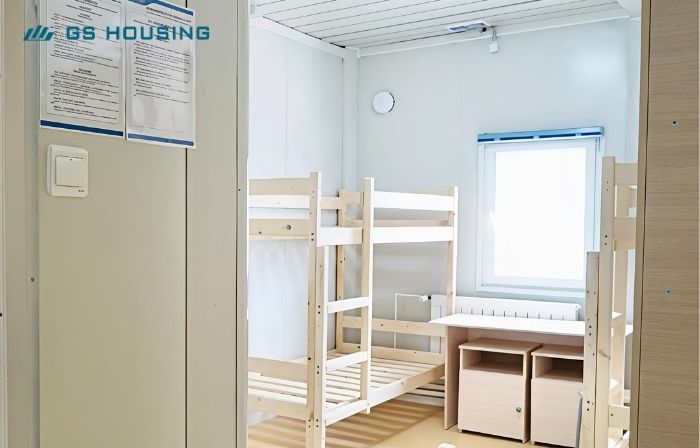
Worker dormitories |
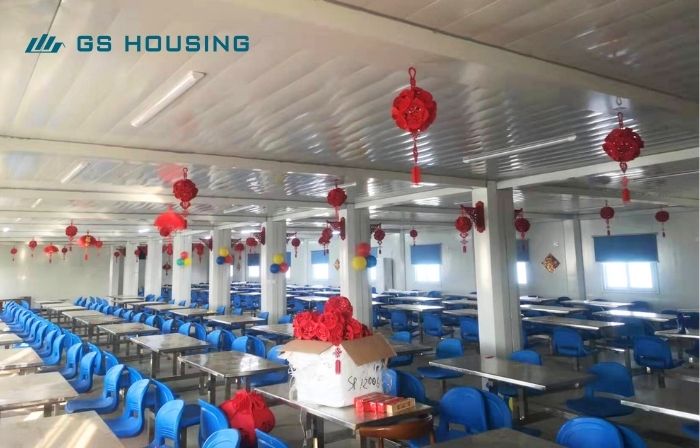
Container Canteens |
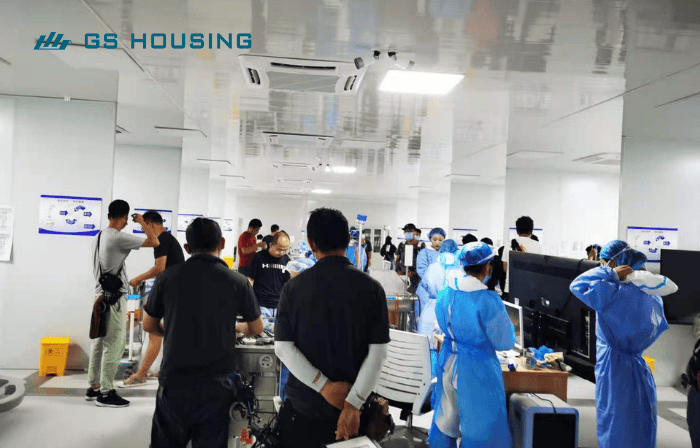
Modular medical units |
|
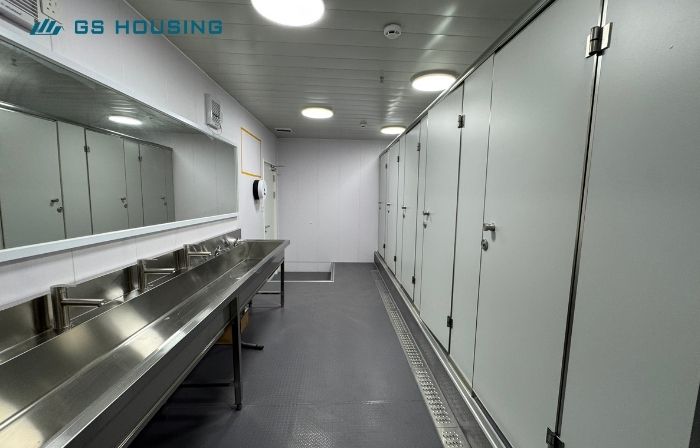
Portable Bathroom Systems |

3. Applicable scenarios
· Construction site camps
· Oil and gas field camps
· Mining camps
· Military camps
· Long-term infrastructure building projects
Belongs to “engineering modular buildings.”
II. Expandable Pop up House
1. Structural Features
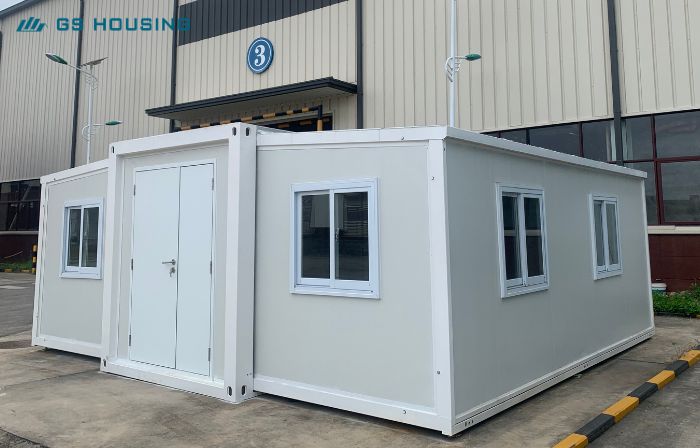
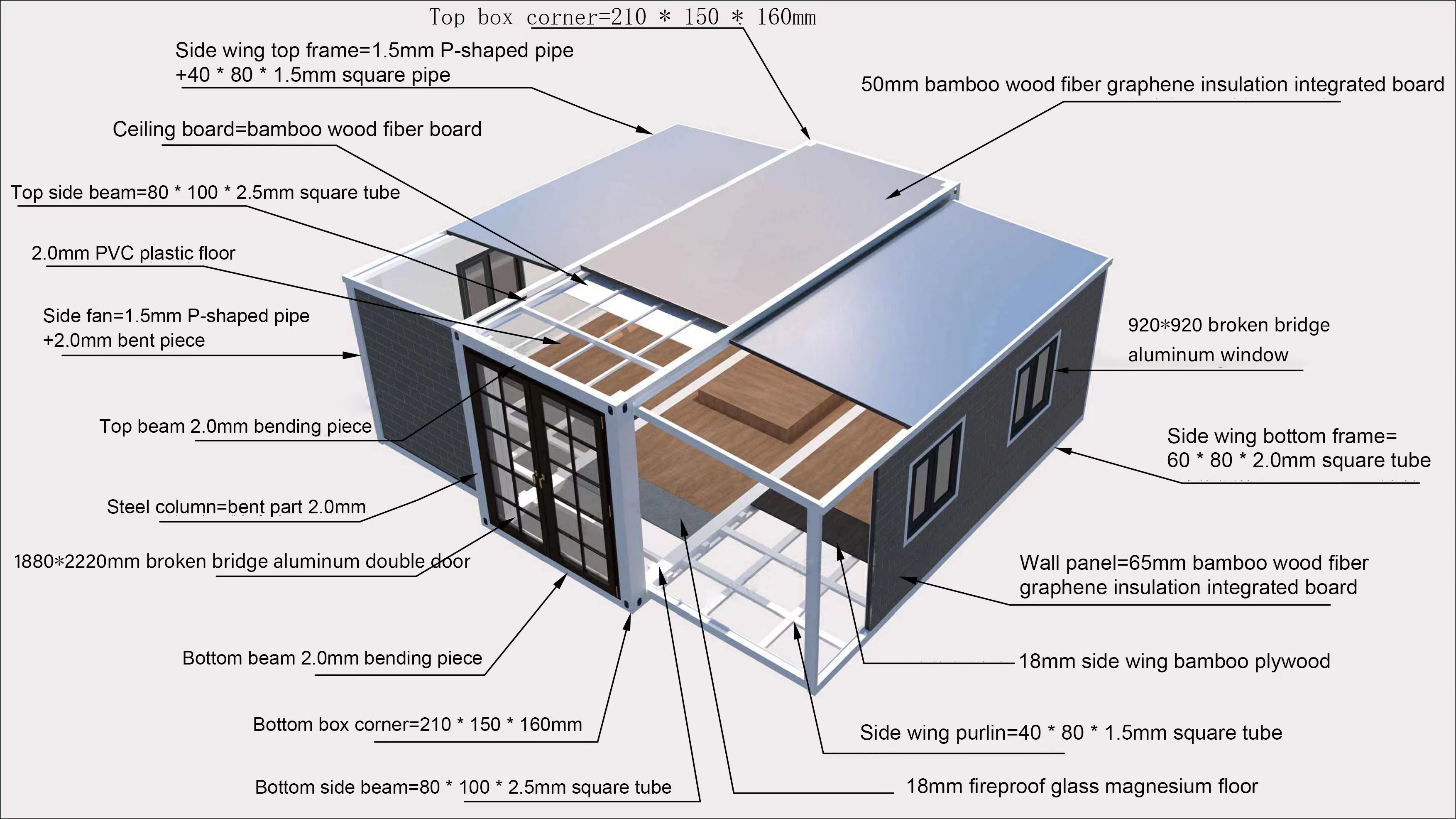
The expandable pop up house consists of a main container body and two expandable side structures.
In its transport state, it is the width of a standard container (generally 2.2 m to 2.4 m) and can be expanded to 5 m to 6 m on-site.
Expansion methods typically include the following:
✔ Hydraulic expansion
✔ Manually assisted sliding rail expansion
Core logic: Small transport volume, large space utilization.
2. Advantages
(1) High space utilization: The indoor area almost doubles after unfolding.
(2) Fast installation: Unfolding can usually be completed in 1-2 hours.
(3) Suitable for single-function buildings:
3. Limitations
Structural strength is weaker than that of a boxable house
Not suitable for long-term use in extreme climates
Hinged structures are prone to fatigue after long-term use
4. Applicable Scenarios
Temporary housing after disasters
Tourist resorts
Short-term commercial demonstrations
Farm housing
Export retail markets
Belongs to the category of “rapid-to-move-in modules”.
III. Folding Container House
1. Structural Features
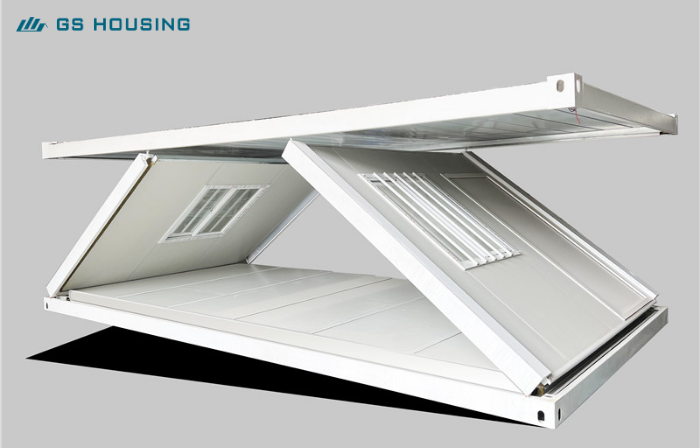
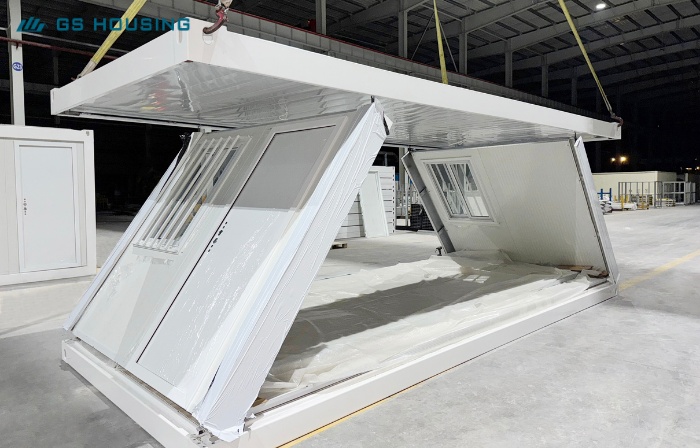
Folding containers are typically “integrated pre-assembled housing.”
compressing their volume through middle or side folding.
They are highly compressed during transport, allowing multiple units to be loaded at once.
Deployment Methods:
· Lifting Deployment
· Manual Deployment
2. Advantages
(1) Highest Transportation Efficiency
Can achieve a loading ratio of 1:4 or even 1:6.
(2) Extremely Fast Installation
A single container can be deployed in 10-20 minutes.
(3) Suitable for Emergency Deployment
3. Limitations
Thin steel structure cross-section
Not suitable for multi-story structures
Short service life
Moderate wind resistance
4. Applicable Scenarios
War or post-disaster emergency response
Temporary medical points
Isolation zones
Short-term worker dormitories
Belongs to “emergency modular buildings.”
IV. Comparison of the core differences among the three container houses
|
Comparison Dimensions |
Flat Pack container house |
Expandable container |
Folding container |
| Transport Volume | Medium | Small | Minimum |
| Unfolded Area | Fixed | Doubled | Fixed |
| Structural Strength | ★★★★★ | ★★★ | ★★ |
| Multi-layer Stacking | Possible | Not Recommended | Not Recommended |
| Service Life | 10-20 years | 5-10 years | 3-8 years |
| Suitable for Campsite Systems | Yes | No | No |
| Installation Speed | Fast | Very Fast | Extremely Fast |
| Cost Structure | High Overall Cost-Effectiveness | High Unit Price | Low Unit Price |
V. Product Selection Based on Project Type
1. Large-scale Infrastructure / EPC Projects
Preferred: Flat Pack Container Houses
Reasons:
· Can systematically plan campsites
· Can meet long-term project needs
· Can be used for multi-story offices
· Can be dismantled and reused later

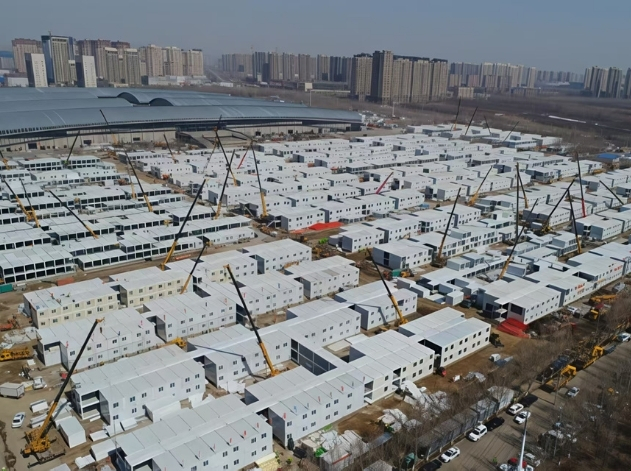
2. Post-Disaster Reconstruction / Emergency Resettlement
Preferred:
Flat Pack Container Houses
Folding Containers
Expandable Containers
3. Cultural Tourism / Light Commercial
Preferred: Expandable Containers
Because they offer a greater sense of space and a better living experience.
4. Military or Field Applications
Preferred:
· Folding Containers for rapid frontline deployment
· Flat Pack Containers for rear camp systems
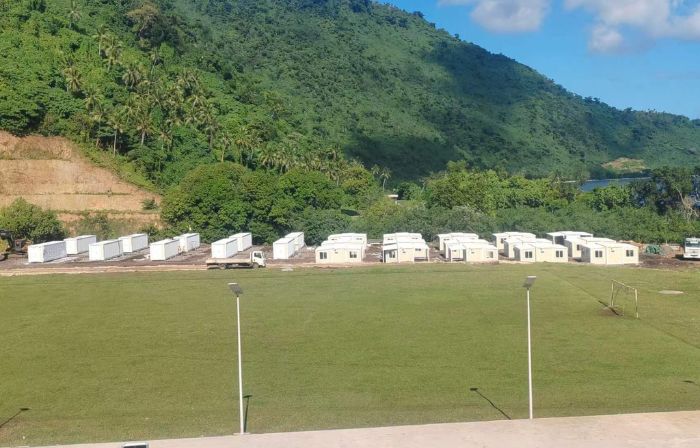
VI. Cost Logic Analysis
Many clients only look at the unit price but ignore the “total life cycle cost.”
Flat pack containers:
Slightly higher initial cost
Reusable
Lowest average cost of use
Folding Containers:
Low initial cost
Short lifespan
Higher long-term cost
Expandable pop up houses:
High unit cost
Not suitable for high-frequency turnover
VII. Market Trend Analysis
1. Russian-speaking and Central Asian Markets: Prefer flat pack container houses for mining, oil, and gas camps.
2. African Market: High demand for folding container houses for emergency and initial stages of engineering projects.
3. Middle Eastern Market: Prefer high-configuration flat-pack container house system camps.
4. European and American Retail Markets: Expandable container houses are more popular and suitable for individual purchases.
VIII. Future Directions from a Technological Development Perspective
1. Flat-pack containers are evolving towards “modular building systems.”
2. Expandable containers are upgrading towards “intelligent and automatic deployment”.
3. Folding containers are evolving towards “ultra-lightweight emergency equipment.”
IX. Summary
From a long-term engineering value perspective:
✔ Flat pack containers = Engineering-oriented, System-oriented, Long-term
✔ Expandable containers = Experiential, Space-oriented, Light commercial
✔ Folding containers = Emergency-oriented, Rapidly deployable
The three prefab container houses are not in a “replace one” relationship, but rather different solutions are chosen based on project attributes.
Post time: 27-02-26